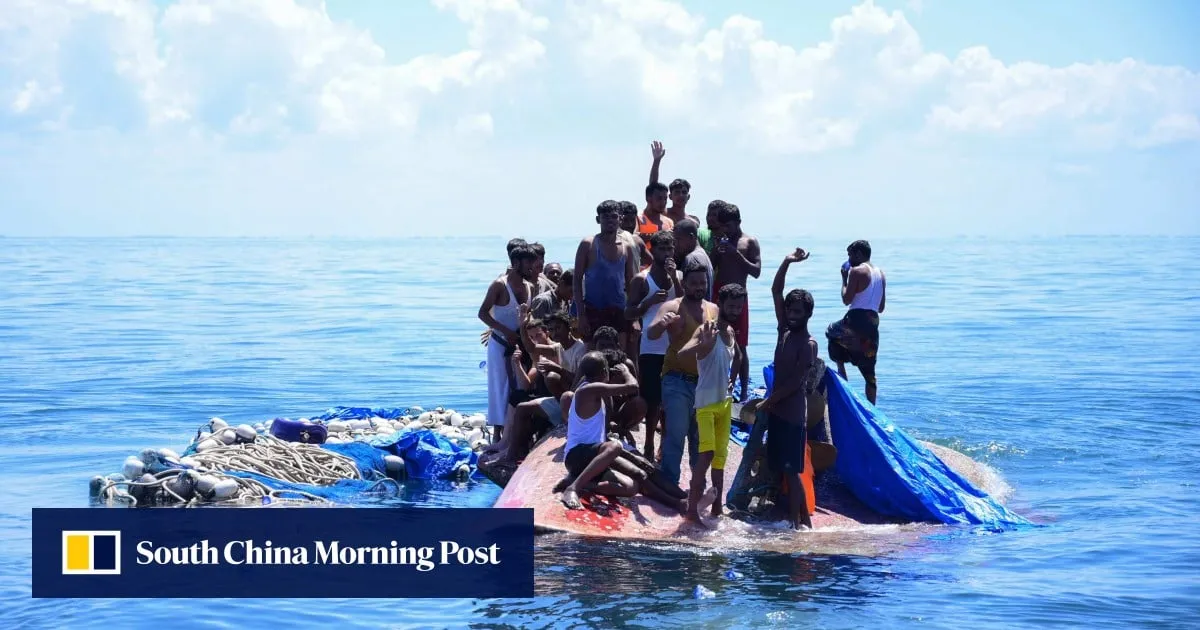
Rohingya refugee Rahila Begum spent two days adrift in the Andaman Sea this month, clinging to a wooden shard after her overcrowded boat capsized, one of the few survivors of a disaster that left 250 missing and feared dead.She was among the thousands of Rohingya Muslims who brave hunger and accidents on rickety boats each year to flee desperate conditions in camps in southeastern Bangladesh for countries such as Indonesia and Malaysia.Hundreds die en route from hunger or accidents at sea, but the numbers keep growing as shrinking food rations caused by dwindling international aid push yet more to make the dangerous crossing.“I never thought I would survive,” said Begum, her voice thready from fever and aches as she sat, wrapped in a blanket, on a thin mat in her parents’ shack thrown together from tarpaulin sheets. “It felt like the end of my life.”The 26-year-old was rescued by a passing Bangladeshi oil tanker after her boat, with nearly 300 aboard, sank this month on its way to Malaysia and later handed to the country’s coastguard.Rahila Begum at a refugee camp in Cox’s Bazar, Bangladesh. Photo: ReutersBangladesh’s coastal district of Cox’s Bazar is home to nearly 1.2 million Rohingya, many of whom fled persecution and fighting in Buddhist-majority Myanmar, where they are accused of being outsiders.
SRCSouth China Morning Post
LANGEN
LEANCenter-Right
WORDS216
ENT8
TUE · 2026-04-21 · 03:58 GMTBRIEF NSR-2026-0421-71096
NSR-2026-0421-71096News Report·EN·Human Interest
Why more Rohingya risk sea escapes to Malaysia, Indonesia: ‘some make it, some die’
Facing dire conditions in refugee camps in Cox's Bazar, Bangladesh, increasing numbers of Rohingya Muslims are risking dangerous sea voyages to Malaysia and Indonesia. These journeys, often undertaken in overcrowded and rickety boats, are driven by shrinking food rations due to declining international aid.
ReutersSouth China Morning PostFiled 2026-04-21 · 03:58 GMTLean · Center-RightRead · 1 min
South China Morning PostFIG 01
Reading time
1min
Word count
216words
Sources cited
1cited
Entities identified
8entities
Quality score
100%
§ 01
Briefing Summary
AI-generatedNEWSAR · AI
Facing dire conditions in refugee camps in Cox's Bazar, Bangladesh, increasing numbers of Rohingya Muslims are risking dangerous sea voyages to Malaysia and Indonesia. These journeys, often undertaken in overcrowded and rickety boats, are driven by shrinking food rations due to declining international aid. This month, one such boat carrying nearly 300 people capsized in the Andaman Sea, leaving 250 missing and presumed dead. Despite the high risk of death from hunger and accidents at sea, the number of Rohingya attempting these escapes continues to rise as conditions in the camps worsen for the nearly 1.2 million refugees who fled persecution in Myanmar.
Confidence 0.90Sources 1Claims 5Entities 8
§ 02
Article analysis
Model · rule-basedFraming
Human Interest
Human Rights
Tone
Mixed Tone
AI-assessed
CalmNeutralAlarmist
Factuality
0.80 / 1.00
Factual
LowHigh
Sources cited
1
Limited
FewMany
§ 03
Key claims
5 extracted01
Bangladesh’s coastal district of Cox’s Bazar is home to nearly 1.2 million Rohingya.
statistic
Confidence
1.00
02
I never thought I would survive. It felt like the end of my life.
quoteRahila Begum
Confidence
1.00
03
Rohingya refugee Rahila Begum survived after her overcrowded boat capsized in the Andaman Sea.
factual
Confidence
1.00
04
250 people are missing and feared dead after the boat Rahila Begum was on capsized.
factual
Confidence
0.90
05
Hundreds of Rohingya die en route from hunger or accidents at sea each year.
statistic
Confidence
0.80
§ 04
Full report
1 min read · 216 words§ 05
Entities
8 identifiedKey playerOppositionContextPositiveNeutralNegative
§ 06
Keywords & salience
10 termsrohingya refugees
1.00
sea escapes
0.80
bangladesh
0.70
malaysia
0.70
indonesia
0.70
refugee camps
0.60
boat capsized
0.50
dwindling aid
0.50
cox's bazar
0.40
myanmar
0.40
§ 07
Topic connections
Interactive graph No topic relationship data available yet. This graph will appear once topic relationships have been computed.