NEWSAR
Multi-perspective news intelligence
SRCAssociated Press (AP)
LANGEN
LEANCenter
WORDS1 772
TUE · 2026-04-21 · 06:53 GMTBRIEF NSR-2026-0421-71162
News/Pope’s visit to Equatorial Guinea is a d/Pope’s visit to Equatorial Guinea is a diplomatic challenge …
NSR-2026-0421-71162News Report·EN·Human Interest

Pope’s visit to Equatorial Guinea is a diplomatic challenge as he closes his Africa trip

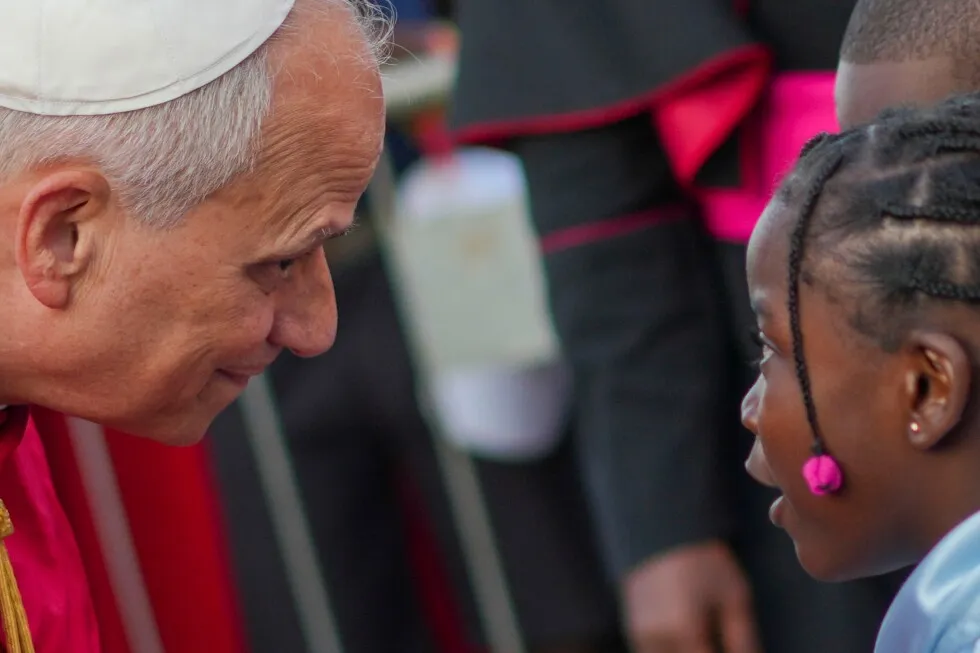
Pope Leo XIV listens to a girl as he arrives at the Parish of Our Lady of Fatima in Luanda, Angola, for a meeting with bishops, priests, consecrated men and women, and pastoral workers Monday, April 20, 2026, on the eighth day of an 11-day apostolic journey to Africa (AP Photo/Andrew Medichini) 2026

Associated Press (AP)Filed 2026-04-21 · 06:53 GMTLean · CenterRead · 8 min
Pope’s visit to Equatorial Guinea is a diplomatic challenge as he closes his Africa trip
Associated Press (AP)FIG 01
Reading time
8min
Word count
1 772words
Sources cited
0cited
Entities identified
0entities
Quality score
25%
§ 04

Full report

8 min read · 1 772 words
Pope Leo XIV listens to a girl as he arrives at the Parish of Our Lady of Fatima in Luanda, Angola, for a meeting with bishops, priests, consecrated men and women, and pastoral workers Monday, April 20, 2026, on the eighth day of an 11-day apostolic journey to Africa (AP Photo/Andrew Medichini) 2026-04-21T05:13:39Z LUANDA, Angola (AP) — Pope Leo XIV heads Tuesday to Equatorial Guinea for the final leg of his four-nation African journey, arriving in a country that presents perhaps the most diplomatically delicate challenge of this trip and his young papacy. The former Spanish colony on Africa’s western coast is run by Africa’s longest-serving president, Teodoro Obiang Nguema Mbasogo, 83. He has been in power since 1979 and is accused of widespread corruption and authoritarianism. The discovery of offshore oil in the mid-1990s transformed Equatorial Guinea’s economy virtually overnight, with oil now accounting for almost half of its GDP and more than 90% of exports, according to the African Development Bank. Yet more than half of the country’s nearly 2 million people live in poverty. And rights groups including Human Rights Watch — as well as court cases in France and Spain — have documented how revenues have enriched the ruling Obiang family rather than the broader population. freestar.queue.push(function () { window.fsAdCount = window.fsAdCount + 1 || 0; let customChannel = '/dynamic_' + fsAdCount; let adList = document.querySelectorAll(".fs-feed-ad") let thisAd = adList[fsAdCount]; let randId = Math.random().toString(36).slice(2); thisAd.id = randId; let thisPlacement = fsAdCount == 0 ? "apnews_story_feed" : "apnews_story_feed_dynamic"; freestar.newAdSlots({ placementName: thisPlacement, slotId: randId }, customChannel); }); Leo has shown he won’t mince words on this maiden African journey as pope, and the church’s teaching on the scourge of social inequity and corruption is clear. If Leo’s stop in Cameroon was any indication, the pope’s messaging in Equatorial Guinea might be just as sharp. Upon arriving in Yaounde, Cameroon last week, Leo met with President Paul Biya, at 93 the world’s oldest leader. Like Obiang, Biya has also been in power for decades — since 1982 — and like Obiang, he’s accused of presiding over an authoritarian government. /* Desktop-first: fully collapse by default */ #ap-readmore-embed { display: none; margin: 0; padding: 0; height: 0; min-height: 0; overflow: hidden; text-align: center; position: relative; z-index: 2; } /* Only show on mobile */ @media (max-width: 767px) { #ap-readmore-embed { display: block; margin: 28px 0; height: auto; overflow: visible; } } #ap-readmore-embed .ap-readmore-btn { appearance: none; -webkit-appearance: none; border: 0; background: #000; color: #fff; cursor: pointer; display: inline-flex; align-items: center; justify-content: center; gap: 10px; padding: 14px 22px; border-radius: 999px; font-family: inherit, "AP Sans", -apple-system, BlinkMacSystemFont, "Helvetica Neue", Arial, sans-serif; font-weight: 700; font-size: 16px; letter-spacing: 0.2px; line-height: 1; box-shadow: 0 10px 18px rgba(0,0,0,0.12); transition: transform 120ms ease, box-shadow 120ms ease, opacity 120ms ease; touch-action: manipulation; -webkit-tap-highlight-color: transparent; position: relative; z-index: 3; } #ap-readmore-embed .ap-readmore-btn:hover { transform: translateY(-1px); box-shadow: 0 14px 22px rgba(0,0,0,0.16); } #ap-readmore-embed .ap-readmore-btn:active { transform: translateY(0); box-shadow: 0 10px 18px rgba(0,0,0,0.12); opacity: 0.95; } #ap-readmore-embed .ap-readmore-btn:focus-visible { outline: 3px solid rgba(228, 0, 43, 0.35); outline-offset: 3px; } #ap-readmore-embed .ap-readmore-icon { width: 10px; height: 10px; border-right: 2px solid currentColor; border-bottom: 2px solid currentColor; transform: rotate(45deg); margin-top: -2px; } #ap-readmore-embed .ap-readmore-fade { display: none; height: 48px; margin-top: -48px; pointer-events: none; background: linear-gradient(to bottom, rgba(255,255,255,0), rgba(255,255,255,1)); } Read More (function () { var APRM_EMBED_ID = "ap-readmore-embed"; var APRM_MOBILE_MQ = "(max-width: 767px)"; function APRM_onReady(fn) { if (document.readyState === "loading") { document.addEventListener("DOMContentLoaded", fn); } else { fn(); } } APRM_onReady(function () { var APRM_embedEl = document.getElementById(APRM_EMBED_ID); if (!APRM_embedEl) return; // 🚨 DESKTOP: remove entire module wrapper and bail early if (!window.matchMedia(APRM_MOBILE_MQ).matches) { var APRM_rootModule = APRM_embedEl.closest(".HTMLModuleEnhancement") || APRM_embedEl.closest(".HtmlModule"); if (APRM_rootModule && APRM_rootModule.parentNode) { APRM_rootModule.parentNode.removeChild(APRM_rootModule); } else if (APRM_embedEl.parentNode) { APRM_embedEl.parentNode.removeChild(APRM_embedEl); } return; // stop the rest of the script from running } }); })(); (function () { var EMBED_ID = "ap-readmore-embed"; var BTN_ID = "apReadMoreBtn"; var FADE_ID = "apReadMoreFade"; var STOP_SELECTOR = ".Page-below"; var SIGN_IN_GATE_SELECTOR = ".sign-in-gate-content"; var HIDDEN_ATTR = "data-ap-readmore-hidden"; var MOBILE_MQ = "(max-width: 767px)"; function ready(fn) { if (document.readyState === "loading") { document.addEventListener("DOMContentLoaded", fn); } else { fn(); } } function isElementNode(n) { return n && n.nodeType === 1; } function cancelEvent(e) { if (!e) return; if (typeof e.preventDefault === "function") e.preventDefault(); if (typeof e.stopPropagation === "function") e.stopPropagation(); if (typeof e.stopImmediatePropagation === "function") e.stopImmediatePropagation(); e.cancelBubble = true; e.returnValue = false; } function collapseDesktopEmbed(embed) { if (!embed) return true; if (!window.matchMedia(MOBILE_MQ).matches) { var maybeWrappers = [ embed.parentElement, embed.closest(".html-embed"), embed.closest("[data-type='htmlembed']"), embed.closest("[class*='embed']"), embed.closest("[class*='Embed']") ].filter(Boolean); embed.style.display = "none"; embed.style.margin = "0"; embed.style.padding = "0"; embed.style.height = "0"; embed.style.minHeight = "0"; embed.style.overflow = "hidden"; maybeWrappers.forEach(function (el) { el.style.margin = "0"; el.style.padding = "0"; el.style.height = "0"; el.style.minHeight = "0"; el.style.overflow = "hidden"; }); if (embed.parentNode) { embed.parentNode.removeChild(embed); } return true; } return false; } ready(function () { var embed = document.getElementById(EMBED_ID); var btn = document.getElementById(BTN_ID); var fade = document.getElementById(FADE_ID); if (!embed || !btn) return; if (collapseDesktopEmbed(embed)) return; var signInGate = document.querySelector(SIGN_IN_GATE_SELECTOR); if (signInGate) { embed.innerHTML = ""; return; } // — Analytics: impression when embed enters viewport — if ("IntersectionObserver" in window) { var io = new IntersectionObserver(function (entries, observer) { if (entries[0].isIntersecting) { window.dataLayer = window.dataLayer || []; window.dataLayer.push({ event: "ap_readmore_impression" }); observer.disconnect(); } }, { threshold: 0 }); io.observe(btn); } var stopEl = document.querySelector(STOP_SELECTOR); if (!stopEl) return; var rootCandidates = [ embed.closest(".Page"), embed.closest("article"), embed.closest("main"), document.body ].filter(Boolean); var root = rootCandidates.find(function (c) { return c.contains(stopEl); }) || document.body; var all = root.getElementsByTagName("*"); var hidden = []; for (var i = 0; i Leo didn’t hold back as he stood next to Biya and delivered his arrival speech in the presidential palace. “In order for peace and justice to prevail, the chains of corruption — which disfigure authority and strip it of its credibility — must be broken,” Leo said. “Hearts must be set free from an idolatrous thirst for profit.” freestar.queue.push(function () { window.fsAdCount = window.fsAdCount + 1 || 0; let customChannel = '/dynamic_' + fsAdCount; let adList = document.querySelectorAll(".fs-feed-ad") let thisAd = adList[fsAdCount]; let randId = Math.random().toString(36).slice(2); thisAd.id = randId; let thisPlacement = fsAdCount == 0 ? "apnews_story_feed" : "apnews_story_feed_dynamic"; freestar.newAdSlots({ placementName: thisPlacement, slotId: randId }, customChannel); }); A secular but very Catholic country Equatorial Guinea is officially a secular country, but the Catholic Church is at the center of its political and social systems. Church leaders “are very much interconnected intrinsically with the government,” said Tutu Alicante, a U.S.-based activist who runs the EG Justice rights group. “Part of it is the fear the government has instilled in everyone, including the church, and part of it is the monetary gains that the church derives from this government.” The Rev. Fortunatus Nwachukwu, No. 2 in the Vatican’s missionary evangelization office, said the Catholic Church is present in difficult civil spaces and knows how to operate in them to carry out its mission. “Should the church go to war against the government? Surely no,” Nwatchukwu said. “Should the church swallow everything as if it were normal? No. The church has to continue preaching justice, always in defense of life, human dignity and the common good.” That is particularly challenging in Equatorial Guinea, which with about 75% of its population Catholic is one of the most Catholic countries in Africa. But it’s also one of the most oppressed. In addition to official corruption, the country’s government also faces rampant accusations of harassment, arrest and intimidation of political opponents, critics and journalists. freestar.queue.push(function () { window.fsAdCount = window.fsAdCount + 1 || 0; let customChannel = '/dynamic_' + fsAdCount; let adList = document.querySelectorAll(".fs-feed-ad") let thisAd = adList[fsAdCount]; let randId = Math.random().toString(36).slice(2); thisAd.id = randId; let thisPlacement = fsAdCount == 0 ? "apnews_story_feed" : "apnews_story_feed_dynamic"; freestar.newAdSlots({ placementName: thisPlacement, slotId: randId }, customChannel); }); Corruption is a longstanding problem It has consistently ranked among the bottom 10 countries in Transparency International’s annual corruption perception index, though the government has in recent years taken some steps to improve the situation, said Transparency International’s regional advisor for Africa, Samuel Kaninda. The government passed an anti-corruption law and is working to fund an anti-corruption commission. But the only way such measures will be effective is if the commission is truly independent to investigate and the judiciary is independent as well, he said. Kaninda said he hoped the pope’s visit would draw attention to such shortcomings, and give the people of Equatorial Guinea hope. Even if the government exploits the visit to signal a papal endorsement of its rule, historically pope trips to even authoritarian regimes have ended up as a net positive experience for the people, he said. “The risk is there, but at the same time, we see more of the opportunity to shed more light on a lot more that is happening there,” he said. freestar.queue.push(function () { window.fsAdCount = window.fsAdCount + 1 || 0; let customChannel = '/dynamic_' + fsAdCount; let adList = document.querySelectorAll(".fs-feed-ad") let thisAd = adList[fsAdCount]; let randId = Math.random().toString(36).slice(2); thisAd.id = randId; let thisPlacement = fsAdCount == 0 ? "apnews_story_feed" : "apnews_story_feed_dynamic"; freestar.newAdSlots({ placementName: thisPlacement, slotId: randId }, customChannel); }); A busy final stop on a long trip At the very least, the first papal visit since St. John Paul II came in 1982 is giving seamstress Tumi Carine lots of business, as she makes dresses with fabric stamped with Leo’s image. “The coming of the pope brought us many customers,” Carine said. “ We are really grateful for the coming of the pope, so, we are really happy.” Leo has a packed schedule in Equatorial Guinea. He arrives and meets with Obiang and then delivers two sets of remarks: A speech to government authorities and diplomats, and then another speech at the national university. In addition to celebrating Masses, he’ll visit a psychiatric hospital and a prison and will meet with young people and their families. Before leaving Thursday, he’ll pray at a memorial to victims of a 2021 blast at a military barracks in Bata that killed more than 100 people. The explosions were blamed on the negligent handling of dynamite in a barracks close to residential areas. freestar.queue.push(function () { window.fsAdCount = window.fsAdCount + 1 || 0; let customChannel = '/dynamic_' + fsAdCount; let adList = document.querySelectorAll(".fs-feed-ad") let thisAd = adList[fsAdCount]; let randId = Math.random().toString(36).slice(2); thisAd.id = randId; let thisPlacement = fsAdCount == 0 ? "apnews_story_feed" : "apnews_story_feed_dynamic"; freestar.newAdSlots({ placementName: thisPlacement, slotId: randId }, customChannel); }); ___ Associated Press religion coverage receives support through the AP’s collaboration with The Conversation US, with funding from Lilly Endowment Inc. The AP is solely responsible for this content. NICOLE WINFIELD Winfield has been on the Vatican beat since 2001, covering the papacies of St. John Paul II, Pope Benedict XVI and the Francis pontificate and traveling the world with them.