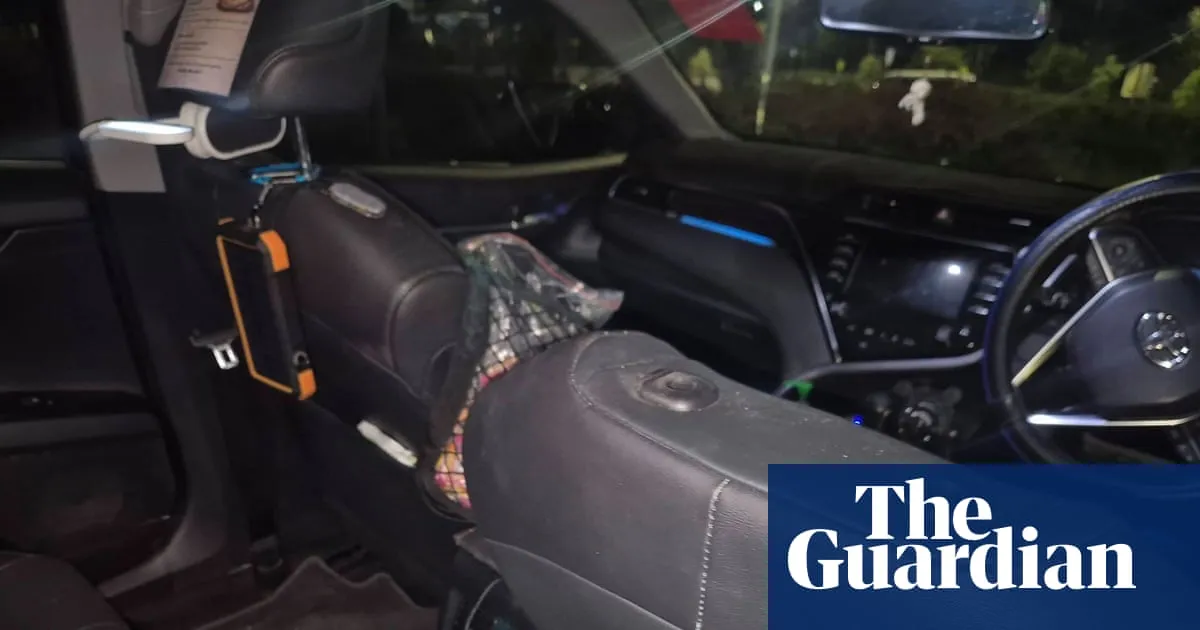
Dozens of Uber drivers have brought claims of unfair deactivation to the Fair Work Commission since the Federal Government passed laws protecting drivers, who aren’t employees, from unfair deactivation in 2024. Photograph: Michael Thorn View image in fullscreen Dozens of Uber drivers have brought claims of unfair deactivation to the Fair Work Commission since the Federal Government passed laws protecting drivers, who aren’t employees, from unfair deactivation in 2024. Photograph: Michael Thorn Uber driver Michael was assaulted by passengers. He says the platform’s response added insult to injury Drivers booted off the platform say they have little recourse to appeal as rideshare giant increasingly relies on automated systems Get our breaking news email, free app or daily news podcast Michael Thorn thought he’d suffered enough after his Uber passenger punched him in the head, sending him to hospital. But then the ride-share platform deactivated his account. “It’s even worse than getting belted,” Thorn said. Drivers say they are being unfairly deactivated in droves as experts warn Uber has grown too reliant on automated systems to cut its workers. The $220bn global transport platform has only a few hundred local staff but tens of thousands of Australian drivers, with those unfairly booted from its systems forced to turn to unions or the employment watchdog. Thorn had come to rely on Uber as his main source of income after five years on the platform, earning about $700 a week to cover medical bills and surging petrol prices. In April, he picked up four passengers from a western Sydney pub. They appeared drunk, took several minutes to put on their seatbelts and then allegedly threw a portable car lamp at him, he says. After he told them to get out, he alleged one rider threw a car seat headrest at Thorn, head-butted him and punched him repeatedly in the face. Police say investigations are ongoing. Thorn said he was taken to hospital and received stitches to his head. He sent a report to Uber but received a complaint from the passengers and was told his account had been shut down. “Here I am, face swelling, getting stitched up, and this is what I’m facing,” he said. The night of his assault, an Uber company safety officer called to apologise for the deactivation, Thorn said. He said his account was reactivated four days later. He has been left with a warning that he could still be deactivated, having received two prior complaints from passengers that Thorn described as unfairly angry. “A lot of Uber drivers will just do the shonky [thing], they’ll park illegally, they’ll accept intoxicated drivers, they’ll do all the risky stuff … because they don’t want to get the report,” he said. An Uber spokesperson said the company was committed to driver and rider safety and it had clear guidelines regarding appropriate behaviour. They declined to comment on specific drivers’ cases. The spokesperson added: “We understand that losing access to the Uber platform can affect livelihoods, which is why these decisions are never made lightly.” Dozens of drivers have brought claims of unfair deactivation to the commission since the Federal Government passed laws protecting drivers, who aren’t employees, from unfair deactivation in 2024. While some cases are found in Uber’s favour, the workplace tribunal has repeatedly lambasted Uber’s rapid fire method of removing workers from its platform. In a 2025 case, it ordered Uber to pay a driver almost two months of lost earnings for unfairly deactivating him after he claimed he was assaulted by passengers after asking them to stop using drugs in his car. View image in fullscreen Michael Thorn says his Uber account was deactivated after a customer punched him in the head then lodged a complaint against him on Uber. Photograph: Michael Thorn As recently as 10 April, Uber Eats was ordered to reactivate a delivery rider who had lost access after its human employees were found to have not considered the rider’s view and focused on his automated customer rating falling below 85%. “This is illogical and arbitrary,” the bench found. Uber in that case argued its approach was “human-led”, and fraudulent reports could be rejected, but acknowledged the company did not have a human “considering each and every circumstance”. Michael Rawling, associate professor of labour law at the University of Technology Sydney, said the company had abandoned parts of the traditional Australian system of unfair dismissal by rapidly enforcing a guideline without hearing from workers first. “Procedural fairness … can require having a conversation with the worker involved, a back and forth,” Rawling said. “A lot of that is not happening.” With fewer than 600 Australian staff, Uber likely had not put in place enough resources to handle unfair cutoffs, Rawling said. “What seems to be happening, whether by default or design, is that it’s the Fair Work Commission process that’s handling that for Uber.” The Transport Workers’ Union has also been left to pick up the slack when Uber fails to process driver concerns. One driver, Ranjit Singh, said he believed Uber would have left him cut off from the platform after he was attacked by a passenger in January, if not for the union’s intervention. “[Uber] just keep sending me automated messages, keep making the false promise somebody will look into the matter and they will get back to you.” Singh estimates he lost more than $2,000 in earnings after a customer hit him with her hand and phone, broke his watch and threw his glasses to the floor – then lodged a complaint with Uber that ruined his five-star rating. “They just straight away deactivated my account,” Singh said. Singh had to wait more than a week to be reinstated despite calling Uber immediately after the incident and providing witness statements and photos of requests. The TWU national assistant secretary, Emily McMillan, said the platform’s algorithm is controlling vulnerable workers’ lives. “There has been a devastating flood of violent assaults and fatalities of gig workers in the past few years which have hit the community hard,” McMillan said. “We need to see gig platforms take full accountability for their out-of-control algorithmic systems.” Explore more on these topics Industrial relations Uber Gig economy Transport news Share Reuse this content
SRCThe Guardian - World News
LANGEN
LEANCenter-Left
WORDS1 036
ENT6
TUE · 2026-04-21 · 15:00 GMTBRIEF NSR-2026-0421-71253
NSR-2026-0421-71253News Report·EN·Human Interest
Uber driver Michael was assaulted by passengers. He says the platform’s response added insult to injury
Uber driver Michael Thorn was allegedly assaulted by passengers in Sydney in April, resulting in hospitalization and stitches. Following the incident, Uber deactivated his account after receiving a complaint from the passengers.
Luca IttimaniThe Guardian - World NewsFiled 2026-04-21 · 15:00 GMTLean · Center-LeftRead · 5 min
The Guardian - World NewsFIG 01
Reading time
5min
Word count
1 036words
Sources cited
0cited
Entities identified
6entities
Quality score
100%
§ 01
Briefing Summary
AI-generatedNEWSAR · AI
Uber driver Michael Thorn was allegedly assaulted by passengers in Sydney in April, resulting in hospitalization and stitches. Following the incident, Uber deactivated his account after receiving a complaint from the passengers. Thorn, who relied on Uber for income, felt the deactivation compounded the injury. While his account was reactivated four days later, he received a warning and faces potential deactivation due to prior complaints. This case highlights a growing concern among Uber drivers in Australia, where many claim unfair deactivation, particularly since the 2024 law protecting non-employee drivers. Dozens of drivers have filed claims with the Fair Work Commission, alleging Uber relies too heavily on automated systems, leaving drivers with limited recourse.
Confidence 0.90Entities 6
§ 04
Full report
5 min read · 1 036 words§ 05
Entities
6 identifiedKey playerOppositionContextPositiveNeutralNegative
Organizations3
§ 06
Keywords & salience
10 termsdeactivation
1.00
uber driver
0.90
unfair deactivation
0.90
assault
0.80
fair work commission
0.70
automated systems
0.70
michael thorn
0.70
rideshare platform
0.60
passenger complaints
0.50
driver safety
0.50
§ 07
Topic connections
Interactive graph Network visualization showing 12 related topics
View Full Graph Person Organization Location Event|Click node to navigate|Edge numbers = shared articles