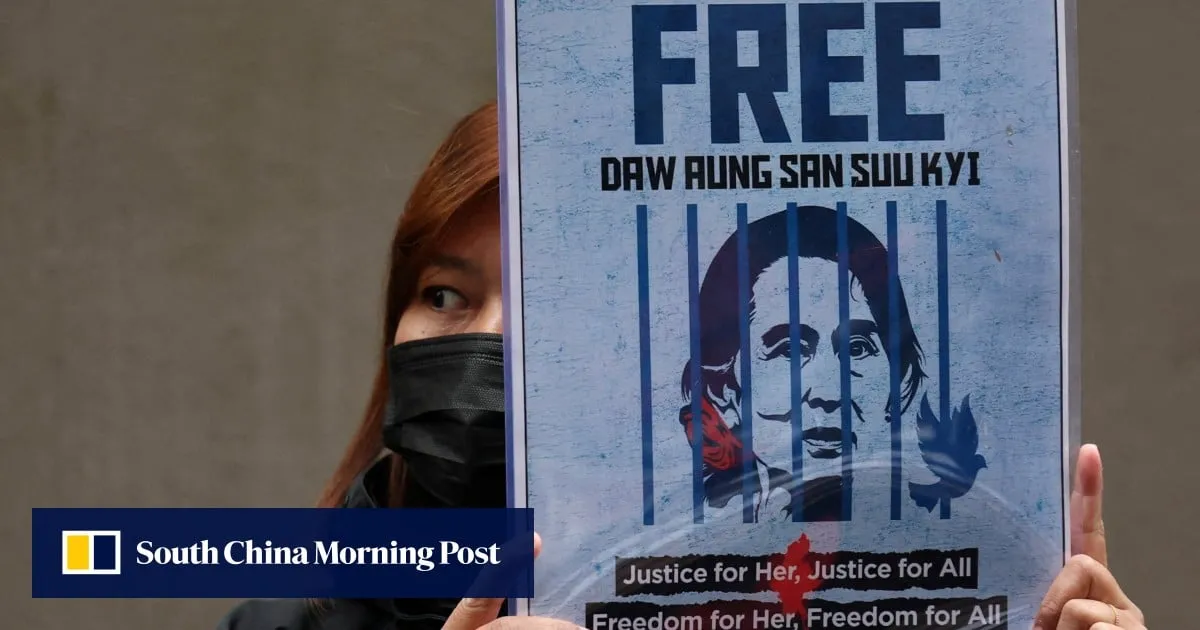
Myanmar’s military-backed rulers have shaved time off Aung San Suu Kyi’s prison sentence and freed thousands of detainees, but analysts say the apparent goodwill gestures tell a story of a regime growing bolder, not more merciful.The government last week announced an amnesty for 4,335 prisoners, its third in six months, and reduced by a sixth the 27-year sentence of the 80-year-old Nobel Peace Prize laureate Suu Kyi, who has not been seen in public since her criminal trials ended in December 2022.Among those freed was Win Myint, the former president arrested alongside Suu Kyi in the February 2021 Coup that brought Senior General Min Aung Hlaing to power.
SRCSouth China Morning Post
LANGEN
LEANCenter-Right
WORDS108
ENT6
WED · 2026-04-22 · 05:25 GMTBRIEF NSR-2026-0422-71446
NSR-2026-0422-71446Analysis·EN·Political Strategy
Why Myanmar’s token amnesties are ‘no cause for celebration’
Myanmar's military-backed rulers have announced an amnesty for 4,335 prisoners, reducing Aung San Suu Kyi's sentence by a sixth to 18 years from its original 27-year term. The amnesty is the third in six months and comes as Suu Kyi has not been seen in public since her criminal trials ended in December 2022.
Maria SiowSouth China Morning PostFiled 2026-04-22 · 05:25 GMTLean · Center-RightRead · 1 min
South China Morning PostFIG 01
Reading time
1min
Word count
108words
Sources cited
1cited
Entities identified
6entities
Quality score
100%
§ 01
Briefing Summary
AI-generatedNEWSAR · AI
Myanmar's military-backed rulers have announced an amnesty for 4,335 prisoners, reducing Aung San Suu Kyi's sentence by a sixth to 18 years from its original 27-year term. The amnesty is the third in six months and comes as Suu Kyi has not been seen in public since her criminal trials ended in December 2022. Former president Win Myint was also among those freed, having been arrested alongside Suu Kyi in the February 2021 coup that brought Senior General Min Aung Hlaing to power. The amnesty is part of a series of moves by the regime aimed at appearing more lenient. Analysts say these gestures suggest the regime is growing bolder rather than becoming more merciful. The move has been met with skepticism from some, who view it as an attempt to improve its international image.
Confidence 0.85Sources 1Claims 5Entities 6
§ 02
Article analysis
Model · rule-basedFraming
Political Strategy
Human Rights
Tone
Measured
AI-assessed
CalmNeutralAlarmist
Factuality
0.70 / 1.00
Factual
LowHigh
Sources cited
1
Limited
FewMany
§ 03
Key claims
5 extracted01
Suu Kyi has not been seen in public since December 2022.
factualnull
Confidence
1.00
02
Win Myint, the former president, was among those freed.
factualnull
Confidence
1.00
03
The government reduced Aung San Suu Kyi's sentence by a sixth.
factualnull
Confidence
1.00
04
Myanmar's government announced an amnesty for 4,335 prisoners.
factualnull
Confidence
1.00
05
Analysts say the gestures tell a story of a regime growing bolder, not more merciful.
quoteanalysts
Confidence
0.90
§ 04
Full report
1 min read · 108 words§ 05
Entities
6 identifiedKey playerOppositionContextPositiveNeutralNegative
People3
Organizations1
Locations1
§ 06
Keywords & salience
9 termsaung san suu kyi
0.90
myanmar military
0.80
regime
0.80
coup
0.70
amnesty
0.70
nobel peace prize
0.60
prison sentence
0.60
detainees
0.50
goodwill gestures
0.40
§ 07
Topic connections
Interactive graph No topic relationship data available yet. This graph will appear once topic relationships have been computed.