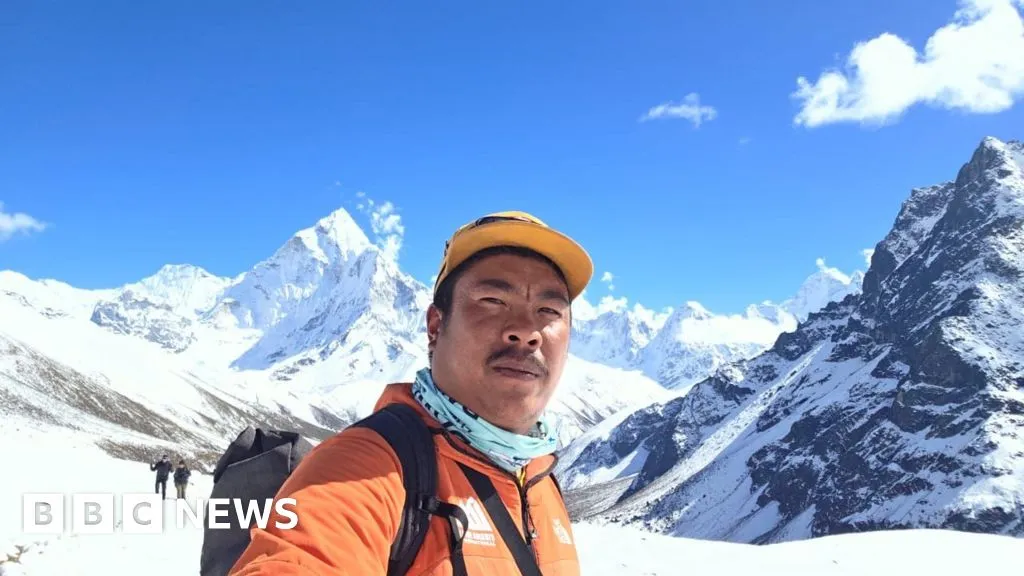
An early flood warning system designed to save the lives of thousands of people in the Everest region may no longer be working, Nepalese officials have admitted to the BBC, after it was allowed to fall into a state of disrepair.The disclosure came after villagers in the local Sherpa communities told the BBC no inspection of the UN-supported project had been carried out for many years after the dangerous Imja glacial lake was last drained in 2016.Since then, no maintenance has been undertaken, which means siren towers have been left to rust, while some have even had their batteries stolen, according to locals.On top of this, the satellite data reception transmitting the lake's water level - which can then be used to send out mobile phone alerts to locals - has been unreliable, officials at Nepal's Department of Hydrology and Meteorology (DHM) told the BBC.The Imja lake, which sits at a little over 5,000m (16,400ft) above sea level, has not burst since it was drained a decade ago - at which point, it was almost 150m deep in places.Back then, the depth of the lake was reduced by about 3.5m as part of a $3.5m risk reduction project, which included the early warning system.But scientists warn global warming-induced fast melting glaciers are causing many Himalayan glacial lakes to expand dangerously - meaning they can then burst out and sweep away downstream settlements, trekking routes and bridges.Jangbu SherpaLocals like Jangbu Sherpa in the Chhukung village say they were told officials would inspect the siren system every year but that has not happened
SRCBBC News - World
LANGEN
LEANCenter
WORDS261
ENT9
FRI · 2026-04-24 · 23:28 GMTBRIEF NSR-2026-0425-71479
NSR-2026-0425-71479News Report·EN·Environmental
Thousands at risk after multi-million dollar Everest flood warning system left to rust
A multi-million dollar early flood warning system in Nepal's Everest region, designed to protect thousands, is reportedly in disrepair. Nepalese officials have admitted to the BBC that the UN-supported project, installed after the Imja glacial lake was last drained in 2016, has not been maintained.
BBC News - WorldFiled 2026-04-24 · 23:28 GMTLean · CenterRead · 2 min
BBC News - WorldFIG 01
Reading time
2min
Word count
261words
Sources cited
3cited
Entities identified
9entities
Quality score
100%
§ 01
Briefing Summary
AI-generatedNEWSAR · AI
A multi-million dollar early flood warning system in Nepal's Everest region, designed to protect thousands, is reportedly in disrepair. Nepalese officials have admitted to the BBC that the UN-supported project, installed after the Imja glacial lake was last drained in 2016, has not been maintained. Siren towers are rusting, batteries have been stolen, and satellite data transmission for mobile alerts is unreliable, according to local villagers and officials. The Imja lake, a significant flood risk due to melting glaciers exacerbated by climate change, was previously reduced in depth as part of a $3.5 million risk reduction initiative. Locals report that promised annual inspections of the system have not occurred, leaving communities vulnerable to potential glacial lake outburst floods.
Confidence 0.90Sources 3Claims 5Entities 9
§ 02
Article analysis
Model · rule-basedFraming
Environmental
Human Interest
Tone
Mixed Tone
AI-assessed
CalmNeutralAlarmist
Factuality
0.80 / 1.00
Factual
LowHigh
Sources cited
3
Well sourced
FewMany
§ 03
Key claims
5 extracted01
Global warming-induced fast melting glaciers are causing many Himalayan glacial lakes to expand dangerously.
factualscientists
Confidence
0.90
02
An early flood warning system in the Everest region may no longer be working.
factualNepalese officials
Confidence
0.90
03
The satellite data reception transmitting the lake's water level has been unreliable.
factualofficials at Nepal's department of hydrology and meteorology (DHM)
Confidence
0.80
04
No inspection of the UN-supported project had been carried out for many years after the Imja glacial lake was last drained in 2016.
factualvillagers in the local Sherpa communities
Confidence
0.80
05
Siren towers have been left to rust, while some have even had their batteries stolen.
factuallocals
Confidence
0.70
§ 04
Full report
2 min read · 261 words§ 05
Entities
9 identifiedKey playerOppositionContextPositiveNeutralNegative
Organizations3
§ 06
Keywords & salience
8 termseverest flood warning system
1.00
glacial lake
0.90
climate change
0.80
risk reduction
0.70
disrepair
0.60
nepal
0.50
hydrology
0.40
meteorology
0.40
§ 07
Topic connections
Interactive graph Network visualization showing 4 related topics
View Full Graph Person Organization Location Event|Click node to navigate|Edge numbers = shared articles