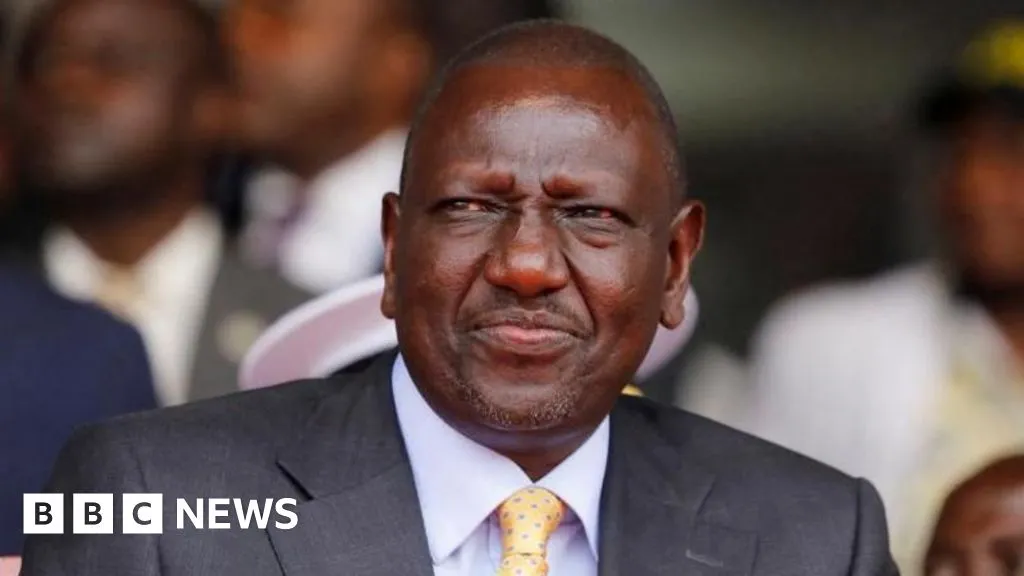
Kenyan President William Ruto has faced a social media backlash after publicly suggesting that Nigerian-accented English was incomprehensible and required a translator. Addressing Kenyans living in Italy on Monday, Ruto said: "If you listen to a Nigerian speaking, you don't know what they are saying - you need a translator," while boasting that Kenyans spoke "some of the best English in the world". His remarks drew fierce condemnation from Nigerians and other Africans online who accused the Kenyan leader of demeaning a fellow African nation. "English is a colonial language, not a measure of intelligence, capability, or national progress," wrote Hopewell Chin'ono, a Zimbabwean journalist. As former British colonies, both Kenya and Nigeria share English as an official language, but each country has developed distinct spoken varieties with different phonetic structures.These differences reflect the influence of indigenous languages - Nigeria has more than 500 languages which shape its cadence and intonation, while Kenya's Bantu, Nilotic and Cushitic mix give rise to its own accents.But in his address to the diaspora gathering, Ruto said Kenya's education system produced strong English proficiency and that it was difficult to understand Nigerians when they spoke English."Our education is good. Our English is good. We speak some of the best English in the world. If you listen to a Nigerian speaking, you don't know what they are saying. You need a translator even when they are speaking English," he said, sparking laughter in the room.
SRCBBC News - World
LANGEN
LEANCenter
WORDS240
ENT8
FRI · 2026-04-24 · 09:01 GMTBRIEF NSR-2026-0424-71494
NSR-2026-0424-71494News Report·EN·Diplomatic
Kenyan leader sparks uproar after mocking Nigerians' spoken English
Kenyan President William Ruto has ignited a social media uproar following remarks made during an address to Kenyans in Italy. Ruto suggested that Nigerian-accented English was difficult to understand, implying a need for a translator, while asserting Kenyans spoke some of the best English globally.
BBC News - WorldFiled 2026-04-24 · 09:01 GMTLean · CenterRead · 1 min
BBC News - WorldFIG 01
Reading time
1min
Word count
240words
Sources cited
1cited
Entities identified
8entities
Quality score
100%
§ 01
Briefing Summary
AI-generatedNEWSAR · AI
Kenyan President William Ruto has ignited a social media uproar following remarks made during an address to Kenyans in Italy. Ruto suggested that Nigerian-accented English was difficult to understand, implying a need for a translator, while asserting Kenyans spoke some of the best English globally. His comments, made on Monday, were met with swift condemnation from Nigerians and other Africans online, who accused him of demeaning a fellow African nation. Critics highlighted that English, as a colonial language, should not be used as a benchmark for intelligence or progress. Both Kenya and Nigeria, former British colonies, officially use English, but distinct accents have emerged due to the influence of diverse indigenous languages in each country.
Confidence 0.90Sources 1Claims 5Entities 8
§ 02
Article analysis
Model · rule-basedFraming
Diplomatic
Human Interest
Tone
Measured
AI-assessed
CalmNeutralAlarmist
Factuality
0.70 / 1.00
Factual
LowHigh
Sources cited
1
Limited
FewMany
§ 03
Key claims
5 extracted01
Nigeria has more than 500 languages which shape its cadence and intonation.
factualnull
Confidence
1.00
02
English is an official language in both Kenya and Nigeria.
factualnull
Confidence
1.00
03
Hopewell Chin'ono, a Zimbabwean journalist, criticized Ruto's remarks.
factualnull
Confidence
1.00
04
Ruto said Kenya's education system produced strong English proficiency.
quotenull
Confidence
1.00
05
Kenyan President William Ruto suggested Nigerian-accented English was incomprehensible and required a translator.
factualnull
Confidence
1.00
§ 04
Full report
1 min read · 240 words§ 05
Entities
8 identifiedKey playerOppositionContextPositiveNeutralNegative
§ 06
Keywords & salience
9 termsspoken english
1.00
william ruto
0.90
nigerian english
0.80
kenyan english
0.80
language proficiency
0.70
colonial language
0.60
social media backlash
0.50
linguistic diversity
0.50
diplomatic incident
0.40
§ 07
Topic connections
Interactive graph Network visualization showing 11 related topics
View Full Graph Person Organization Location Event|Click node to navigate|Edge numbers = shared articles