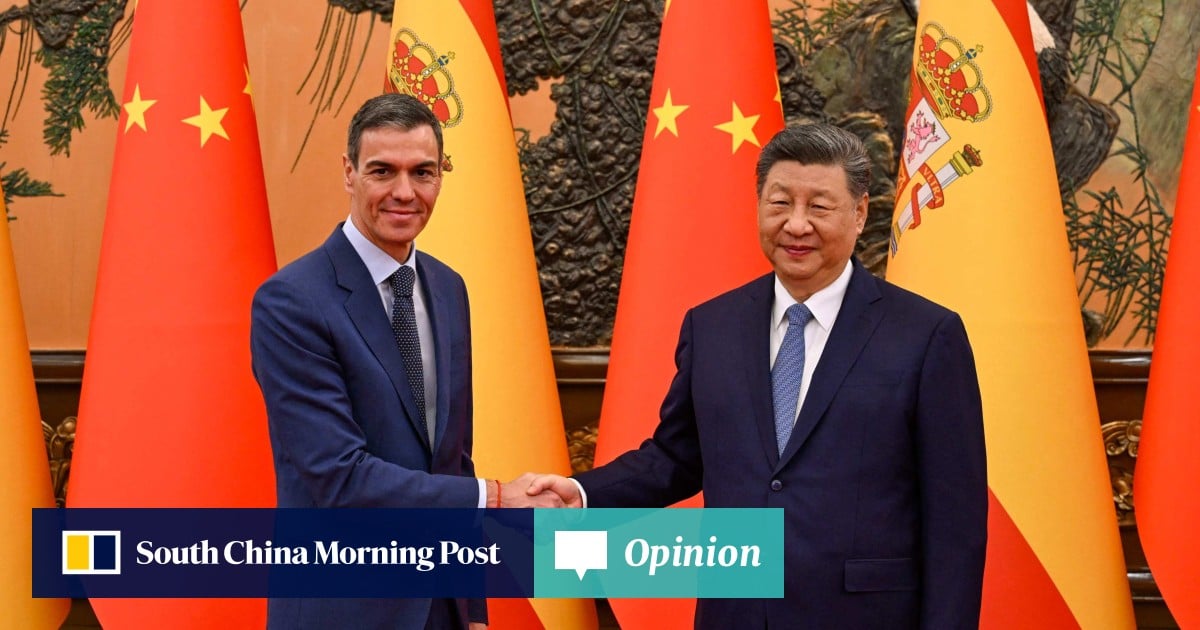
Sebastian Contin Trillo-Figueroa is a geopolitics analyst with a specialisation in EU-Asia relations, who serves as a consultant for public- and private-sector organisations, in particular think tanks.Every time a European leader lands in Beijing with a business delegation, the same speculation follows: is the Atlantic consensus beginning to crack? Is part of Europe drifting towards China and away from Washington?In Spain’s case, the drama expires on contact with the record. Prime Minister Pedro Sanchez’s four visits to Beijing in four years have not produced a European pivot, a strategic vision or a narrower trade imbalance. They have produced market access for agricultural goods.Call it the “fruit bowl” theory of international relations. March 2023 brought Spanish almonds and persimmons to China. September 2024 added eight all-encompassing agreements designed to sound larger than they were. April 2025 unlocked pork and cherries. This month delivered pistachios, poultry, dried figs and more pork. These are not incidental gains attached to a larger deal; they are the deal, with the value of a grocery basket.
SRCSouth China Morning Post
LANGEN
LEANCenter-Right
WORDS170
ENT8
SAT · 2026-04-25 · 12:30 GMTBRIEF NSR-2026-0425-71594
NSR-2026-0425-71594Analysis·EN·Political Strategy
Why Spain’s ‘fruit bowl’ diplomacy with China comes up rather empty
Spanish Prime Minister Pedro Sanchez has made four visits to Beijing in four years, accompanied by business delegations, in an effort to strengthen ties with China. These diplomatic efforts, however, have primarily resulted in market access for Spanish agricultural products, a strategy dubbed the "fruit bowl" theory of international relations.
Sebastian Contin Trillo-FigueroaSouth China Morning PostFiled 2026-04-25 · 12:30 GMTLean · Center-RightRead · 1 min
South China Morning PostFIG 01
Reading time
1min
Word count
170words
Sources cited
1cited
Entities identified
8entities
Quality score
100%
§ 01
Briefing Summary
AI-generatedNEWSAR · AI
Spanish Prime Minister Pedro Sanchez has made four visits to Beijing in four years, accompanied by business delegations, in an effort to strengthen ties with China. These diplomatic efforts, however, have primarily resulted in market access for Spanish agricultural products, a strategy dubbed the "fruit bowl" theory of international relations. Agreements have been secured for various goods, including almonds, persimmons, pork, cherries, pistachios, poultry, and dried figs, with these agricultural exports constituting the core of the trade deals. Despite speculation about a potential European pivot towards China, Spain's engagement has not yielded a broader strategic vision or a significant reduction in the trade imbalance. The focus has remained on securing access for specific food items, rather than larger geopolitical or economic shifts.
Confidence 0.90Sources 1Claims 5Entities 8
§ 02
Article analysis
Model · rule-basedFraming
Political Strategy
Economic Impact
Tone
Measured
AI-assessed
CalmNeutralAlarmist
Factuality
0.60 / 1.00
Mixed
LowHigh
Sources cited
1
Limited
FewMany
§ 03
Key claims
5 extracted01
April 2025 unlocked pork and cherries.
factualSebastian Contin Trillo-Figueroa
Confidence
1.00
02
September 2024 added eight all-encompassing agreements.
factualSebastian Contin Trillo-Figueroa
Confidence
1.00
03
March 2023 brought Spanish almonds and persimmons to China.
factualSebastian Contin Trillo-Figueroa
Confidence
1.00
04
Prime Minister Pedro Sanchez has visited Beijing four times in four years.
factualSebastian Contin Trillo-Figueroa
Confidence
1.00
05
Spain's visits to Beijing have primarily resulted in market access for agricultural goods.
factualSebastian Contin Trillo-Figueroa
Confidence
0.90
§ 04
Full report
1 min read · 170 words§ 05
Entities
8 identifiedKey playerOppositionContext
§ 06
Keywords & salience
9 termsfruit bowl diplomacy
1.00
spain china relations
0.90
geopolitics
0.80
eu-asia relations
0.70
market access
0.60
trade imbalance
0.60
agricultural goods
0.50
pedro sanchez
0.40
atlantic consensus
0.40
§ 07
Topic connections
Interactive graph Network visualization showing 51 related topics
View Full Graph Person Organization Location Event|Click node to navigate|Edge numbers = shared articles