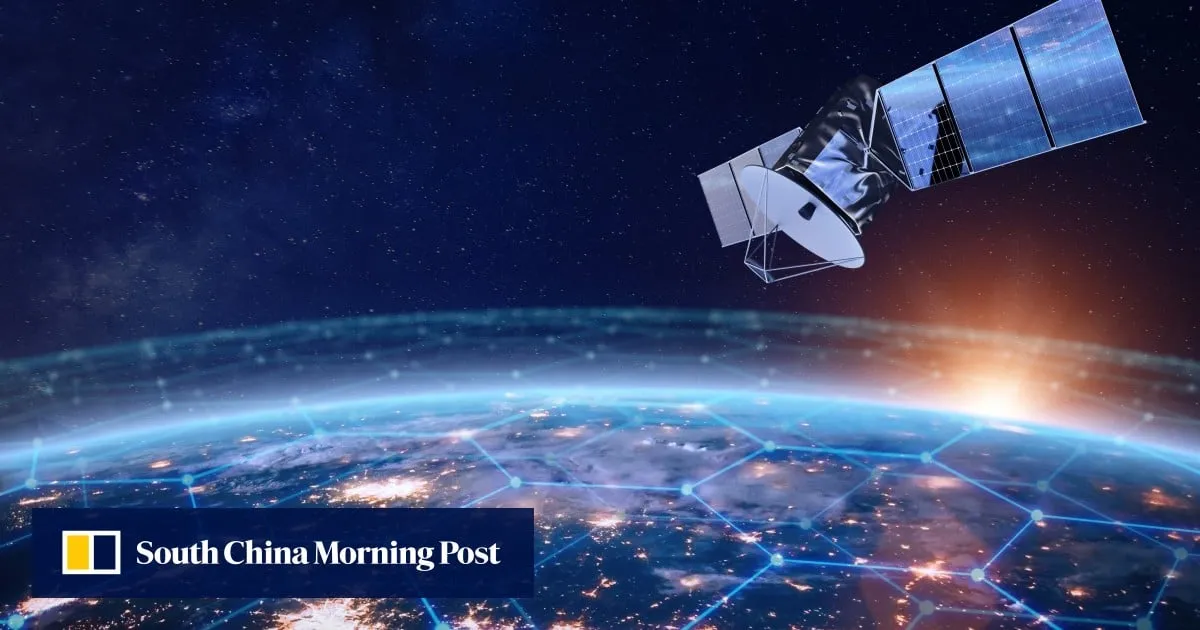
With bad loans and repayment collateral in focus, Chinese banks are increasingly using satellites to evaluate their clients’ terrestrial assets, mounting a hi-tech offensive to safeguard against rising credit risks.China-merchants-bank" class="entity-link entity-organization" data-entity-id="120318" data-entity-type="organization">China Merchants Bank and Shanghai Pudong Development Bank started making use of satellites this year, following a 2022 launch by Ping An Bank and a 2020 move into satellite remote-sensing technology by Zhejiang E-Commerce Bank.Furthering the trend, the China" class="entity-link entity-organization" data-entity-id="100427" data-entity-type="organization">Postal Savings Bank of China and the China-headquartered Chang Guang Satellite Technology sent a jointly developed satellite into space this month, the Economic Observer reported.Access to satellite-aided remote sensing – an outgrowth of China’s space technology since its commercialisation kicked off in 2014 – helps banks track assets such as property and vehicles for which they intend to lend money or have already made outstanding loans, analysts said.High-resolution satellite pictures help gauge the status of loan collateral to ensure it remains viable for repossession in case of a loan default, they explained.“The goal is to reduce non-performing loans and assess better the rural and small business market when traditional credit records may not be complete,” said Liang Yan, a professor of economics at Willamette University in the US.“My understanding is that some banks use proprietary satellites and remote sensing to monitor borrower-collateral assets – such as agricultural land, construction progress on real estate projects and industrial activity – to assess and control credit risks of their loans,” Liang said.03:54The race for the moon’s south pole: can China beat Nasa’s 2028 deadline?The race for the moon’s south pole: can China beat Nasa’s 2028 deadline?The shift towards space-based surveillance comes as some of China’s largest banks continue to grapple with high levels of bad assets in their property-loan portfolios amid an ongoing real estate slump.Non-performing loans in China stood at 1.5 per cent at the end of last year. While significantly lower than the record high of 12.4 per cent seen in 2005, the figure has crept up from a record low of 0.9 per cent in 2011, according to economic data provider CEIC Data.Satellites can seamlessly track ships to ensure they are navigating safely, monitor trucks on highways and check the condition of private jets, said Chen Zhiwu, chair professor of finance at the University of Hong Kong.Some banks in the United States are already using that imagery, given the relatively large number of satellites in use there, Chen noted.Further ReadingLenders scrutinise images to assess damage, gauge credit risks and detect fraud, according to Chris Nichols, president of institutional banking at SouthState Securities.“Private companies can get your resolution down to about 2 feet [0.6 metres] a pixel, and can cover a location two times per day,” he said in a 2020 article discussing the use of satellite imagery in American banking.If you send people there, it takes a lot of time and costs moreChinese banks are following a lead from domestic insurance companies, which have used satellites since the late 2010s, said Zhao Xijun, a finance professor at Renmin University.That imagery helps assess storm damage – such as to crops – and settle insurance claims, whereas “if you send people there, it takes a lot of time and costs more”, Zhao said.Sichuan province in southwestern China has emerged as a hotspot for satellite activity because of its numerous mountains and frequent natural disasters, he said.That model is now being adapted by lenders, particularly in rural finance.In 2020, Zhejiang E-Commerce Bank (MYbank) launched its satellite remote-sensing risk management system, Tomtit, which uses artificial intelligence to analyse satellite imagery and assess crop conditions, the company said in a statement.The system can identify more than 20 types of crops, allowing the bank to extend credit to farmers who may lack formal collateral or credit histories.As of the end of 2025, MYbank had used Tomtit to provide collateral-free loans to more than 13 million farmers, with total credit lines approaching 350 billion yuan (US$51 billion), the statement said.MYbank is backed by Ant Group, the fintech affiliate of Alibaba Group Holding, owner of the South China Morning Post.About 78 per cent of borrowers were smallholder farmers with less than 10 mu (1.65 acres) of land, underscoring the system’s role in expanding access to finance.However, the technology has limitations. Assets parked underground remain hard to see, and highly mobile assets can be tough to track, Zhao said, adding that there is also a palpable cost for procuring satellite time and analysing the resulting data.Despite these hurdles, experts see gains in efficiency. Loans are being approved faster because of satellite-driven data, Liang said, noting that the cost of issuing a loan has plummeted from hundreds of yuan to just 2.3 yuan by utilising remote sensing.Over time, satellite costs are expected to go down while sensing technology becomes increasingly precise, Zhao forecast.
SRCSouth China Morning Post
LANGEN
LEANCenter-Right
WORDS790
ENT12
SAT · 2026-04-25 · 02:00 GMTBRIEF NSR-2026-0425-71626
NSR-2026-0425-71626News Report·EN·Economic Impact
Default in our stars: China’s banks use satellites to track assets with sky-high scrutiny
Chinese banks are increasingly using satellite technology to monitor client assets and mitigate rising credit risks, particularly concerning bad loans and collateral. Institutions like China Merchants Bank, Shanghai Pudong Development Bank, Ping An Bank, and Zhejiang E-Commerce Bank are employing satellite remote-sensing capabilities.
Ralph JenningsSouth China Morning PostFiled 2026-04-25 · 02:00 GMTLean · Center-RightRead · 4 min
South China Morning PostFIG 01
Reading time
4min
Word count
790words
Sources cited
5cited
Entities identified
12entities
Quality score
100%
§ 01
Briefing Summary
AI-generatedNEWSAR · AI
Chinese banks are increasingly using satellite technology to monitor client assets and mitigate rising credit risks, particularly concerning bad loans and collateral. Institutions like China Merchants Bank, Shanghai Pudong Development Bank, Ping An Bank, and Zhejiang E-Commerce Bank are employing satellite remote-sensing capabilities. This trend is further supported by joint satellite launches, such as one by the Postal Savings Bank of China and Chang Guang Satellite Technology. The technology allows banks to assess the status of collateral like property and vehicles, monitor agricultural land, construction progress, and industrial activity. This high-tech approach aims to reduce non-performing loans and improve risk assessment, especially in markets with incomplete traditional credit records, amidst challenges in the property sector.
Confidence 0.90Sources 5Claims 5Entities 12
§ 02
Article analysis
Model · rule-basedFraming
Economic Impact
Technology
Tone
Measured
AI-assessed
CalmNeutralAlarmist
Factuality
0.80 / 1.00
Factual
LowHigh
Sources cited
5
Well sourced
FewMany
§ 03
Key claims
5 extracted01
Non-performing loans in China stood at 1.5 per cent at the end of last year.
statisticCEIC Data
Confidence
1.00
02
The goal is to reduce non-performing loans and assess better the rural and small business market.
quoteLiang Yan, professor of economics at Willamette University
Confidence
0.90
03
Chinese banks are increasingly using satellites to evaluate clients’ assets to safeguard against rising credit risks.
factual
Confidence
0.90
04
Some banks use proprietary satellites and remote sensing to monitor borrower-collateral assets.
quoteLiang Yan, professor of economics at Willamette University
Confidence
0.80
05
Satellites can seamlessly track ships, monitor trucks, and check the condition of private jets.
quoteChen Zhiwu, chair professor of finance at the University of Hong Kong
Confidence
0.70
§ 04
Full report
4 min read · 790 words§ 05
Entities
12 identifiedKey playerOppositionContextPositiveNeutralNegative
Organizations8
CM
China Merchants Bank
CompanyKey Player
70
SP
Shanghai Pudong Development Bank
CompanyKey Player
70
PS
Postal Savings Bank of China
CompanyKey Player
70
ZE
Zhejiang E-Commerce Bank
organizationKey Player
60
PA
Ping An Bank
organizationKey Player
60
CG
Chang Guang Satellite Technology
organizationKey Player
60
UO
University of Hong Kong
Educational
40
WU
Willamette University
Educational
40
§ 06
Keywords & salience
8 termssatellite remote sensing
1.00
credit risk assessment
0.90
non-performing loans
0.80
asset tracking
0.70
china's banks
0.60
loan collateral
0.50
real estate slump
0.40
space technology
0.40
§ 07
Topic connections
Interactive graph Network visualization showing 51 related topics
View Full Graph Person Organization Location Event|Click node to navigate|Edge numbers = shared articles