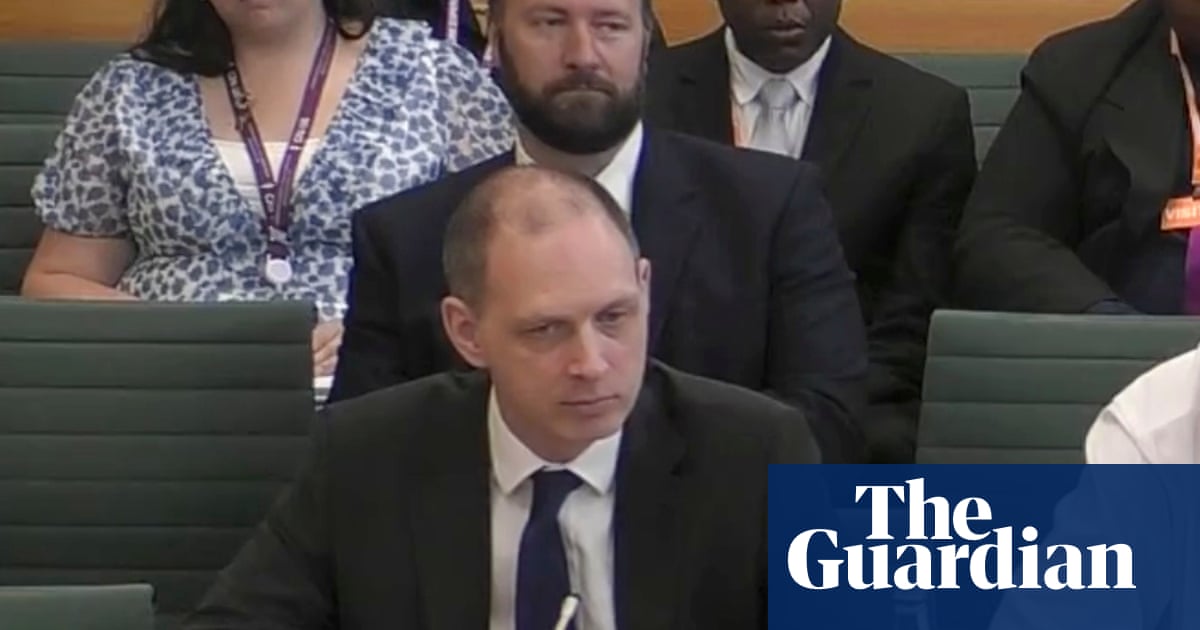
A top Foreign Office security official who played a key role in granting Peter Mandelson’s vetting clearance “felt pressure to deliver a rapid outcome” because of contacts from Downing Street, MPs have been told.In testimony relayed to parliament via the Foreign Office (FCDO), Ian Collard said he had not seen the assessment summary produced by the vetting agency when he gave an oral briefing to Olly Robbins, the department’s former permanent secretary. Instead, Collard had received an oral briefing from a member of the FCDO’s personnel security team.Robbins was dismissed from his position by Keir Starmer on 16 April after the Guardian revealed the FCDO gave Mandelson “developed vetting” clearance despite United Kingdom Security Vetting (UKSV) recommending it not be granted in late January 2025. The clearance was necessary for Mandelson to take up his announced role as British ambassador to Washington.Collard has claimed that it was only after Mandelson was removed from his post in September 2025 that he saw the UKSV assessment summary. He said the summary document featured tickboxes noting Mandelson was a “high concern” and vetting officers recommended “clearance denied”, as well as a statement from UKSV that he was a “very borderline case”.Collard’s answers to questions from MPs on the foreign affairs committee, published on Monday evening, add a new name to the list of officials who were aware Mandelson had not been recommended for clearance by UKSV. He said, before speaking to Robbins, he discussed it with his line manager, the chief operating officer in the FCDO, then Corin Robertson. Robertson is now the British ambassador to Japan.The question of whether to grant Mandelson clearance, Collard said, was the only time he had spoken with Robbins or his predecessors as permanent secretary about a specific decision to grant vetting.The FCDO described the decision to go against the recommendations made by UKSV as “unusual but not exceptional”, but this includes instances where the department decided to block security clearance despite UKSV concluding it would be appropriate.While Collard said he “felt pressure” to rapidly conclude Mandelson’s vetting process, he said that this did not affect the “professional judgment that was reached by himself” or members of the personnel security team he led.But it is this, among many remarkable claims in his account, that will probably attract the most attention. Since Robbins gave oral testimony to the foreign affairs committee last week, accounts have differed between the Foreign Office and Downing Street as to whether there had been pressure on the department to get Mandelson in post as soon as possible.Robbins told MPs: “Throughout January, honestly, my office and the foreign secretary’s office were under constant pressure.” He characterised the questions from Downing Street as being about “when” Mandelson would be in post, not “whether” he might.At prime minister’s questions last Wednesday, Starmer sought to use Robbins’s testimony to dismiss claims Downing Street had put pressure on the FCDO to get Mandelson to Washington as soon as possible. Starmer said: “No pressure existed whatsoever in relation to this case.”Starmer faces a vote on a parliamentary inquiry into whether he misled MPs. His comment that “no pressure existed whatsoever” is among the comments that opposition MPs claim are misleading, alongside a statement that “full due process” was followed.Downing Street has said the prime minister’s comment about “pressure” referred to the security vetting process, rather than the broader appointment of Mandelson. But Collard’s comment that – while it did not affect his professional judgment – he was aware of pressure to complete the vetting process rapidly will probably add to the criticism of the prime minister’s remarks.The prime minister’s former chief of staff, Morgan McSweeney, and Philip Barton, Robbins’s immediate predecessor as permanent secretary, are due to appear in front of the foreign affairs committee on Tuesday morning.They may face questions over the differing accounts as to the pressure exerted on the FCDO by Downing Street.Barton may be quizzed about his role in giving Mandelson access to the FCDO’s headquarters before the security clearance process had concluded. Collard said he was given an exemption as a member of the House of Lords and that Mandelson’s private secretary informed people that the vetting process was ongoing.
SRCThe Guardian - World News
LANGEN
LEANCenter-Left
WORDS696
MON · 2026-04-27 · 20:06 GMTBRIEF NSR-2026-0427-72077
NSR-2026-0427-72077News Report·EN·Political Strategy
Top Foreign Office official ‘felt pressure’ for ‘rapid outcome’ on Mandelson vetting
A top Foreign Office security official, Ian Collard, testified to MPs that he felt pressure for a "rapid outcome" on Peter Mandelson's vetting clearance due to Downing Street contacts. Collard stated he briefed former permanent secretary Olly Robbins orally without seeing the UK Security Vetting (UKSV) assessment, which had recommended against granting clearance for Mandelson's ambassadorial role.
Henry DyerThe Guardian - World NewsFiled 2026-04-27 · 20:06 GMTLean · Center-LeftRead · 3 min
The Guardian - World NewsFIG 01
Reading time
3min
Word count
696words
Sources cited
4cited
Entities identified
0entities
Quality score
75%
§ 01
Briefing Summary
AI-generatedNEWSAR · AI
A top Foreign Office security official, Ian Collard, testified to MPs that he felt pressure for a "rapid outcome" on Peter Mandelson's vetting clearance due to Downing Street contacts. Collard stated he briefed former permanent secretary Olly Robbins orally without seeing the UK Security Vetting (UKSV) assessment, which had recommended against granting clearance for Mandelson's ambassadorial role. Mandelson was removed from the post in September 2025, after which Collard claims he saw the UKSV summary noting "high concern" and a recommendation to "clearance denied." The Foreign Office described overriding UKSV recommendations as "unusual but not exceptional." Collard maintained this pressure did not affect his professional judgment or that of his team.
Confidence 0.90Sources 4Claims 5
§ 02
Article analysis
Model · rule-basedFraming
Political Strategy
Legal & Judicial
Tone
Measured
AI-assessed
CalmNeutralAlarmist
Factuality
0.85 / 1.00
Factual
LowHigh
Sources cited
4
Well sourced
FewMany
§ 03
Key claims
5 extracted01
Keir Starmer dismissed Olly Robbins from his position as permanent secretary on 16 April.
factual
Confidence
1.00
02
United Kingdom Security Vetting (UKSV) recommended that Peter Mandelson not be granted developed vetting clearance in late January 2025.
factualUKSV
Confidence
1.00
03
The UKSV assessment summary labeled Mandelson a 'high concern' and a 'very borderline case' with a recommendation of 'clearance denied'.
factualIan Collard
Confidence
0.95
04
The FCDO described the decision to go against UKSV recommendations as 'unusual but not exceptional'.
quoteFCDO
Confidence
0.90
05
Ian Collard felt pressure from Downing Street to deliver a rapid outcome regarding Peter Mandelson’s security vetting.
quoteIan Collard
Confidence
0.90
§ 04
Full report
3 min read · 696 words§ 06
Keywords & salience
9 termsvetting clearance
1.00
peter mandelson
0.90
foreign office
0.80
downing street
0.70
security official
0.60
uk security vetting
0.50
rapid outcome
0.50
parliament
0.40
ambassador to washington
0.40
§ 07
Topic connections
Interactive graph No topic relationship data available yet. This graph will appear once topic relationships have been computed.