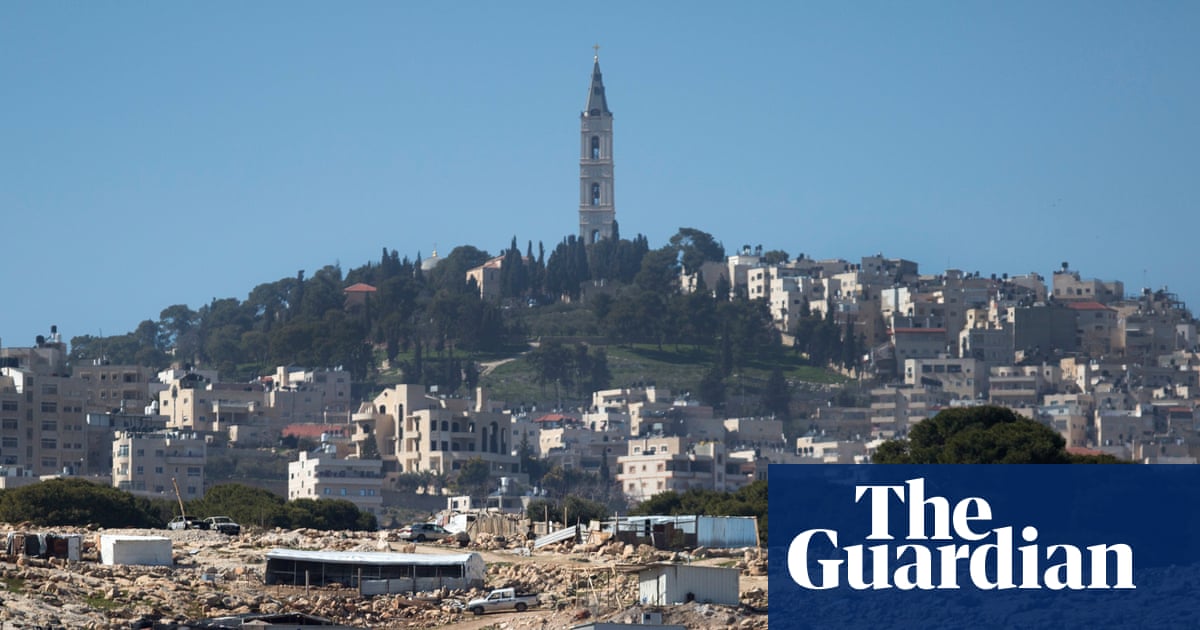
Israel plans to start work next month on a bypass road that will close off the heart of the occupied West Bank to Palestinians and cement the de facto annexation of an area critical for the viability of a future Palestinian state.The road is a key part of the blueprint for a vast illegal new settlement in the E1 area east of Jerusalem, which would fragment the occupied West Bank. The Israeli finance minister, Bezalel Smotrich, said the plans were intended to “bury the idea of a Palestinian state”.Designed as a sealed transit corridor for Palestinian vehicles, the bypass will provide Israel with a pretext to bar Palestinians from existing roads in the planned settlement area, where only Israeli vehicles will be permitted.The bypass was nicknamed “sovereignty road” when initial construction was approved in 2020 by the then defence minister, Naftali Bennett, who celebrated the project’s role as a tool of annexation. “We’re applying sovereignty in deeds, not words,” he said at the time.The current defence minister, Israel-katz" class="entity-link entity-person" data-entity-id="4249" data-entity-type="person">Israel Katz, said last year that road construction and settlement expansion would strengthen Israel’s “hold” on the occupied West Bank.The E1 area covers about 3% of the occupied West Bank, a triangle of land between Jerusalem, Bethlehem and Ramallah that is critical for the development and prosperity of a future Palestinian state.Opponents call the bypass “apartheid road” because it forces Palestinians and Israelis into separate transport systems.It will also be an instrument for ethnic cleansing of remaining Palestinian communities in the area said, Hagit Ofran, a settlement expert at the Israeli advocacy group Peace Now. “They want the land, they don’t want the people,” she said.If the new Israeli settlement is built, it will in effect sever the north and south of the occupied West Bank for Palestinians, and further isolate occupied East Jerusalem from other Palestinian communities.MapBuilding a road for Palestinians to transit across this area would not offset the impact of annexing the land itself for Israeli settlers, Ofran said.Notice of the impending start of construction was given to Palestinians affected by the road, who had petitioned Israeli courts to halt the bypass. Their lawyer, Neta Amar-Sheif, got a letter last week giving 45 days to object to the work.The route planned for the road passes over houses in the community of As Saraiya, which are slated for demolition. Other communities, including Elazariya, Abu Dis and Sawahra, will be isolated within the Israeli settlement bloc.“They can theoretically decide to put a checkpoint in Elazariya and allow residents’ cars permits for the area, but you cannot sustain a community life if you are in an enclave of Israelis,” Ofran said.“What is likely to happen is those communities will be disconnected from their surroundings and either immediately evicted or pushed out.”Construction of the road is moving ahead as Israel prepares to start building more than 3,000 homes in the E1 area, neighbouring the existing settlement of Ma’ale Adumim.Anyone travelling from the E1 area into Israel now must go through a checkpoint to reach Jerusalem. Once Palestinians are excluded from roads here, the checkpoint will be removed, allowing for unbroken travel into Jerusalem for Israelis.“They can start the construction without paving the road, they can even build E1 without the road but it’s going to be very hard on the traffic,” Ofran said. “If you really want to attract people, then you need the road. It’s part of the whole idea.”When Israel gave formal planning approval to the E1 project last year more than 20 countries including the UK, France, Canada and Australia condemned that decision as an unacceptable violation of international law that risked fuelling violence.The UN’s international court of justice in 2024 ruled that Israel’s occupation of Palestinian territories was illegal and in a sweeping advisory opinion ordered Israel to end it “as rapidly as possible” and make full reparations.Since then, however, the Israeli government has pursued an aggressive agenda of settlement expansion across the West Bank, with little domestic opposition from any mainstream political party.
SRCThe Guardian - World News
LANGEN
LEANCenter-Left
WORDS664
ENT11
TUE · 2026-01-13 · 09:37 GMTBRIEF NSR-2026-0113-7216
NSR-2026-0113-7216News Report·EN·Political Strategy
Israel poised to start construction of bypass through heart of West Bank
Israel is set to begin construction next month on a bypass road in the occupied West Bank, a project critics say will further isolate Palestinian communities and facilitate the expansion of Israeli settlements. The road, located in the E1 area east of Jerusalem, is intended to create a transit corridor for Palestinians, while allowing Israel to restrict Palestinian access to existing roads in the area.
Emma Graham-HarrisonThe Guardian - World NewsFiled 2026-01-13 · 09:37 GMTLean · Center-LeftRead · 3 min
The Guardian - World NewsFIG 01
Reading time
3min
Word count
664words
Sources cited
5cited
Entities identified
11entities
Quality score
100%
§ 01
Briefing Summary
AI-generatedNEWSAR · AI
Israel is set to begin construction next month on a bypass road in the occupied West Bank, a project critics say will further isolate Palestinian communities and facilitate the expansion of Israeli settlements. The road, located in the E1 area east of Jerusalem, is intended to create a transit corridor for Palestinians, while allowing Israel to restrict Palestinian access to existing roads in the area. Israeli officials have stated the project aims to strengthen Israel's control over the West Bank and undermine the possibility of a future Palestinian state. Opponents argue the bypass will divide the West Bank, further isolate East Jerusalem, and lead to the displacement of Palestinian communities, including the demolition of homes in As Saraiya. Affected Palestinians have been given 45 days to object to the construction.
Confidence 0.90Sources 5Claims 5Entities 11
§ 02
Article analysis
Model · rule-basedFraming
Political Strategy
Human Rights
Tone
Mixed Tone
AI-assessed
CalmNeutralAlarmist
Factuality
0.70 / 1.00
Factual
LowHigh
Sources cited
5
Well sourced
FewMany
§ 03
Key claims
5 extracted01
The E1 area covers about 3% of the occupied West Bank.
statistic
Confidence
1.00
02
The Israeli finance minister, Bezalel Smotrich, said the plans were intended to “bury the idea of a Palestinian state”.
quoteBezalel Smotrich
Confidence
1.00
03
Israel plans to start work next month on a bypass road that will close off the heart of the occupied West Bank to Palestinians.
factual
Confidence
1.00
04
The road is a key part of the blueprint for a vast illegal new settlement in the E1 area east of Jerusalem.
factual
Confidence
0.90
05
Opponents call the bypass “apartheid road” because it forces Palestinians and Israelis into separate transport systems.
factual
Confidence
0.80
§ 04
Full report
3 min read · 664 words§ 05
Entities
11 identifiedKey playerOppositionContextPositiveNeutralNegative
People4
Organizations1
§ 06
Keywords & salience
10 termswest bank
1.00
bypass road
0.90
annexation
0.80
palestinian state
0.80
settlement expansion
0.80
israeli settlements
0.70
e1 area
0.70
occupied territory
0.60
road construction
0.50
ethnic cleansing
0.50
§ 07
Topic connections
Interactive graph Network visualization showing 50 related topics
View Full Graph Person Organization Location Event|Click node to navigate|Edge numbers = shared articles