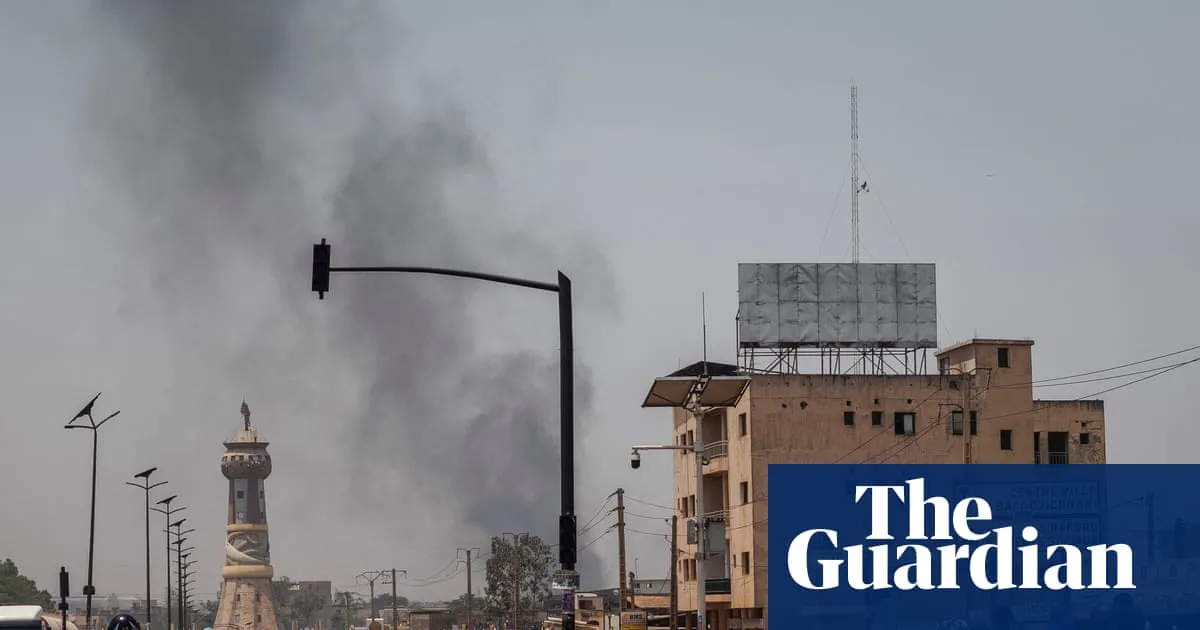
When al-Qaida-affiliated Islamic militants launched a series of attacks on military bases and raids into major towns in Mali and neighbouring Burkina Faso last summer, observers suggested they had been inspired by their counterparts in Syria, who had overthrown the regime of Bashar al-Assad and taken power six months or so earlier.Despite the tactical successes that earned them the fearful title of the “Ghost Army”, seizing swathes of territory and denying cities and the military of fuel and other essentials, the chances of Jama’at Nusrat ul-Islam wa al-Muslimin (JNIM) definitively defeating Mali’s military regime and the thousand or so Russian mercenaries hired to defend it looked poor.This week few think the regime of Assimi Goïta, a soldier who seized power in Mali in 2021, will survive very long – even if most analysts still believe it is more likely the Islamic militants and their separatist partners will seek to force concessions from authorities in the chaotic, poor and violent African country rather than seek outright control.Recent days have seen a paroxysm of violence in Mali that is shocking even for the Sahel, which stretches below the Sahara across Africa from the Atlantic to the Indian Ocean. The region has been scarred in recent years by successive coups d’état, extremism, humanitarian crises and wars. Major UN, US and French counterinsurgency and peacekeeping missions between 2012 and 2022 all failed. Few external powers have been keen to get involved again.The joint offensive launched last weekend by JNIM and its allies in Mali’s Tuareg minority community was carefully planned and coordinated. It targeted government forces and their Russian auxiliaries with ambushes, car bombs, drones and more conventional weapons, inflicting significant casualties. One was Mali’s defence minister, Sadio Camara, killed in a suicide attack on his residence in the garrison town of Kati. Another was the head of military intelligence.Other attacks hit Bamako’s international airport, while JNIM fighters and Tuareg separatists seized control of the key northern town of Kidal after soldiers fled and a force of Russian mercenaries surrendered. The defeat reversed a key symbolic victory won by the junta in Mali three years ago.Jean-Hervé Jezequel, Sahel project director for International Crisis Group, described “a major escalation in the conflict, a new stage reached by armed groups in the strategy that has driven them in recent years to attack Mali’s main urban centres”.There are deeper underlying reasons for the new surge of violence. The Sahel offers a perfect storm of factors that lead to violent extremism: grinding poverty, instability, sectarian tensions and a history of decades of conflict that has left huge numbers of weapons.Last year just under 70% of deaths from terrorism occurred in only five countries, of which three were in the Sahel.A further accelerant is the brutal counterinsurgency tactics systematically employed by armed forces and Russian mercenaries across the region, and, above all, the failure of governments to provide basic services and security.In country after country, militants have exploited this by offering protection and some basic assistance, as well as coercing communities into accepting their authority and strict Islamic rules. Expansion is essential to their campaign. Controlling populations means young men can be recruited and mosques can be used to bolster influence and authority. Control of roads and rivers means traffic can be taxed and routes used for lucrative smuggling operations.Ulf Laessing, who runs the Sahel programme of Germany’s Konrad Adenauer Foundation from Bamako, said the main focus for JNIM was to carve out an enclave within Mali which would allow it to build up its “own state in some kind of autonomy”, as al-Sharaa and HTS did in Syria before launching their lightning offensive to overthrow the al-Assad regime.The tactical alliance with the Tuareg separatists is in line with a strategy pioneered by al-Qaida, to which JNIM may owe a tenuous loyalty, which encourages militants to build relationships and connections with communities. It is unlikely the alliance would survive victory, however, according to analysts.Laessing said JNIM and other Islamic militant groups were “testing the bulwarks of regimes everywhere”.“I don’t think Bamako will fall … The JNIM can’t control large cities but they can force governments to their knees and negotiate with them and force them to adopt more of their ideology,” he said.“JNIM plays a long-term game. They can simply wait until the state authority erodes further.”
SRCThe Guardian - World News
LANGEN
LEANCenter-Left
WORDS718
TUE · 2026-04-28 · 06:00 GMTBRIEF NSR-2026-0428-72164
NSR-2026-0428-72164Analysis·EN·Conflict
Taking power in Mali might be a stretch but insurgents can force hand of weakened regime
Mali's military regime, led by Assimi Goïta, faces a severe escalation of violence from al-Qaida-affiliated militants, Jama’at Nusrat ul-Islam wa al-Muslimin (JNIM), and their Tuareg separatist allies. Recent coordinated attacks, including ambushes and drone strikes, have inflicted significant casualties on Malian forces and their Russian mercenaries, resulting in the deaths of the defense minister and head of military intelligence.
Jason Burke International security correspondentThe Guardian - World NewsFiled 2026-04-28 · 06:00 GMTLean · Center-LeftRead · 3 min
The Guardian - World NewsFIG 01
Reading time
3min
Word count
718words
Sources cited
1cited
Entities identified
0entities
Quality score
75%
§ 01
Briefing Summary
AI-generatedNEWSAR · AI
Mali's military regime, led by Assimi Goïta, faces a severe escalation of violence from al-Qaida-affiliated militants, Jama’at Nusrat ul-Islam wa al-Muslimin (JNIM), and their Tuareg separatist allies. Recent coordinated attacks, including ambushes and drone strikes, have inflicted significant casualties on Malian forces and their Russian mercenaries, resulting in the deaths of the defense minister and head of military intelligence. JNIM and separatists have also seized the key northern town of Kidal, reversing a previous junta victory. While outright regime overthrow is considered unlikely, analysts believe the insurgents aim to force concessions from the weakened government in the chaotic Sahel region, where previous international counterinsurgency efforts have failed.
Confidence 0.90Sources 1Claims 5
§ 02
Article analysis
Model · rule-basedFraming
Conflict
Political Strategy
Tone
Mixed Tone
AI-assessed
CalmNeutralAlarmist
Factuality
0.65 / 1.00
Mixed
LowHigh
Sources cited
1
Limited
FewMany
§ 03
Key claims
5 extracted01
Mali’s defense minister, Sadio Camara, was killed in a suicide attack on his residence in the garrison town of Kati.
factual
Confidence
0.95
02
Last year just under 70% of deaths from terrorism occurred in only five countries, of which three were in the Sahel.
statistic
Confidence
0.90
03
JNIM fighters and Tuareg separatists seized control of the key northern town of Kidal after a force of Russian mercenaries surrendered.
factual
Confidence
0.90
04
The recent offensive represents a major escalation and a new stage in the strategy to attack Mali’s main urban centres.
quoteJean-Hervé Jezequel
Confidence
0.85
05
The regime of Assimi Goïta, who seized power in 2021, is unlikely to survive very long.
predictionanalysts
Confidence
0.60
§ 04
Full report
3 min read · 718 words§ 06
Keywords & salience
10 termsmali insurgency
1.00
al-qaida affiliates
0.90
russian mercenaries
0.80
military regime
0.70
sahel region
0.60
tuareg separatists
0.60
counterinsurgency
0.50
coups d’état
0.50
jnim
0.40
assimi goïta
0.40
§ 07
Topic connections
Interactive graph No topic relationship data available yet. This graph will appear once topic relationships have been computed.