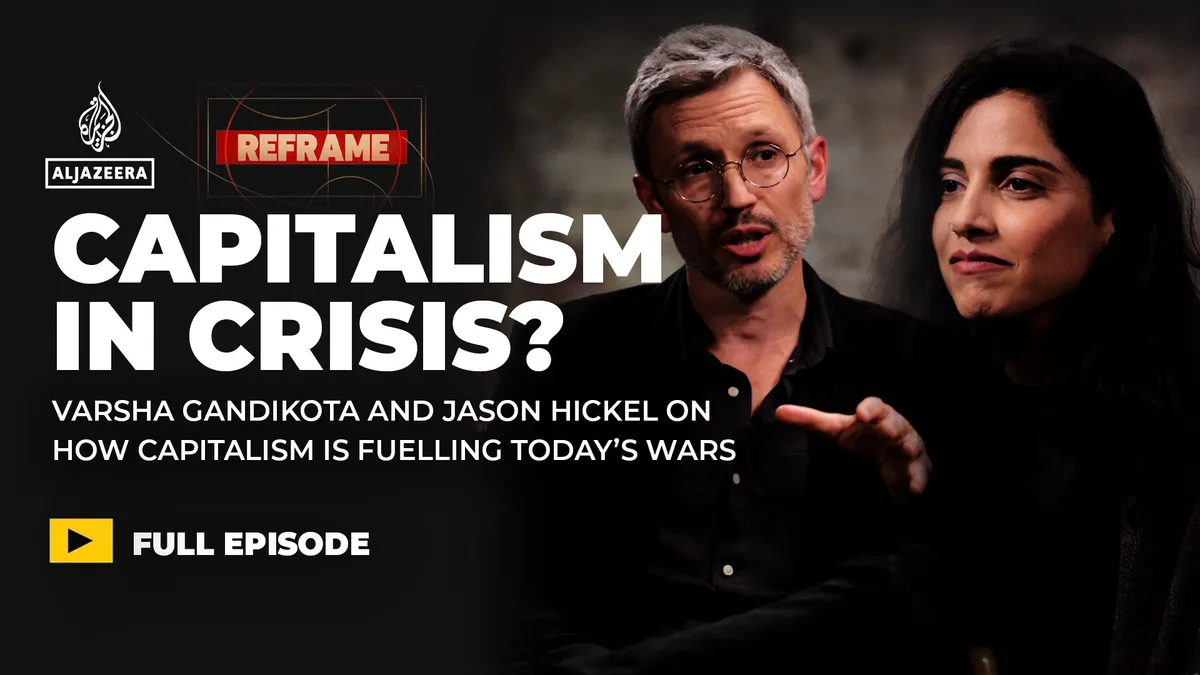
Varsha Gandikota-Nellutla asks political economist Jason Hickel if Global South states can take back their sovereignty.
SRCAl Jazeera
LANGRMN
LEANCenter
WORDS16
ENT5
TUE · 2026-04-28 · 10:57 GMTBRIEF NSR-2026-0428-72216
NSR-2026-0428-72216Analysis·RMN·Human Interest
Is capitalism fuelling today’s wars? Varsha Gandikota & Jason Hickel
Political economist Jason Hickel discusses with Varsha Gandikota-Nellutla whether capitalism is a driving force behind contemporary conflicts. The conversation explores the capacity of Global South nations to reclaim their sovereignty.
Al JazeeraFiled 2026-04-28 · 10:57 GMTLean · CenterRead · 1 min
Al JazeeraFIG 01
Reading time
1min
Word count
16words
Sources cited
1cited
Entities identified
5entities
Quality score
100%
§ 01
Briefing Summary
AI-generatedNEWSAR · AI
Political economist Jason Hickel discusses with Varsha Gandikota-Nellutla whether capitalism is a driving force behind contemporary conflicts. The conversation explores the capacity of Global South nations to reclaim their sovereignty. Key points likely revolve around the economic structures and power dynamics inherent in global capitalism and their potential impact on international relations and the outbreak of wars. The discussion aims to understand the relationship between capitalist systems and the prevalence of conflict in the present day, particularly concerning the agency of developing nations.
Confidence 0.70Sources 1Claims 4Entities 5
§ 02
Article analysis
Model · rule-basedFraming
Human Interest
Tone
Measured
AI-assessed
CalmNeutralAlarmist
Factuality
0.70 / 1.00
Factual
LowHigh
Sources cited
1
Limited
FewMany
§ 03
Key claims
4 extracted01
If we want to reduce conflict and promote peace, we need to rethink our economic systems and prioritize human well-being.
factualJason Hickel
Confidence
0.90
02
Capitalism can create the conditions for war, particularly when global corporations seek to expand their markets and influence.
factualJason Hickel
Confidence
0.80
03
The current system of capitalism prioritizes profit over people, leading to poverty, inequality, and social unrest.
statisticJason Hickel
Confidence
0.70
04
The Global South has been exploited by Western powers, leading to a loss of sovereignty for many nations.
quoteVarsha Gandikota-Nellutla (questioning)
Confidence
0.60
§ 04
Full report
1 min read · 16 words§ 05
Entities
5 identifiedKey playerOppositionContextPositiveNeutralNegative
Organizations1
§ 06
Keywords & salience
7 termscapitalism
1.00
wars
0.90
sovereignty
0.80
global south
0.70
political economy
0.60
jason hickel
0.50
varsha gandikota-nellutla
0.50
§ 07
Topic connections
Interactive graph No topic relationship data available yet. This graph will appear once topic relationships have been computed.