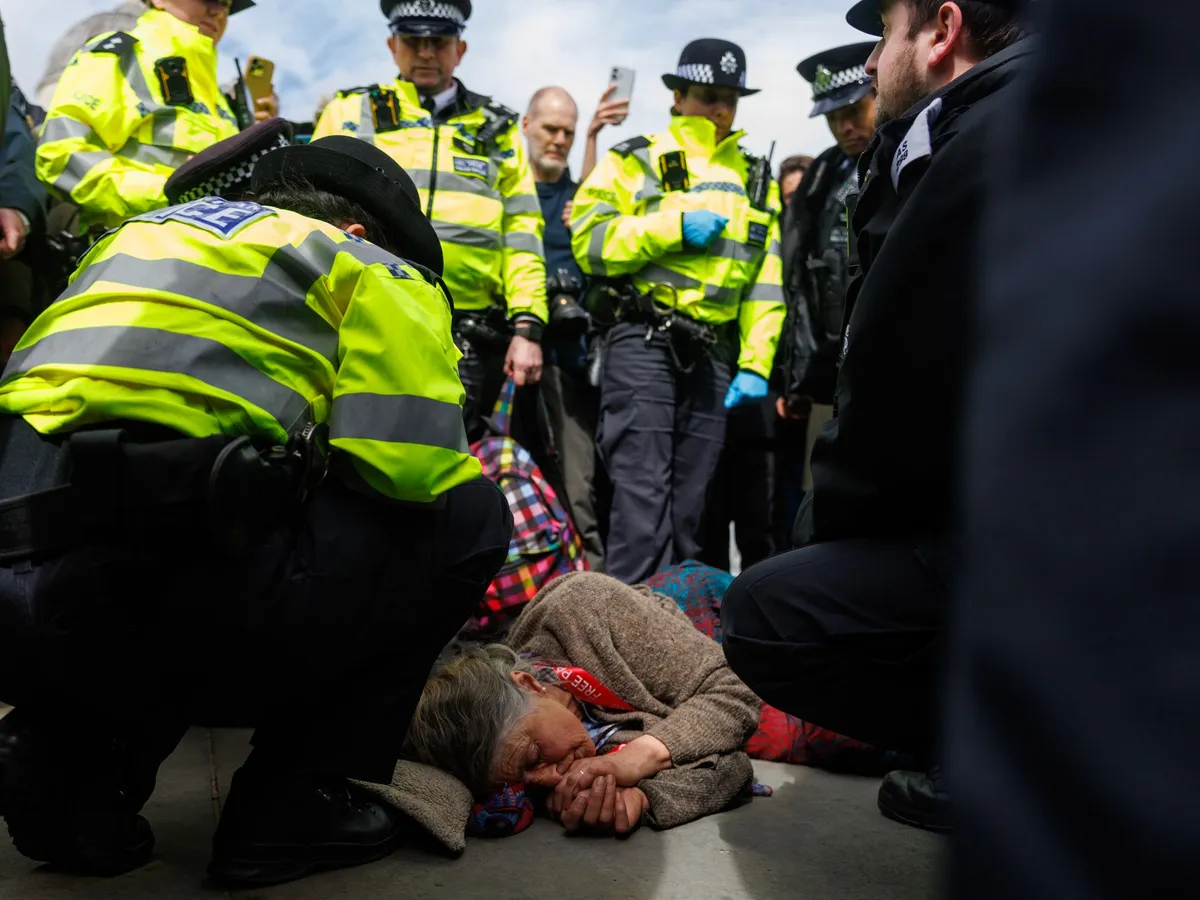
UK watchdog warns against overreach in targeting activist groups under ‘counterterrorism’ laws.The British government risks stretching “counterterrorism” laws beyond their original purpose by using such powers against activist groups, a United Kingdom “terrorism” watchdog has said.In his annual report examining the use of Britain’s “terrorism” legislation during 2024, independent reviewer Jonathan Hall said the subsequent banning of pro-Palestine group Palestine Action had exposed “real uncertainty” over whether serious damage to property alone should qualify as “terrorism”.Recommended Stories list of 3 itemslist 1 of 3More than 500 arrested at UK protest against Palestine Action banlist 2 of 3Photos: UK police arrest more than 500 people at Palestine Action rallylist 3 of 3British universities paid security firm to ‘spy’ on pro-Palestine studentsend of listThe law’s broad wording could without clearer limits risk pulling protest activity into “terrorism” policing, even where there is no intent to harm people, Hall said.“There is no legal authority on what ‘serious damage to property’ means,” Hall wrote, saying the definition could extend beyond violent attacks to acts such as criminal damage, depending on how courts interpret the threshold.While he said it was unthinkable to remove property damage entirely from the legal definition of “terrorism”, he suggested lawmakers could narrow the test, for example, by requiring a risk to life, a national security dimension or exclusion for non-violent protest.His report comes as the government appeals a High Court ruling that found the banning of Palestine Action unlawful on the grounds of free speech.The ban, imposed in July 2025, remains in force pending the outcome of the appeal. United Nations High Commissioner for Human Rights Volker Turk warned at the time that using ”counterterrorism” legislation to implement the ban on Palestine Action risked “hindering the legitimate exercise of fundamental freedoms across the UK”.
SRCAl Jazeera
LANGEN
LEANCenter
WORDS294
ENT4
WED · 2026-04-29 · 18:51 GMTBRIEF NSR-2026-0429-72559
NSR-2026-0429-72559News Report·EN·Human Interest
UK’s ‘terrorism’ laws risk overreach, watchdog warns
A UK terrorism watchdog, Jonathan Hall, has warned that the government risks overreaching its counterterrorism laws by applying them to activist groups. In his 2024 annual report, Hall highlighted the banning of Palestine Action as an example, raising concerns about the broad definition of "serious damage to property" within terrorism legislation.
Al Jazeera StaffAl JazeeraFiled 2026-04-29 · 18:51 GMTLean · CenterRead · 2 min
Al JazeeraFIG 01
Reading time
2min
Word count
294words
Sources cited
2cited
Entities identified
4entities
Quality score
100%
§ 01
Briefing Summary
AI-generatedNEWSAR · AI
A UK terrorism watchdog, Jonathan Hall, has warned that the government risks overreaching its counterterrorism laws by applying them to activist groups. In his 2024 annual report, Hall highlighted the banning of Palestine Action as an example, raising concerns about the broad definition of "serious damage to property" within terrorism legislation. He stated there is uncertainty whether property damage alone, without intent to harm people, should qualify as terrorism, suggesting clearer limits or a higher threshold for such acts. This warning comes as the government appeals a High Court ruling that found the ban on Palestine Action unlawful due to free speech concerns. The UN High Commissioner for Human Rights previously cautioned that using counterterrorism laws for such bans could hinder fundamental freedoms.
Confidence 0.90Sources 2Claims 4Entities 4
§ 02
Article analysis
Model · rule-basedFraming
Human Interest
Tone
Measured
AI-assessed
CalmNeutralAlarmist
Factuality
0.90 / 1.00
Factual
LowHigh
Sources cited
2
Limited
FewMany
§ 03
Key claims
4 extracted01
The ban on Palestine Action remains in force pending the outcome of the appeal.
factual
Confidence
1.00
02
The British government risks stretching 'counterterrorism' laws beyond their original purpose by using such powers against activist groups.
factualindependent reviewer Jonathan Hall
Confidence
0.90
03
The law's broad wording could without clearer limits risk pulling protest activity into 'terrorism' policing, even where there is no intent to harm people.
factualindependent reviewer Jonathan Hall
Confidence
0.80
04
There is no legal authority on what 'serious damage to property' means, and the definition could extend beyond violent attacks to acts such as criminal damage.
factualindependent reviewer Jonathan Hall
Confidence
0.80
§ 04
Full report
2 min read · 294 words§ 05
Entities
4 identifiedKey playerOppositionContextPositiveNeutralNegative
Organizations1
Locations1
§ 06
Keywords & salience
9 termscounterterrorism laws
1.00
activist groups
0.90
overreach
0.80
palestine action
0.70
terrorism definition
0.70
serious damage to property
0.60
watchdog
0.50
free speech
0.50
pro-palestine
0.40
§ 07
Topic connections
Interactive graph No topic relationship data available yet. This graph will appear once topic relationships have been computed.