Asia’s gold rush is starting to lose some of its lustre, as surging oil prices due to the Iran war dampen rate-cut hopes that recently helped fuel one of the metal’s strongest rallies in years.A surge in energy costs has revived inflation concerns and made central banks less likely to cut rates, and this has made interest-bearing assets more attractive, according to analysts.Gold prices fell by 12 per cent from US$5,247.90 per troy ounce on February 27 to US$4,620 on Friday morning.The metal is typically seen as an attractive long-term investment and a safe-haven asset in times of economic and geopolitical uncertainties.On January 28, gold prices reached an all-time high at US$$5,602. It rose 65 per cent from US$2,624 on January 2 last year to US$4,339.65 on December 31, according to KITCO, a precious metals information provider.Oil prices remained elevated, with Brent crude futures for July rising by almost one per cent to US$111.41 per barrel on Friday. The benchmark has risen for four straight months, with its June contract that expired on Thursday surging to US$126.41 a barrel, the highest since March 2022.Smoke rises in the Fujairah oil industry zone, UAE, amid the Iran war. Oil prices have surged since the start of the conflict. Photo: ReutersOn Wednesday, the US Federal Reserve kept interest rates on hold but raised concerns about inflation. The following day, the Bank of England maintained its rates and set out scenarios for the economic impact of the Iran war, one of which was a potential “forceful” increase in borrowing costs.“I don’t think gold prices will fall much further, but the current scenario with the energy prices isn’t helping at all,” said Gnanasekar Thiagarajan, India-based founder of Commtrendz Research, highlighting that higher inflationary expectations might force central banks to increase interest rates.“Only when interest rates come down, gold prices rise.”Investors in Asia tend to flock to the metal when anticipating higher prices, and only a few deep-pocketed buyers would consider acquiring it during a downtrend, he said.Further ReadingThe cautious sentiment was evident even during the Indian festival of Akshaya Tritiya on April 19, even though it was traditionally considered one of the biggest buying occasions for the metal, Thiagarajan added.Asia accounted for about 70 per cent of global gold sales last year, with India and China among the biggest buyers, according to the World Gold Council.Total gold demand around the world rose by two per cent to 1,231 tonnes in the first quarter from the same period a year earlier, the council said in a report released on Wednesday. As a result of high gold prices, the value of purchases jumped by 74 per cent to a record US$193 billion over the same period.01:46Rising diesel prices push Filipino farmers to financial breaking point
SRCSouth China Morning Post
LANGEN
LEANCenter-Right
WORDS458
FRI · 2026-05-01 · 09:34 GMTBRIEF NSR-2026-0501-72963
NSR-2026-0501-72963News Report·EN·Economic Impact
Gold loses its shimmer in Asia over rising oil prices, hawkish Fed stance
Gold prices in Asia are declining due to rising oil prices and a hawkish stance from central banks. Surging oil costs, exacerbated by the Iran conflict, have revived inflation concerns, making central banks less likely to cut interest rates.
Biman MukherjiSouth China Morning PostFiled 2026-05-01 · 09:34 GMTLean · Center-RightRead · 2 min
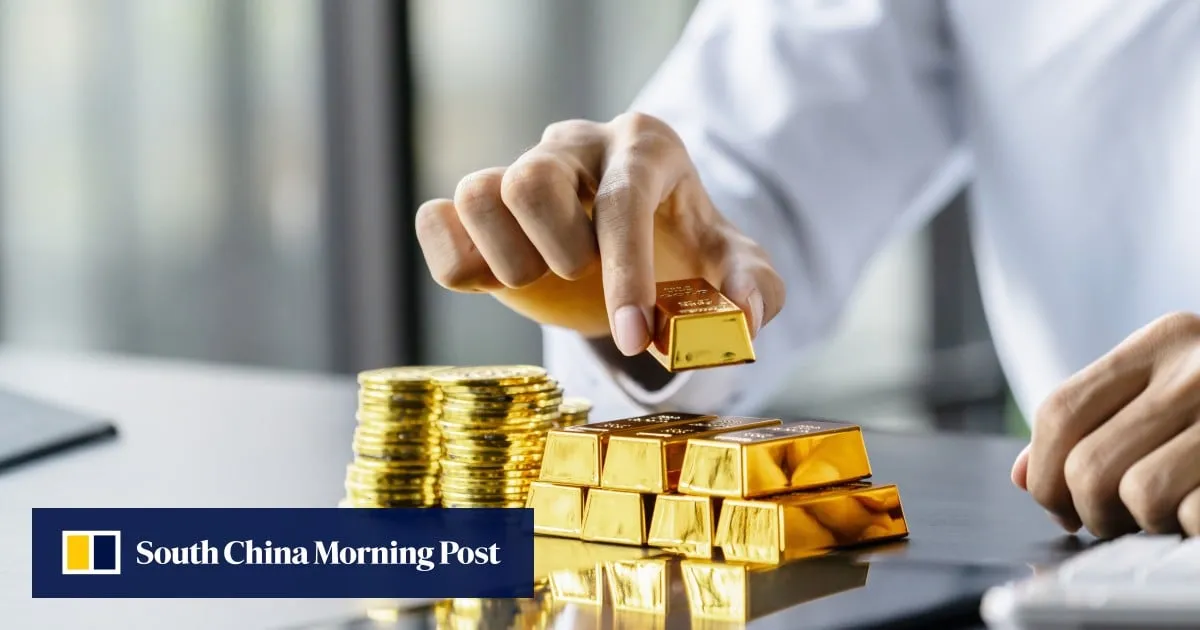
South China Morning PostFIG 01
Reading time
2min
Word count
458words
Sources cited
3cited
Entities identified
0entities
Quality score
75%
§ 01
Briefing Summary
AI-generatedNEWSAR · AI
Gold prices in Asia are declining due to rising oil prices and a hawkish stance from central banks. Surging oil costs, exacerbated by the Iran conflict, have revived inflation concerns, making central banks less likely to cut interest rates. This shift makes interest-bearing assets more attractive than gold, a traditional safe-haven. Gold prices have fallen significantly from recent highs, with Brent crude futures remaining elevated. Analysts suggest that higher inflationary expectations may lead central banks to maintain or increase borrowing costs, which is unfavorable for gold prices. This cautious sentiment was observed even during traditional gold-buying festivals in Asia, a region that accounts for a substantial portion of global gold sales.
Confidence 0.90Sources 3Claims 5
§ 02
Article analysis
Model · rule-basedFraming
Economic Impact
Conflict
Tone
Measured
AI-assessed
CalmNeutralAlarmist
Factuality
0.85 / 1.00
Factual
LowHigh
Sources cited
3
Well sourced
FewMany
§ 03
Key claims
5 extracted01
Brent crude futures for July rose by almost one per cent to US$111.41 per barrel on Friday.
statistic
Confidence
1.00
02
Total gold demand around the world rose by two per cent to 1,231 tonnes in the first quarter from the same period a year earlier.
statisticWorld Gold Council
Confidence
1.00
03
Gold prices fell by 12 per cent from US$5,247.90 per troy ounce on February 27 to US$4,620 on Friday morning.
statistic
Confidence
1.00
04
Asia accounted for about 70 per cent of global gold sales last year, with India and China among the biggest buyers.
statisticWorld Gold Council
Confidence
0.95
05
Higher inflationary expectations might force central banks to increase interest rates.
predictionGnanasekar Thiagarajan
Confidence
0.70
§ 04
Full report
2 min read · 458 words§ 06
Keywords & salience
10 termsgold prices
1.00
oil prices
0.90
inflation
0.80
interest rates
0.80
federal reserve
0.70
iran war
0.70
safe-haven asset
0.60
asia
0.50
central banks
0.50
bank of england
0.40
§ 07
Topic connections
Interactive graph No topic relationship data available yet. This graph will appear once topic relationships have been computed.