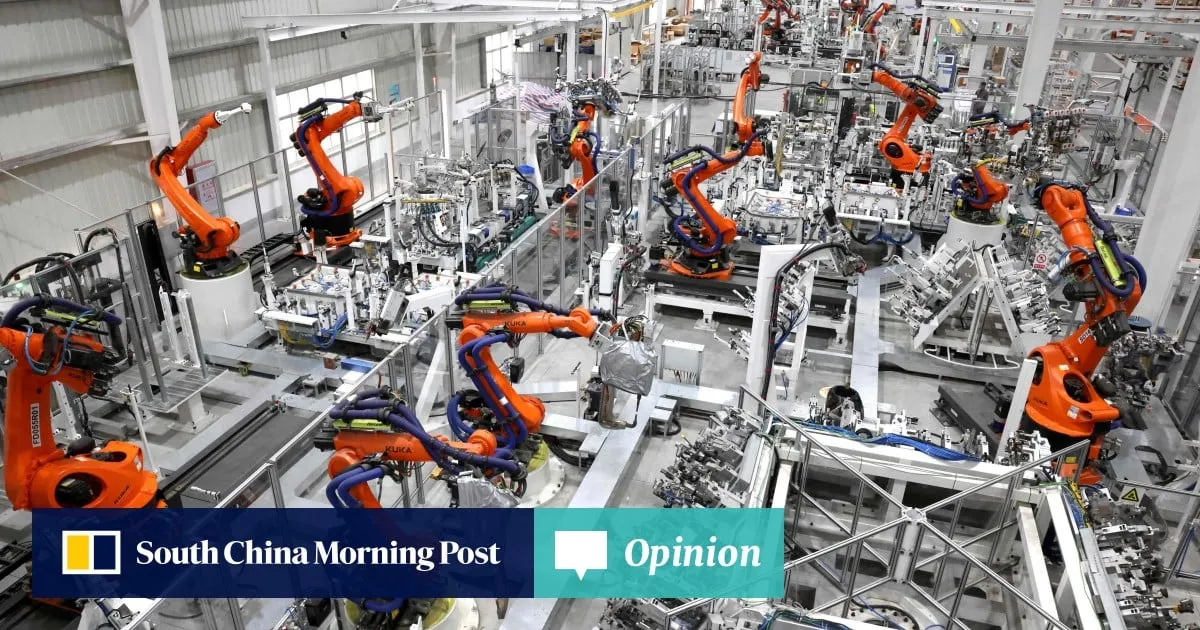
If the “China-shock" class="entity-link entity-event" data-entity-id="121504" data-entity-type="event">China Shock” of the early 2000s was about China catching up, then “China-shock-20" class="entity-link entity-event" data-entity-id="90614" data-entity-type="event">China-shock" class="entity-link entity-event" data-entity-id="121504" data-entity-type="event">China Shock 2.0” is about the country redefining the boundaries of what is economically possible across manufacturing sectors, according to Columbia University professor Adam Tooze.Amid complaints about the trade and industrial policies accelerating China’s rise in many sectors – including aviation, space, artificial intelligence (AI), telecoms, microprocessors, robotics, nuclear and fusion power, quantum computing, materials sciences, biotechnology, pharmaceuticals, solar power and batteries – Tooze offers a simple warning: “The rise of China is a long-term trend to which the West must adjust.”“The New Global Imbalances”, a report by the Centre for Economic Policy Research (CEPR), is similarly blunt: “Failure to acknowledge the structural nature of these changes, and excessive emphasis on protection, will undermine long-term growth for all.”
SRCSouth China Morning Post
LANGEN
LEANCenter-Right
WORDS132
ENT7
FRI · 2026-05-01 · 08:30 GMTBRIEF NSR-2026-0501-72968
NSR-2026-0501-72968Analysis·EN·Economic Impact
China’s manufacturing rise is here to stay. The West must recalibrate
According to Columbia University professor Adam Tooze, China's current manufacturing advancements represent a "China shock 2.0," signifying a long-term trend where the country is redefining economic possibilities across numerous high-tech sectors. This includes areas like aviation, AI, microprocessors, and renewable energy.
David DodwellSouth China Morning PostFiled 2026-05-01 · 08:30 GMTLean · Center-RightRead · 1 min
South China Morning PostFIG 01
Reading time
1min
Word count
132words
Sources cited
2cited
Entities identified
7entities
Quality score
100%
§ 01
Briefing Summary
AI-generatedNEWSAR · AI
According to Columbia University professor Adam Tooze, China's current manufacturing advancements represent a "China shock 2.0," signifying a long-term trend where the country is redefining economic possibilities across numerous high-tech sectors. This includes areas like aviation, AI, microprocessors, and renewable energy. A report from the Centre for Economic Policy Research (CEPR) echoes this sentiment, warning that Western nations must recalibrate their approach and acknowledge the structural nature of these changes. The report suggests that an overemphasis on protectionism will ultimately hinder long-term growth for all. The core message is that the West needs to adjust to China's sustained economic rise and its expanding capabilities in advanced manufacturing.
Confidence 0.85Sources 2Claims 4Entities 7
§ 02
Article analysis
Model · rule-basedFraming
Economic Impact
Technology
Tone
Measured
AI-assessed
CalmNeutralAlarmist
Factuality
0.40 / 1.00
Mixed
LowHigh
Sources cited
2
Limited
FewMany
§ 03
Key claims
4 extracted01
China is accelerating its rise in sectors including aviation, AI, telecoms, microprocessors, robotics, nuclear power, and biotechnology.
factual
Confidence
0.95
02
The rise of China is a long-term trend to which the West must adjust.
predictionAdam Tooze
Confidence
0.90
03
Failure to acknowledge structural changes and excessive protectionism will undermine long-term growth for all.
predictionCentre for Economic Policy Research
Confidence
0.85
04
China shock 2.0 is about the country redefining the boundaries of what is economically possible across manufacturing sectors.
predictionAdam Tooze
Confidence
0.80
§ 04
Full report
1 min read · 132 words§ 05
Entities
7 identifiedKey playerOppositionContextPositiveNeutralNegative
People1
Locations3
§ 06
Keywords & salience
8 termschina manufacturing
1.00
china shock 2.0
0.90
economic recalibration
0.80
industrial policies
0.70
long-term trend
0.60
structural changes
0.50
advanced manufacturing sectors
0.40
global imbalances
0.40
§ 07
Topic connections
Interactive graph No topic relationship data available yet. This graph will appear once topic relationships have been computed.