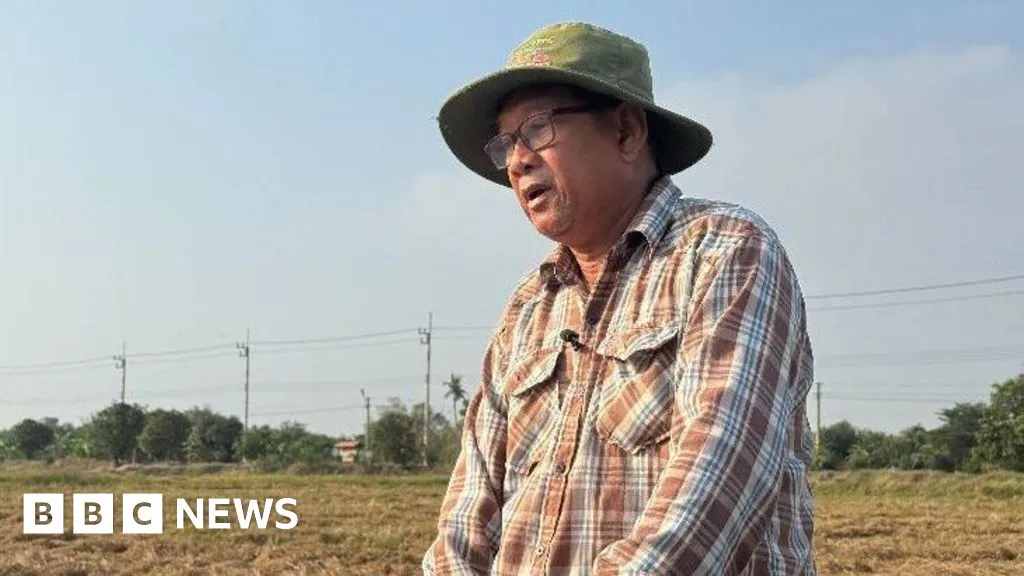
Hormuz closed, Beijing followedThe proximate cause of this crisis is a war that most of these farmers had little reason to care about before.When the United States and Israel struck Iran on 28 February, the Strait of Hormuz, the narrow waterway through which roughly one-third of the world's seaborne fertiliser trade flows, effectively shut down.Many countries import a large amount of fertilisers from the Persian Gulf region.Within weeks of the war starting, the price of urea, the world's most common nitrogen fertiliser, had jumped more than 40%.As exports through the Strait halted, the world's gaze turned to China, the planet's single largest fertiliser producer.Last year, China was responsible for 25% of global output of fertiliser and exported more than $13 billion of it.But China has shut its own doors - in March it banned exports of several types of fertiliser, crucial to the agricultural industry. This came on top of restrictions that have been steadily been put in place since 2021.Between half and 80% of those fertiliser exports are now restricted, according to a Reuters' analysis of Chinese customs data.In China's Shandong province, a fertiliser exporter who asked not to be named described receiving the notice to halt exports from the government.For the past few years, his import-export company has exported fertilisers to countries mostly based in the Asia Pacific region like Thailand, Indonesia, and New Zealand.He said that the company had contracts signed and shipping dates confirmed to "at least five or six countries" prior to the ban."We had already received the orders," he said. "The clients were waiting. But now we have been told not to ship.""Of course, we are worried about business, but we understand why the government is doing this," he added. "The government is trying to ensure enough domestic supply, so we will follow the regulations."The only fertiliser China still exports in meaningful quantities is ammonium sulfate, a lower-grade industrial byproduct that is a poor substitute for other more crucial fertilisers that are needed to grow essential food crops like rice."The combined effect of China's export ban and the closure of the Strait of Hormuz will inevitably rattle the global fertiliser market and food security," said Joseph Glauber, a Research Fellow Emeritus at the Washington-based International Food Policy Research Institute.For Southeast Asia, a region structurally dependent on Chinese fertiliser supply, Beijing's decision to halt exports has had a massive impact.Vietnam is one of the world's major rice exporters, feeding much of the Philippines and parts of Africa.In the first quarter of 2026, China accounted for more than half of Vietnam's total fertiliser imports by volume: more than 480,000 tonnes. Simply put, the country that feeds the region cannot feed its own fields without Chinese supply.The Philippines is in an even more precarious position. It depends on China for 75% of its fertiliser and has almost no domestic production to fall back on.Making matters worse, the Philippines relies on Vietnam for nearly roughly 80% of its rice imports. The supply chain is a straight line of dependencies: Filipino consumers rely on Vietnamese rice, and Vietnamese farmers rely on Chinese fertiliser. Break any link, and the whole chain could give way.Thailand, an agricultural powerhouse whose rice exports help feed much of Asia, sourced roughly one-fifth of its fertiliser from China in 2024 and separately drew 32% of its total fertiliser imports from the Gulf. Both corridors are now simultaneoulsy compromised.The harvest that might not comeThe consequences of all this will not appear in food prices this week, or even next month.They will only be visible at the end of the year, when harvests that should have been planted this spring come in smaller than they should, or not at all, according to analysts."Different countries might have enough fertilisers in stock for the immediate planting season, but if the crisis drags on any longer, we will be seeing impact on crops such as rice in the coming months," said Professor Teng.The UN World Food Programme estimates that the combined fallout from the Middle East conflict could push 45 million additional people into acute hunger in 2026.In Asia and the Pacific, food insecurity is expected to rise by 24% - the largest relative increase of any region on earth."Sometimes I wish rice farmers across the country would stop planting altogether, so the government would have no rice to eat and understand how we feel," said Pratheuang Piamsomboon, a 48-year-old rice farmer in Bangkok's Nong Chok district."The hardship is impossible to put into words."
SRCBBC News - World
LANGEN
LEANCenter
WORDS744
FRI · 2026-05-01 · 00:01 GMTBRIEF NSR-2026-0501-72976
NSR-2026-0501-72976News Report·EN·Human Interest
It's not just oil: Iran war also threatens Asia's food security
A war involving Iran has disrupted global fertilizer trade, threatening Asia's food security. The conflict led to the closure of the Strait of Hormuz, a key route for fertilizer exports, causing urea prices to surge over 40%.
BBC News - WorldFiled 2026-05-01 · 00:01 GMTLean · CenterRead · 3 min
BBC News - WorldFIG 01
Reading time
3min
Word count
744words
Sources cited
0cited
Entities identified
0entities
Quality score
75%
§ 01
Briefing Summary
AI-generatedNEWSAR · AI
A war involving Iran has disrupted global fertilizer trade, threatening Asia's food security. The conflict led to the closure of the Strait of Hormuz, a key route for fertilizer exports, causing urea prices to surge over 40%. China, the world's largest fertilizer producer, subsequently banned exports of crucial fertilizer types, restricting between 50-80% of its usual shipments. This move, aimed at ensuring domestic supply, significantly impacts Asian countries heavily reliant on Chinese fertilizer. The combined impact of the Hormuz closure and China's export ban is expected to destabilize the fertilizer market and jeopardize food security across the region.
Confidence 0.90
§ 04
Full report
3 min read · 744 words§ 06
Keywords & salience
9 termsfertiliser trade
1.00
food security
1.00
strait of hormuz
0.90
china fertiliser exports
0.90
iran war
0.80
urea price jump
0.70
asia pacific
0.60
agricultural industry
0.50
nitrogen fertiliser
0.40
§ 07
Topic connections
Interactive graph No topic relationship data available yet. This graph will appear once topic relationships have been computed.