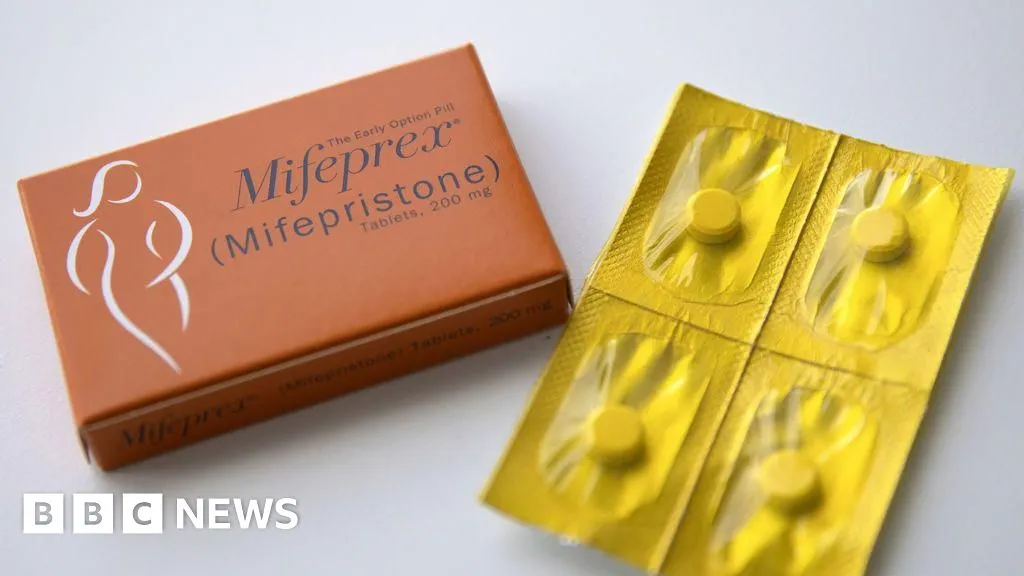
In 2024, the US Supreme Court unanimously rejected an effort to restrict access to mifepristone.But the decision, which came two years after the court rescinded the nationwide guarantee to an abortion, left the door open to other attempts to limit the availability of the drug.The court's order on Friday overrides a lower court's ruling from earlier this month that pauses the case while the Trump administration conducts an FDA review."This decision defies clear science and settled law and advances an anti-abortion agenda that is deeply unpopular with the American people," said Julia Kaye, an attorney with the American Civil Liberties Union (ACLU) in a statement."For countless people, especially those who live in rural areas, face intimate partner violence, or live with disabilities, losing a telemedicine option will mean losing access to this vital medication altogether," she added.Louisiana Attorney General Liz Murrill celebrated the court's decision, saying the Biden-era rule "facilitated the deaths of thousands of Louisiana babies (and millions in other states)"."I look forward to continuing to defend women and babies as this case continues," she added.Meanwhile, New York Attorney General Letitia James said on Friday that abortion access will continue to be legal in her state, despite the appellate court's ruling."In New York, our laws ensure that anyone who needs abortion care can seek it here. That has not changed, and we will continue to protect access to abortion, including medication abortion," she said in a statement."Mifepristone is safe, effective, and essential," she said, adding: "Restrictions on abortion care are restrictions on life-saving health care. This decision puts lives at risk."Mifepristone works by blocking a hormone called progesterone, which is necessary for a pregnancy to continue. The second drug, misoprostol, empties the uterus.The US first approved mifepristone for the medical termination of pregnancy through seven weeks gestation in September 2000. In 2016, its approved use was extended to 10 weeks of pregnancy.Misoprostol has been available by prescription for decades as a treatment for stomach ulcers and to manage postpartum hemorrhaging. Its non-pregnancy related uses are likely why it has not attracted the same controversy as mifepristone.Meanwhile, mifepristone is also used to treat women who have suffered miscarriages and Cushing syndrome, a hormone-related condition.Over 3.7 million women used mifepristone in the US between 2000 and 2018, according to the FDA.
SRCBBC News - World
LANGEN
LEANCenter
WORDS380
FRI · 2026-05-01 · 23:29 GMTBRIEF NSR-2026-0502-73117
NSR-2026-0502-73117News Report·EN·Legal & Judicial
US court limits mail-order access to abortion pill mifepristone
A US appeals court has limited mail-order access to the abortion pill mifepristone, overriding a lower court's pause on the case. The Supreme Court had previously rejected an effort to restrict the drug's access in 2024, but this new ruling allows for further review of FDA regulations.
BBC News - WorldFiled 2026-05-01 · 23:29 GMTLean · CenterRead · 2 min
BBC News - WorldFIG 01
Reading time
2min
Word count
380words
Sources cited
4cited
Entities identified
0entities
Quality score
75%
§ 01
Briefing Summary
AI-generatedNEWSAR · AI
A US appeals court has limited mail-order access to the abortion pill mifepristone, overriding a lower court's pause on the case. The Supreme Court had previously rejected an effort to restrict the drug's access in 2024, but this new ruling allows for further review of FDA regulations. Proponents of the decision, like Louisiana's Attorney General, argue it protects unborn fetuses, while opponents, such as the ACLU and New York's Attorney General, contend it restricts vital healthcare, particularly for those in rural areas or with disabilities. Mifepristone, approved in 2000 and later expanded for use up to 10 weeks of pregnancy, works by blocking progesterone. It is also used for miscarriage management and Cushing syndrome.
Confidence 0.90Sources 4Claims 5
§ 02
Article analysis
Model · rule-basedFraming
Legal & Judicial
Public Health
Tone
Measured
AI-assessed
CalmNeutralAlarmist
Factuality
0.60 / 1.00
Mixed
LowHigh
Sources cited
4
Well sourced
FewMany
§ 03
Key claims
5 extracted01
Over 3.7 million women used mifepristone in the US between 2000 and 2018.
statisticFDA
Confidence
1.00
02
Mifepristone works by blocking a hormone called progesterone, which is necessary for a pregnancy to continue.
factual
Confidence
1.00
03
The US Supreme Court unanimously rejected an effort to restrict access to mifepristone in 2024.
factual
Confidence
1.00
04
Losing a telemedicine option will mean losing access to this vital medication altogether for people in rural areas or facing violence.
quoteJulia Kaye
Confidence
0.70
05
The Biden-era rule facilitated the deaths of thousands of Louisiana babies and millions in other states.
quoteLiz Murrill
Confidence
0.50
§ 04
Full report
2 min read · 380 words§ 06
Keywords & salience
10 termsmifepristone
1.00
abortion pill
1.00
access to abortion
0.90
us supreme court
0.80
medication abortion
0.70
telemedicine
0.60
legal restrictions
0.50
fda review
0.50
progesterone
0.40
misoprostol
0.40
§ 07
Topic connections
Interactive graph No topic relationship data available yet. This graph will appear once topic relationships have been computed.