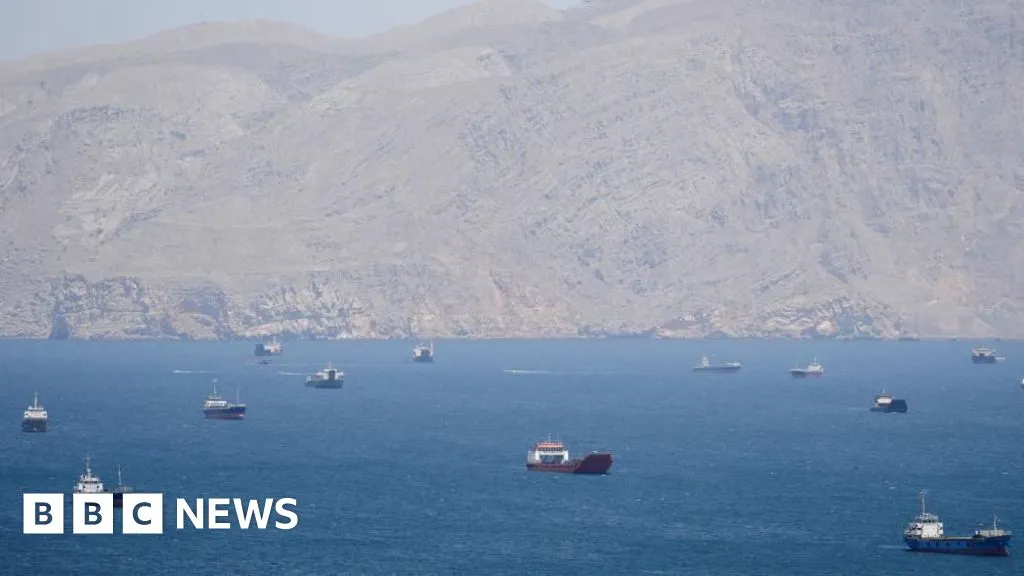
The agency warned that non-US persons who pay could also face civil and criminal enforcement liability if payments cause US persons, such as insurers and financial institutions, to violate sanctions.OFAC said it "will continue to aggressively target Iran's main revenue-generating sectors, in particular its petroleum and petrochemical sectors".The US Treasury also announced sanctions on three Iranian foreign currency exchange houses on Friday, saying they have converted oil revenue into more usable currencies.Treasury Secretary Scott Bessent said his agency would "relentlessly target the regime's ability to generate, move and repatriate funds, and pursue anyone enabling Tehran's attempts to evade sanctions". After the US and Israel attacked Iran on 28 February, Iran has been targeting and striking ships passing through the Strait of Hormuz, including seizing two of them.The US has also enforced a naval blockade since 13 April, stopping all ships from travelling to or from Iranian ports. Trump had hoped the blockade would put pressure on Iran by targeting its revenue from the tolls and oil sales.US Central Command (Centcom) said on Friday that 45 commercial ships have been told to turn around since the blockade began.About 3,000 ships typically pass through the strait each month, but that number has dropped sharply to just a handful each day.The strait is a crucial shipping channel for oil and other goods including food, medicines and technological supplies.UNHCR, the UN refugee agency, said on Friday that the closure of key maritime routes has forced the use of longer and more expensive alternatives to transport aid.Higher transport and fuel costs "disproportionately affect people in emergencies", including refugees and displaced people, the agency said.The cost of delivering aid to Sudan, entering its fourth year of war, has doubled in recent months, as rerouting shipments around the Cape of Good Hope in South Africa adds up to 25 days in delivery time.The UN agency said it has adapted quickly by rerouting sea cargo and relying more on land corridors. But it warned that "if instability in the Middle East persists, rising costs, delays and limited transport capacity are likely to constrain humanitarian operations further."The US and Iran began a fragile ceasefire on 8 April. Since then, the two countries have held talks, but no long-term deal has been reached.Iran gave mediators in Pakistan a proposal to end the war on Thursday night, according to Iran's state-run IRNA news agency. However, US President Donald Trump has responded negatively to the proposal."They want to make a deal, I'm not excited, so we'll see what happens," Trump said on Friday.He added: "Because they have no military left, essentially. I'm not sure if they ever get there."The president did not give details about the proposal or explain why he was not satisfied, but said: "They're asking for things that I can't agree to."He also voiced frustration with Iran's leadership, saying: "It's a very disjointed leadership. They all want to make a deal, but they're all messed up."After Iran's Supreme Leader Ali Khamenei was killed in US and Israeli strikes on the first day of the war, his son Mojtaba Khamenei succeeded him. However, decision-making seems less centralised than it was before the war.On Thursday, Trump said he was briefed on options for Iran ranging from "blast the hell out of them and finish them forever" to "make a deal".The conflict began after the US and Israel carried out wide-ranging strikes on Iran in February. Iran responded by launching attacks on Israel and US-allied states in the Gulf.The US and Israel said Iran was trying to develop a nuclear bomb, which Tehran has strongly denied.
SRCBBC News - World
LANGEN
LEANCenter
WORDS594
SAT · 2026-05-02 · 14:18 GMTBRIEF NSR-2026-0502-73281
NSR-2026-0502-73281News Report·EN·Conflict
US threatens shipping firms with sanctions if they pay Iran tolls
The US Treasury Department has threatened shipping firms with sanctions if they pay tolls to Iran, warning that non-US persons could face legal consequences if such payments facilitate sanctions violations. This action comes as Iran has been targeting ships in the Strait of Hormuz following attacks by the US and Israel.
BBC News - WorldFiled 2026-05-02 · 14:18 GMTLean · CenterRead · 3 min
BBC News - WorldFIG 01
Reading time
3min
Word count
594words
Sources cited
6cited
Entities identified
0entities
Quality score
75%
§ 01
Briefing Summary
AI-generatedNEWSAR · AI
The US Treasury Department has threatened shipping firms with sanctions if they pay tolls to Iran, warning that non-US persons could face legal consequences if such payments facilitate sanctions violations. This action comes as Iran has been targeting ships in the Strait of Hormuz following attacks by the US and Israel. The US has also imposed a naval blockade since April 13th, significantly reducing ship traffic through the vital waterway. The Treasury also sanctioned three Iranian currency exchange houses involved in converting oil revenue. These measures aim to pressure Iran's revenue streams, impacting global trade and humanitarian aid delivery due to increased costs and delays.
Confidence 0.90Sources 6Claims 5
§ 02
Article analysis
Model · rule-basedFraming
Conflict
Economic Impact
Tone
Measured
AI-assessed
CalmNeutralAlarmist
Factuality
0.85 / 1.00
Factual
LowHigh
Sources cited
6
Well sourced
FewMany
§ 03
Key claims
5 extracted01
45 commercial ships have been told to turn around by US Central Command since the naval blockade began on April 13.
statisticUS Central Command
Confidence
1.00
02
Non-US persons paying Iran tolls face civil and criminal enforcement liability if payments cause US persons to violate sanctions.
factualOFAC
Confidence
0.95
03
Approximately 3,000 ships typically pass through the Strait of Hormuz each month.
statistic
Confidence
0.90
04
The cost of delivering aid to Sudan has doubled in recent months due to rerouting shipments around the Cape of Good Hope.
statisticUNHCR
Confidence
0.90
05
Iran provided mediators in Pakistan with a proposal to end the war on Thursday night.
factualIRNA
Confidence
0.80
§ 04
Full report
3 min read · 594 words§ 06
Keywords & salience
8 termsiran sanctions
1.00
strait of hormuz
0.90
shipping firms
0.80
naval blockade
0.70
revenue generation
0.60
humanitarian aid
0.50
ofac
0.40
treasury secretary
0.40
§ 07
Topic connections
Interactive graph Network visualization showing 3 related topics
View Full Graph Person Organization Location Event|Click node to navigate|Edge numbers = shared articles