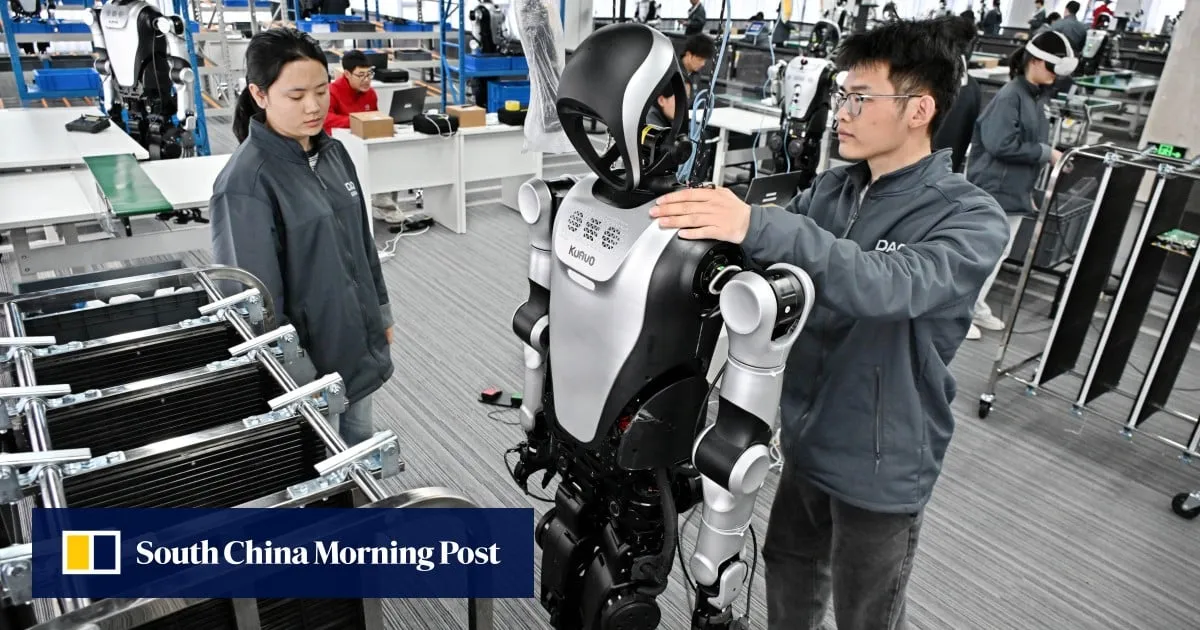
China’s smartphone and electronics supply chain is adapting its expertise to support the country’s fledgling but fast-growing humanoid robotics industry, as component suppliers seek new growth beyond a slowing mobile market.The sector received a glimpse of that crossover after Honor’s humanoid robot D1, a dark-horse entrant from the smartphone maker, won Beijing’s recent robot half-marathon, beating established Chinese robotics names such as Unitree.Honor entered the humanoid robotics sector only last year. Its robot, Lightning, beat the human world record by more than six minutes. After the race, Honor engineer Yao Bin told Chinese media outlet ThePaper.cn that one reason for the win was the transfer of smartphone cooling technology to robots, which kept the motor cool after running 21km.
SRCSouth China Morning Post
LANGEN
LEANCenter-Right
WORDS119
SUN · 2026-05-03 · 04:00 GMTBRIEF NSR-2026-0503-73347
NSR-2026-0503-73347News Report·EN·Economic Impact
From phones to robots: China’s supply chain eyes next growth curve in humanoid
China's established smartphone and electronics supply chain is pivoting to support the burgeoning humanoid robotics industry, seeking new avenues for growth as the mobile market slows. This transition was highlighted by Honor's humanoid robot, D1, which recently won Beijing's robot half-marathon, outperforming established robotics companies.
Iris DengSouth China Morning PostFiled 2026-05-03 · 04:00 GMTLean · Center-RightRead · 1 min
South China Morning PostFIG 01
Reading time
1min
Word count
119words
Sources cited
1cited
Entities identified
0entities
Quality score
75%
§ 01
Briefing Summary
AI-generatedNEWSAR · AI
China's established smartphone and electronics supply chain is pivoting to support the burgeoning humanoid robotics industry, seeking new avenues for growth as the mobile market slows. This transition was highlighted by Honor's humanoid robot, D1, which recently won Beijing's robot half-marathon, outperforming established robotics companies. Honor, a smartphone maker, entered the humanoid robotics sector last year, and its robot's victory was attributed in part to the application of smartphone cooling technology to manage motor heat during the 21km race. This demonstrates how expertise from the mobile sector is being leveraged to advance China's rapidly developing robotics capabilities.
Confidence 0.85Sources 1Claims 5
§ 02
Article analysis
Model · rule-basedFraming
Economic Impact
Technology
Tone
Measured
AI-assessed
CalmNeutralAlarmist
Factuality
0.90 / 1.00
Factual
LowHigh
Sources cited
1
Limited
FewMany
§ 03
Key claims
5 extracted01
Honor entered the humanoid robotics sector only last year.
factual
Confidence
1.00
02
Honor’s humanoid robot D1 won Beijing’s recent robot half-marathon, beating established names like Unitree.
factual
Confidence
1.00
03
Honor's robot, Lightning, beat the human world record by more than six minutes.
statistic
Confidence
0.90
04
China’s smartphone and electronics supply chain is adapting expertise to support the humanoid robotics industry.
factual
Confidence
0.90
05
The transfer of smartphone cooling technology to robots helped keep the motor cool after running 21km.
factualYao Bin
Confidence
0.85
§ 04
Full report
1 min read · 119 words§ 06
Keywords & salience
8 termshumanoid robotics
1.00
supply chain
0.90
smartphone industry
0.80
electronics
0.70
growth curve
0.60
cooling technology
0.50
honor
0.40
robot half-marathon
0.40
§ 07
Topic connections
Interactive graph Network visualization showing 2 related topics
View Full Graph Person Organization Location Event|Click node to navigate|Edge numbers = shared articles