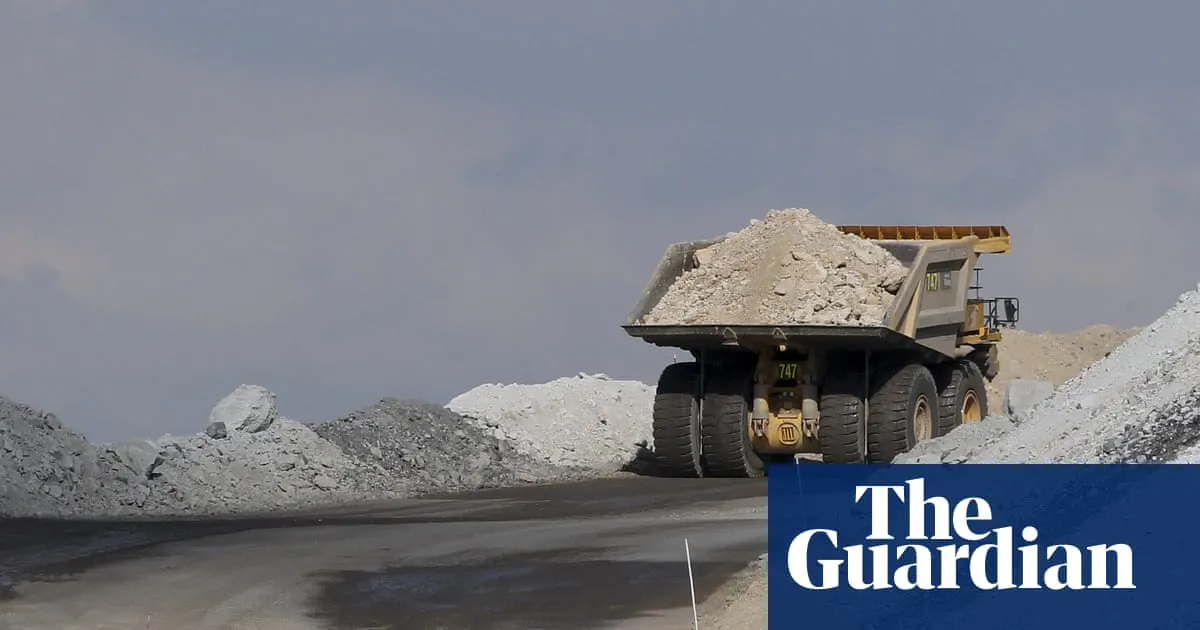
‘Once again that methane emissions from Australia’s coal sector remain drastically underreported,’ methane analyst Dr Sabina Assan said. Photograph: Rob Griffith/AP View image in fullscreen ‘Once again that methane emissions from Australia’s coal sector remain drastically underreported,’ methane analyst Dr Sabina Assan said. Photograph: Rob Griffith/AP ‘Wake-up call’: methane emissions from Australian coalmines more than double official estimates, report finds International Energy Agency findings show government must commit to rapid cuts in emissions of greenhouse gas, climate experts say Emissions of the potent greenhouse gas methane from Australian coalmines are more than double official government estimates reported to the UN, according to a new International Energy Agency report. Climate and energy analysts said the report had again highlighted an “enormous gap” in the country’s reported methane emissions from coalmines and should serve as a wake-up call. The IEA’s Global Methane Tracker report released on Monday said Australia’s coalmines, particularly in Queensland and New South Wales, emitted 1.7m tonnes of methane in 2025. The government’s latest emissions data compiled under the UN’s international agreement on climate change shows Australia’s coalmines emitted 0.82Mt of methane – equivalent to 25m tonnes of carbon dioxide. The IEA’s data includes methane releases measured by satellites – a method not used by the government. Previous IEA reports have looked at Australia’s coal and gas sector and found methane emissions could be 60% higher than official reports. Dr Sabina Assan, a methane analyst at energy thinktank Ember, said the IEA estimate showed “once again that methane emissions from Australia’s coal sector remain drastically under-reported”. She said: “The size of potential emissions should serve as a wake-up call for Australia to align its policies with climate science and commit to rapid cuts in coalmine methane – one of the cheapest and fastest ways to reduce warming today.” Methane has caused about 30% of the heating of the planet since the Industrial Revolution, according to the IEA. The gas is about 80 times more potent than carbon dioxide at heating the planet over a 20-year timeframe. Cutting methane emissions is seen by climate experts as a way to quickly slow the rate of global heating because methane breaks down in the atmosphere in about 12 years, compared with CO2 which lasts more than a century. The IEA report said 35% of methane emissions from human activity was coming from the fossil fuel sector “yet there is still no sign that methane emissions from fossil fuel operations are falling, despite well-known and proven mitigation pathways”. Tim Baxter, an Australian climate and energy analyst, said “urgent, permanent and drastic emissions cuts” of methane could do “an outsized amount of good while we work on reducing the use of fossil fuels everywhere we can”. Australia had a major responsibility to cut methane emissions from coal, he said, because it was one of the world’s largest exporters of coal. “The Australian government is increasingly isolated when it comes to defending its coalmine methane estimation methods,” he said. “Essentially all independent assessments of Australia’s methods reveal enormous gaps. The IEA’s latest report is just one among a large choir signing the tune that there is something very wrong with the way Australia estimates its fossil methane emissions, but the federal government refuses to hear.” According to official estimates, Australia’s agricultural sector is the country’s biggest methane emitter at 2.25Mt compared with 1.17Mt from the energy industry. Methane emissions from Australian coalmines have been falling from a high of 1.2Mt in 2007 to 0.8Mt in 2024, according to official data. But Ember has argued that one reason for this fall is that more methane emissions are being estimated rather than directly measured. One UN-backed study of one Queensland coalmine that flew monitoring equipment over the site has found methane emissions there were likely to be between three and eight times higher than official reports. In 2024 the government formed an expert panel to review the way methane was being measured. Guardian Australia has approached the office of the climate and energy minister, Chris Bowen, for comment. Explore more on these topics Greenhouse gas emissions Climate crisis Fossil fuels Coal Australian politics Energy Queensland news Share Reuse this content
SRCThe Guardian - World News
LANGEN
LEANCenter-Left
WORDS693
ENT8
MON · 2026-05-04 · 05:31 GMTBRIEF NSR-2026-0504-73523
NSR-2026-0504-73523News Report·EN·Environmental
‘Wake-up call’: methane emissions from Australian coalmines more than double official estimates, report finds
A new International Energy Agency (IEA) report reveals that methane emissions from Australian coalmines are more than double the official government estimates reported to the UN. The IEA's Global Methane Tracker found that Australian coalmines emitted 1.7 million tonnes of methane in 2025, significantly higher than the government's reported 0.82 million tonnes.
Graham ReadfearnThe Guardian - World NewsFiled 2026-05-04 · 05:31 GMTLean · Center-LeftRead · 3 min
The Guardian - World NewsFIG 01
Reading time
3min
Word count
693words
Sources cited
3cited
Entities identified
8entities
Quality score
100%
§ 01
Briefing Summary
AI-generatedNEWSAR · AI
A new International Energy Agency (IEA) report reveals that methane emissions from Australian coalmines are more than double the official government estimates reported to the UN. The IEA's Global Methane Tracker found that Australian coalmines emitted 1.7 million tonnes of methane in 2025, significantly higher than the government's reported 0.82 million tonnes. This discrepancy, attributed to the IEA's use of satellite measurements, highlights a substantial underreporting of potent greenhouse gas emissions. Climate experts emphasize that this finding serves as a critical wake-up call for Australia to implement rapid cuts in coalmine methane, a key strategy for quickly reducing global warming. Methane is approximately 80 times more potent than carbon dioxide in the short term.
Confidence 0.90Sources 3Claims 5Entities 8
§ 02
Article analysis
Model · rule-basedFraming
Environmental
Political Strategy
Tone
Mixed Tone
AI-assessed
CalmNeutralAlarmist
Factuality
0.80 / 1.00
Factual
LowHigh
Sources cited
3
Well sourced
FewMany
§ 03
Key claims
5 extracted01
Cutting methane emissions is a cheap and fast way to reduce warming today.
quoteDr Sabina Assan
Confidence
1.00
02
Methane emissions from Australia’s coal sector remain drastically under-reported.
quoteDr Sabina Assan
Confidence
1.00
03
The government’s latest emissions data shows Australia’s coalmines emitted 0.82Mt of methane.
statisticAustralian government
Confidence
1.00
04
Australia’s coalmines emitted 1.7m tonnes of methane in 2025, according to the IEA’s Global Methane Tracker report.
statisticInternational Energy Agency (IEA)
Confidence
1.00
05
Methane emissions from Australian coalmines are more than double official government estimates reported to the UN, according to a new International Energy Agency report.
statisticInternational Energy Agency report
Confidence
1.00
§ 04
Full report
3 min read · 693 words§ 05
Entities
8 identifiedKey playerOppositionContextPositiveNeutralNegative
People1
Organizations3
§ 06
Keywords & salience
10 termsmethane emissions
1.00
coalmines
0.90
underreported
0.80
greenhouse gas
0.70
climate experts
0.60
international energy agency
0.60
wake-up call
0.50
climate change
0.50
rapid cuts
0.40
global heating
0.40
§ 07
Topic connections
Interactive graph Network visualization showing 51 related topics
View Full Graph Person Organization Location Event|Click node to navigate|Edge numbers = shared articles