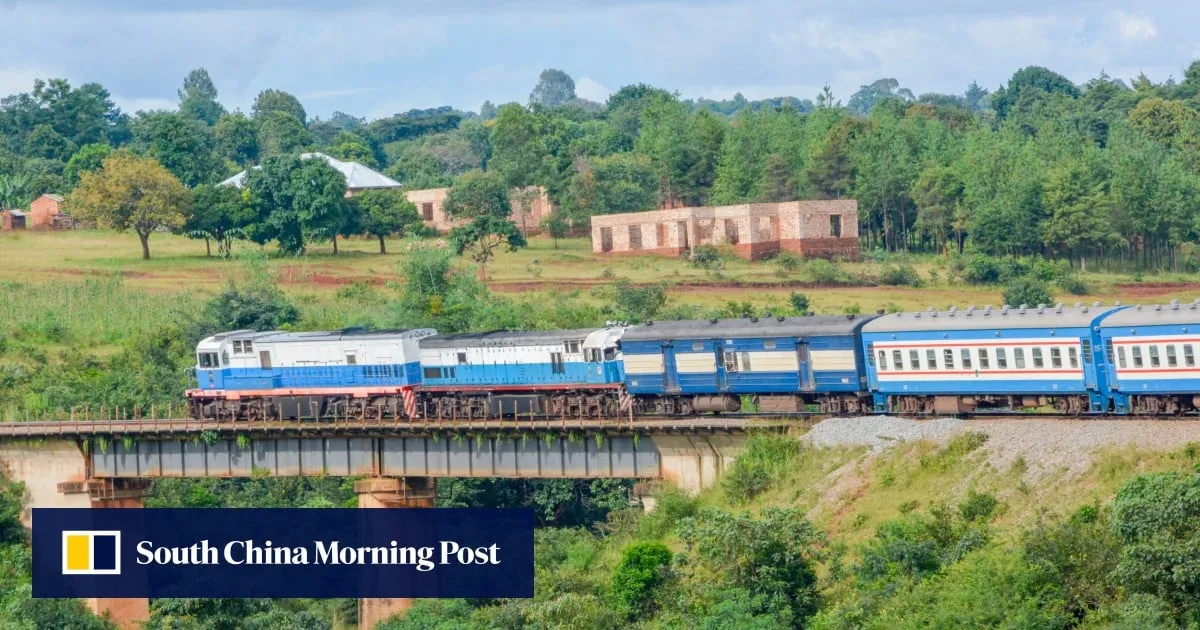
Once up and running, the corridor will stretch 1,600km (1,000 miles) westward through mineral-rich Zambia and the Democratic Republic of Congo to create a logistics corridor to the Atlantic port of Lobito in neighbouring Angola.The United States sees it as a direct rival to the China-backed 1,860km Tanzania-Zambia-railway-authority" class="entity-link entity-organization" data-entity-id="121832" data-entity-type="organization">Tanzania-Zambia Railway Authority (Tazara), which stretches eastward from Kapiri Mposhi in central Zambia to Dar es Salaam on Tanzania’s eastern coast.But for the African governments involved, the corridor is less about geopolitical sway and more about the need to create a seamless transcontinental connection.Speaking in Nairobi on the sidelines of a summit on African infrastructure in late April, Kafuta Mulemba of the intergovernmental Lobito-corridor-transit-transport-facilitation-agency" class="entity-link entity-organization" data-entity-id="121833" data-entity-type="organization">Lobito Corridor Transit Transport Facilitation Agency said that while global powers such as the US and China vied for influence in a region rich in critical minerals, the agency would keep prioritising the economic ambitions of its member states.“You should remember that these assets are state-owned,” Mulemba said. “We do not look at it from a perspective of whether it is Chinese or American. Geopolitics remains geopolitics, but our priority is ensuring inter-regional trade.”
SRCSouth China Morning Post
LANGEN
LEANCenter-Right
WORDS184
ENT11
MON · 2026-05-04 · 06:00 GMTBRIEF NSR-2026-0504-73554
NSR-2026-0504-73554News Report·EN·Economic Impact
Why African leaders value seamless transcontinental links over US-China rivalry
African leaders are prioritizing the development of a new 1,600km logistics corridor connecting Zambia and the Democratic Republic of Congo to Angola's Lobito port. This initiative, aimed at facilitating inter-regional trade, is viewed by the US as a competitor to China's Tazara railway.
Jevans NyabiageSouth China Morning PostFiled 2026-05-04 · 06:00 GMTLean · Center-RightRead · 1 min
South China Morning PostFIG 01
Reading time
1min
Word count
184words
Sources cited
1cited
Entities identified
11entities
Quality score
100%
§ 01
Briefing Summary
AI-generatedNEWSAR · AI
African leaders are prioritizing the development of a new 1,600km logistics corridor connecting Zambia and the Democratic Republic of Congo to Angola's Lobito port. This initiative, aimed at facilitating inter-regional trade, is viewed by the US as a competitor to China's Tazara railway. However, African governments involved emphasize that their focus is on economic development and creating seamless transcontinental links, rather than aligning with geopolitical rivalries between the US and China. Kafuta Mulemba of the Lobito Corridor Transit Transport Facilitation Agency stated that the priority is ensuring inter-regional trade, as the infrastructure is state-owned and serves the economic ambitions of member states.
Confidence 0.90Sources 1Claims 5Entities 11
§ 02
Article analysis
Model · rule-basedFraming
Economic Impact
Diplomatic
Tone
Measured
AI-assessed
CalmNeutralAlarmist
Factuality
0.70 / 1.00
Factual
LowHigh
Sources cited
1
Limited
FewMany
§ 03
Key claims
5 extracted01
Kafuta Mulemba stated that the agency prioritizes inter-regional trade and does not view assets from a Chinese or American perspective.
quoteKafuta Mulemba
Confidence
1.00
02
The US sees the Lobito Corridor as a rival to the China-backed Tazara railway.
factual
Confidence
1.00
03
The Lobito Corridor will stretch 1,600km westward through Zambia and DRC to the Atlantic port of Lobito in Angola.
factual
Confidence
1.00
04
The Lobito Corridor is state-owned.
quoteKafuta Mulemba
Confidence
1.00
05
African governments prioritize the economic ambitions of member states over geopolitical influence.
factual
Confidence
0.90
§ 04
Full report
1 min read · 184 words§ 05
Entities
11 identifiedKey playerOppositionContextPositiveNeutralNegative
Organizations2
§ 06
Keywords & salience
8 termstranscontinental links
1.00
lobito corridor
0.90
us-china rivalry
0.80
african infrastructure
0.70
inter-regional trade
0.70
critical minerals
0.60
geopolitical sway
0.50
tanzania-zambia railway authority
0.40
§ 07
Topic connections
Interactive graph Network visualization showing 51 related topics
View Full Graph Person Organization Location Event|Click node to navigate|Edge numbers = shared articles