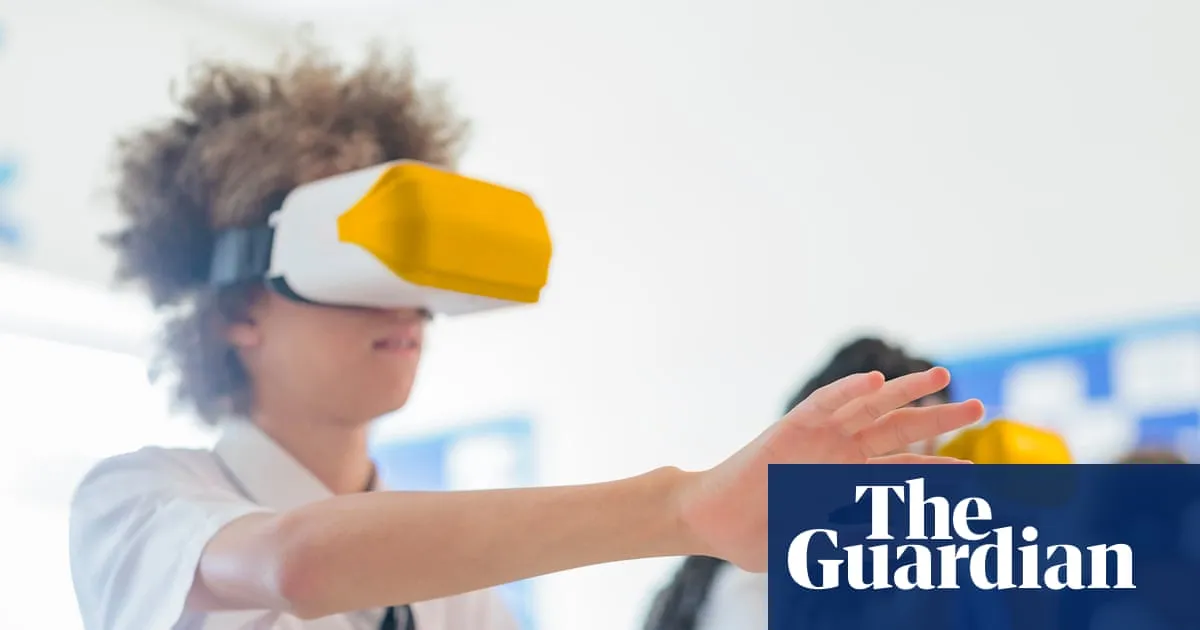
Schools have begun deploying virtual reality to help pupils cope with stress caused by impending exams, attention deficit hyperactivity disorder or difficult home lives.All 15 secondary schools in the London borough of Sutton are using VR headsets made by tech firm Phase Space in a pilot in conjunction with the local NHS mental health trust.Pupils access the seven-minute-long Phase Space VR programme either in a prearranged slot or when they need to leave a lesson because they have become beset by anxiety.Young people find that immersing themselves in VR, even for such a short period of time, helps them calm down, rebuild their confidence and feel ready to resume their studies. Phase Space has been designed to help “overwhelmed and anxious students”, said Zillah Watson, a co-creator of the programme, who is a former head of VR at the BBC.Aelisha Needham, the vice-principal for ethics at the Ark Academy secondary school in north London, which is also using the headsets, said it did so mainly with pupils with social, emotional or mental health problems who have ADHD or anxiety.“We mostly use it in the mornings,” she said. “We have students who in the mornings feel quite deregulated, especially when we have changes to their usual structures … [such as] a cover teacher, or it might be that they have felt a little bit distressed from something at home, or they maybe haven’t had breakfast, or they’re having friendship issues or haven’t done their homework.“Students are a lot calmer. We’re seeing a reduction in things like relocations from lessons where students are being asked to leave because they’re deregulated.” Pupils ask to use the programme when they start to feel overwhelmed, “which is really positive, rather than just walking out [of lessons] and walking around the school,” she said. They use it to “ground themselves”.A pupil using a Phase Space VR headset. Photograph: phasespace.co.ukNine out of 10 pupils who used the headsets in the first 10 schools saw an immediate drop in their stress, said Watson, who is also a visiting professor at London" class="entity-link entity-location" data-entity-id="2807" data-entity-type="location">University College London. The programme “has led to improvements in pupil attendance [and] behaviour and reductions in anxiety related to exams and assessments evident.”Sixteen-year-old Lora Wilson described how Phase Space helps with her anxiety.“You start in a room and it hasn’t got anything in it and the light in the room slowly fades and then you’re almost transported back into black but with light and it’s coming towards you.“It’s very difficult to explain but it’s a really cool experience. It almost feels like I’m somewhere else and I can just relax.”Using the headset has boosted her confidence, she added. “Exams terrified me. They don’t scare me as much any more. It was the most terrifying thing ever. And when I felt that way I would use the headset and it would help me process how I was feeling about it.”The schools in Sutton are exploring the potential of the technology in tandem with the education wellbeing team of the child and adolescent mental health service (Camhs) at South West London and St George’s NHS trust.With Camhs services across England so overloaded, VR may prove a low-cost and effective way for schools to help students suffering from stress, said Needham.Younger pupils in particular at the Ark Academy find the seven-minute stress-busting programme “clears their mind … [it] helps them to maintain focus and be able to sustain attention”, she added.“They said that they’ve improved self-control and the ability to process instructions because they feel a lot calmer and freer in terms of their mindsets and the muddling in their minds prior to that.”Andy Bell, the chief executive of the Centre for Mental Health thinktank, said: “It’s encouraging to see digital solutions being used to support children’s mental health at school.“Schools have a big impact on children’s mental health and those that take a broad approach to wellbeing are better able to support inclusion, attainment, attendance and behaviour.”
SRCThe Guardian - World News
LANGEN
LEANCenter-Left
WORDS658
ENT10
MON · 2026-05-04 · 08:00 GMTBRIEF NSR-2026-0504-73561
NSR-2026-0504-73561News Report·EN·Technology
London schools trialling VR to relieve pupils’ stress
London schools are piloting virtual reality (VR) technology to help pupils manage stress. Fifteen secondary schools in the borough of Sutton, along with Ark Academy in north London, are using VR headsets from Phase Space in collaboration with the local NHS mental health trust.
Denis Campbell Health policy editorThe Guardian - World NewsFiled 2026-05-04 · 08:00 GMTLean · Center-LeftRead · 3 min
The Guardian - World NewsFIG 01
Reading time
3min
Word count
658words
Sources cited
4cited
Entities identified
10entities
Quality score
100%
§ 01
Briefing Summary
AI-generatedNEWSAR · AI
London schools are piloting virtual reality (VR) technology to help pupils manage stress. Fifteen secondary schools in the borough of Sutton, along with Ark Academy in north London, are using VR headsets from Phase Space in collaboration with the local NHS mental health trust. The seven-minute VR program is accessible to students experiencing anxiety due to exams, ADHD, or difficult home lives, allowing them to calm down and regain confidence. Schools report that the VR intervention leads to immediate stress reduction, improved attendance, better behavior, and a decrease in students needing to leave lessons due to distress. This initiative aims to provide students with a tool to self-regulate and ground themselves when feeling overwhelmed.
Confidence 0.90Sources 4Claims 5Entities 10
§ 02
Article analysis
Model · rule-basedFraming
Technology
Human Interest
Tone
Measured
AI-assessed
CalmNeutralAlarmist
Factuality
0.70 / 1.00
Factual
LowHigh
Sources cited
4
Well sourced
FewMany
§ 03
Key claims
5 extracted01
All 15 secondary schools in the London borough of Sutton are using VR headsets made by tech firm Phase Space in a pilot with the local NHS mental health trust.
factual
Confidence
0.95
02
Using the headset has boosted her confidence and reduced her fear of exams.
quoteLora Wilson
Confidence
0.90
03
Schools are trialling virtual reality headsets to help pupils cope with stress caused by exams, ADHD, or difficult home lives.
factual
Confidence
0.90
04
Nine out of 10 pupils who used the headsets in the first 10 schools saw an immediate drop in their stress.
statisticZillah Watson
Confidence
0.85
05
The programme has led to improvements in pupil attendance, behaviour and reductions in anxiety related to exams and assessments.
factualZillah Watson
Confidence
0.80
§ 04
Full report
3 min read · 658 words§ 05
Entities
10 identifiedKey playerOppositionContextPositiveNeutralNegative
Organizations4
§ 06
Keywords & salience
10 termspupil stress
1.00
virtual reality
1.00
mental health
0.90
anxiety
0.90
adhd
0.80
schools
0.70
educational technology
0.60
nhs mental health trust
0.50
phase space
0.50
exam stress
0.40
§ 07
Topic connections
Interactive graph No topic relationship data available yet. This graph will appear once topic relationships have been computed.