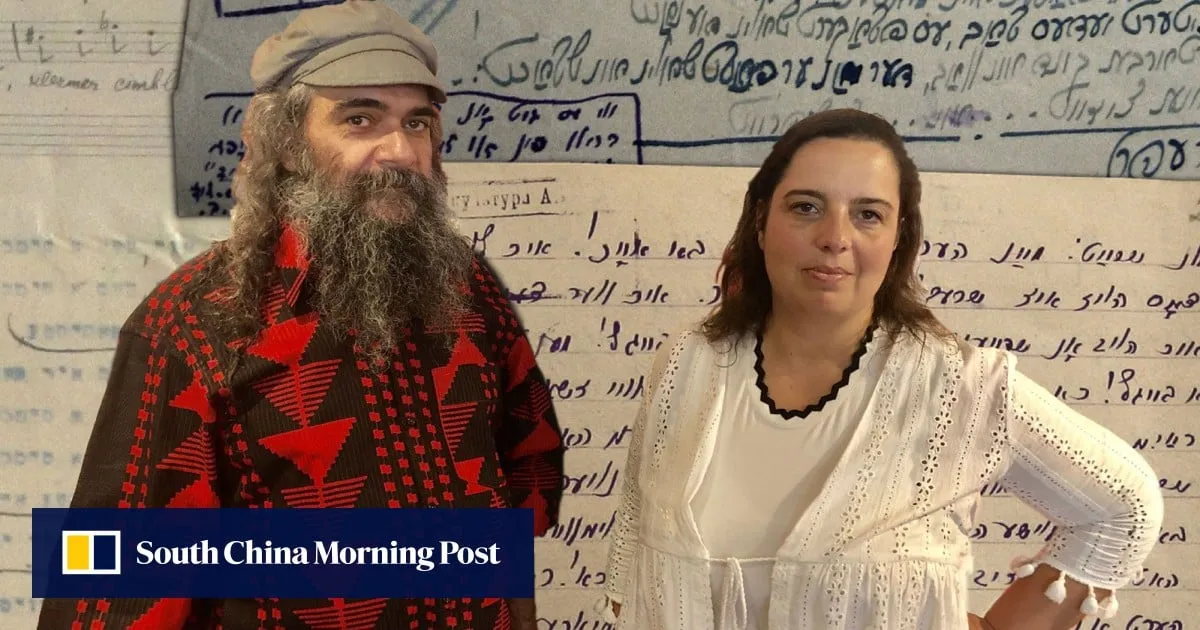
Lost anti-fascist Yiddish language songs from World War II will be making their Asian debut this month.The project is the brainchild of University of Toronto academic Anna Shternshis, who said Shanghai’s own history gave the choice of venue an extra significance, and songwriter and musician Psoy Korolenko.Their performances, which combine live music with lectures, will be only the third Yiddish-language concerts in mainland China over the past 60 years, according to producer Daniel Rosenberg.Shternshis and Korolenko have produced two albums of Yiddish music – 2016’s Grammy-nominated Yiddish Glory: The Lost Songs of World War II and The Silenced Songs of WWII from this year – that were first collected by Soviet ethnologist Moisei Beregovsky in the 1930s and 40s.“He was arrested by Stalin’s government for doing this work, ended up in the Gulag, and was released only in 1956. He never got to see those songs performed on stage,” Shternshis said.
SRCSouth China Morning Post
LANGEN
LEANCenter-Right
WORDS151
ENT12
MON · 2026-05-04 · 08:00 GMTBRIEF NSR-2026-0504-73570
NSR-2026-0504-73570News Report·EN·Human Interest
How ‘lost’ Yiddish songs from a wartime ghetto in Ukraine revive links to Shanghai’s past
Lost anti-fascist Yiddish songs from World War II are debuting in Asia this month in Shanghai, a venue chosen for its historical connection to Jewish refugees. The project, spearheaded by University of Toronto academic Anna Shternshis and musician Psoy Korolenko, features performances combining live music and lectures.
Jordyn HaimeSouth China Morning PostFiled 2026-05-04 · 08:00 GMTLean · Center-RightRead · 1 min
South China Morning PostFIG 01
Reading time
1min
Word count
151words
Sources cited
3cited
Entities identified
12entities
Quality score
100%
§ 01
Briefing Summary
AI-generatedNEWSAR · AI
Lost anti-fascist Yiddish songs from World War II are debuting in Asia this month in Shanghai, a venue chosen for its historical connection to Jewish refugees. The project, spearheaded by University of Toronto academic Anna Shternshis and musician Psoy Korolenko, features performances combining live music and lectures. These concerts mark only the third Yiddish-language performances in mainland China in six decades. Shternshis and Korolenko have released two albums, "Yiddish Glory: The Lost Songs of World War II" and "The Silenced Songs of WWII," based on songs collected by Soviet ethnologist Moisei Beregovsky in the 1930s and 40s. Beregovsky was imprisoned by Stalin's government for his work and never saw the songs performed.
Confidence 0.85Sources 3Claims 5Entities 12
§ 02
Article analysis
Model · rule-basedFraming
Human Interest
Social Justice
Tone
Measured
AI-assessed
CalmNeutralAlarmist
Factuality
0.70 / 1.00
Factual
LowHigh
Sources cited
3
Well sourced
FewMany
§ 03
Key claims
5 extracted01
Soviet ethnologist Moisei Beregovsky collected the songs in the 1930s and 40s and was arrested by Stalin’s government.
factualAnna Shternshis
Confidence
1.00
02
Daniel Rosenberg stated that these are only the third Yiddish-language concerts in mainland China over the past 60 years.
statisticDaniel Rosenberg
Confidence
1.00
03
Anna Shternshis stated that Shanghai's history gave the choice of venue extra significance.
quoteAnna Shternshis
Confidence
1.00
04
The project is the brainchild of University of Toronto academic Anna Shternshis and songwriter Psoy Korolenko.
factual
Confidence
1.00
05
Lost anti-fascist Yiddish language songs from World War II will be making their Asian debut in Shanghai.
factual
Confidence
1.00
§ 04
Full report
1 min read · 151 words§ 05
Entities
12 identifiedKey playerOppositionContextPositiveNeutralNegative
People4
Locations5
§ 06
Keywords & salience
8 termsyiddish songs
1.00
world war ii
0.90
wartime ghetto
0.80
shanghai history
0.70
anti-fascist
0.60
soviet ethnologist
0.50
stalin's government
0.40
gulag
0.40
§ 07
Topic connections
Interactive graph No topic relationship data available yet. This graph will appear once topic relationships have been computed.