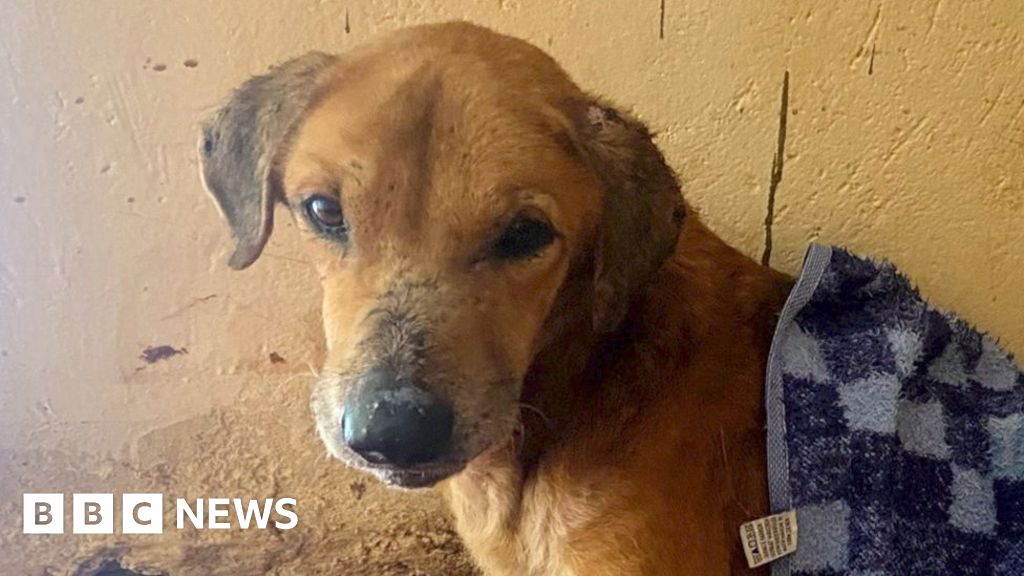
But it is dogs like Russet who pay the biggest price.He was filmed in Mityana, a trading centre around 70km (43 miles) from Uganda's capital, Kampala.The town has become infamous among online animal rescue activists around the world for one thing - sham dog rescue shelters.Ugandan scammers have realised just how popular dogs are in Europe, North America and Australia, and how easily social media's obsession with dogs can be converted into cash."There are young men in the [Ugandan] countryside who are always looking for anything to do on the internet," Bart Kakooza, chairman of the Uganda-society-for-the-protection-and-care-of-animals" class="entity-link entity-organization" data-entity-id="121965" data-entity-type="organization">Uganda Society for the Protection and Care of Animals, tells the BBC."On the other side, in the Western world, people are very passionate about animals. These young men realised they can make money if they can get a dog."It is impossible to say how many social media accounts operate from Mityana. But collectively, they have flooded Instagram, TikTok, Facebook and YouTube with videos of pitiful-looking animals - mostly dogs and cats, but even rabbits – with commentary pleading for donations to shelter, feed and treat them.The scammers flood social media with appeals for fundsA typical video involves a person showing some dogs in a makeshift structure coupled with messages like "our dogs are hungry" or "it's another day without food at the shelter" and "please help us". The clips often exploit what content creators think will resonate with viewers' existing perceptions of Africa, depicting it as a place where food is scare and young dog lovers must fight against the odds to protect animals from societal hostility and neglect.Data analysis by BBC Africa Eye suggests these videos have been effective in converting views into donations.In the past five years, our research showed that more than $730,000 (£540,000) has been raised for animal shelters in Uganda by hundreds of fundraisers posted on the donation platform GoFundMe.Nearly 40% of all the fundraisers analysed by the BBC were connected to Mityana.In the town, the business of sham dog shelters is an open secret. Several residents tell the BBC it is easy to spot the con artists."When you see a young man driving a Subaru [a status symbol car in the area], you just know he is a scammer," says one.Another says: "The scammers are the most respected here in Mityana".Lubajja tells the undercover reporters that the shelter primarily exists to make money from social media viewers abroad under false pretences. He gives some advice on how to increase revenues, and shares some of the tricks, including:Pretending that a landowner has threatened the shelter with eviction and money is needed to relocate itFilming fake veterinary treatments, for example by placing a syringe in the dog's fur rather than administering a real injectionInflating the cost of dog food by more than 11 times."Once you receive the GoFundMe money, you use it to buy a car or build a house," Lubajja says while being secretly filmed."Once you get a white donor, don't treat them as a brother. You have to squeeze them [take their money]. Drain them."But as fake operations like Lubajja's spread across the internet, a growing number of donors came to realise they had been deceived. Initiatives then sprang up to stop the scammers.Campaigners' tactics include raising awareness among potential contributors, and naming and shaming the accounts believed to be the worst offenders.Online activists also say that more than just neglect is taking place in Mityana's shelters, including deliberately harming the animals.A campaign which gained ground due to its aggressive style is We Won't Be Scammed, which has an Instagram account with around 20,000 followers.In the undercover filming, Lubajja himself mentions the campaign and describes it as the scammers' "biggest problem".Nicola Baird says her dog Sebi has inspired her activism against sham animal shelters in UgandaWhat Lubajja probably did not know is that the account is run by a 49-year-old woman who lives some 10,000km away in Yorkshire, in the north of England.Nicola Baird, the founder of We Won't Be Scammed, is on the warpath."The scammers, I just have hatred for them," she tells the BBC. "They are the epitome of evil."As with others in her network of 20 activists, Baird was once a victim. She sent money to a man in Mityana who said his dog needed surgery after a traffic accident.When she received photos and videos of the dog's alleged surgery, Baird started to suspect something was wrong. Veterinary doctors she shared the images with confirmed that they looked more like abuse than veterinary care. "That's when I thought: 'Oh my goodness, I've enabled this abuse.'"And that's when it became a real passion to stop the abuse because I felt like they were abusing [my dog] Sebi - they're abusing part of my family."We Won't Be Scammed and other online activists think that Russet, the dog who was filmed at the side of the road and featured in dozens of fundraising videos, had his legs deliberately broken.During the undercover filming, Lubajja is shown a video of Russet and he identifies it as one of his dogs. When pressed for more details by the journalists, he says the dog had been involved in a traffic accident just outside the shelter.But that may not have been the case.After his initial social media appearance, Russet's image was posted on several different accounts, seemingly as he was passed from one scammer group to another.Around three weeks later, a British social media user and donor, who wishes to remain anonymous, managed to negotiate Russet's release from the scammers to a veterinary clinic in Kampala.Dr Isa Lutebemberwa went to Mityana to pick the dog up and took him to his clinic for treatment, which was funded by the UK donor.Russet's treatment included an operation to repair his broken legsIn Lutebemberwa's opinion, the chances that Russet's injuries resulted from an accident were low. Describing an X-ray of Russet's lower body, he says: "If you look at these bones, all of them were broken almost in the same position.Lutebemberwa and other animal activists in Uganda like Kakooza partially blame international donors for the suffering of dogs in Mityana's shelters, saying they often donate impulsively and without enough scrutiny."People who are donating money are causing the problem of animal cruelty here, because they keep on fuelling it, they are fanning the fire," says Kakooza.Baird agrees that donations may inadvertently have caused harm: "I think the message that we have to take from Russet's abuse is the donations prolonged his agony. Had people not donated, Russet would not have suffered as long as he did."Most animal activists, in Uganda and beyond, think that more awareness among social media users and potential donors would reduce the flow of donations to Mityana's shelters. This would dampen scammers' income and the appeal of the business among young people, and lead to fewer new dogs being captured for the scams.However, few can point to a concrete solution for the dogs who are currently in the shelters.Mityana police told the BBC that an operation in 2023 rescued 24 severely injured dogs kept in poor conditions at a sham shelter in town, and transferred them to Kampala for treatment.Three suspects arrested in the operation were charged with cruelty against animals before being released. Their file was later closed, and they were given a warning.Now, an international coalition of activists, including Kakooza, is trying to use private prosecutions to tackle the problem. One is already in the works.
SRCBBC News - World
LANGEN
LEANCenter
WORDS1 235
ENT12
MON · 2026-05-04 · 06:39 GMTBRIEF NSR-2026-0504-73601
NSR-2026-0504-73601News Report·EN·Human Interest
BBC uncovers the scammers exploiting dogs to elicit donations from animal lovers
BBC investigations reveal that scammers in Mityana, Uganda, are exploiting animal lovers' generosity by creating fake dog rescue shelters. These individuals use social media platforms like Instagram, TikTok, and Facebook to post videos of distressed animals, pleading for donations for shelter, food, and medical care.
BBC News - WorldFiled 2026-05-04 · 06:39 GMTLean · CenterRead · 5 min
BBC News - WorldFIG 01
Reading time
5min
Word count
1 235words
Sources cited
3cited
Entities identified
12entities
Quality score
100%
§ 01
Briefing Summary
AI-generatedNEWSAR · AI
BBC investigations reveal that scammers in Mityana, Uganda, are exploiting animal lovers' generosity by creating fake dog rescue shelters. These individuals use social media platforms like Instagram, TikTok, and Facebook to post videos of distressed animals, pleading for donations for shelter, food, and medical care. The content often plays on Western perceptions of Africa as a place of scarcity. Analysis indicates that hundreds of fundraisers on platforms like GoFundMe have raised over $730,000 for Ugandan animal shelters in the past five years, with nearly 40% linked to Mityana. The scam has become an open secret in the town, with successful scammers often displaying signs of wealth. The primary motivation appears to be financial gain from unsuspecting international donors.
Confidence 0.90Sources 3Claims 5Entities 12
§ 02
Article analysis
Model · rule-basedFraming
Human Interest
Economic Impact
Tone
Mixed Tone
AI-assessed
CalmNeutralAlarmist
Factuality
0.80 / 1.00
Factual
LowHigh
Sources cited
3
Well sourced
FewMany
§ 03
Key claims
5 extracted01
Donations are often used by scammers to purchase cars or build houses rather than for animal welfare.
factualLubajja (secretly filmed)
Confidence
1.00
02
Scammers in Mityana use tactics like faking eviction threats, simulating veterinary treatments, and inflating food costs to increase donations.
factualLubajja (secretly filmed)
Confidence
1.00
03
Nearly 40% of analyzed GoFundMe fundraisers for Ugandan animal shelters were connected to Mityana.
statisticBBC Africa Eye data analysis
Confidence
1.00
04
Over the past five years, more than $730,000 (£540,000) has been raised for animal shelters in Uganda through GoFundMe.
statisticBBC Africa Eye data analysis
Confidence
1.00
05
Ugandan scammers are exploiting dogs and social media's popularity with animals to elicit donations from international donors.
factualBBC
Confidence
1.00
§ 04
Full report
5 min read · 1 235 words§ 05
Entities
12 identifiedKey playerOppositionContext
M
Mityana location · Context
90
U
Uganda location · Context
90
US
Uganda Society for the Protection and Care of Animals organization
70
BK
Bart Kakooza person
70
T
TikTok organization · Context
60
F
Facebook organization · Context
60
I
Instagram organization · Context
60
K
Kampala location · Context
50
NA
North America location · Context
50
A
Australia location · Context
50
E
Europe location · Context
50
R
Russet person · Context
40
§ 06
Keywords & salience
9 termsanimal welfare scams
1.00
dog rescue shelters
0.90
online fundraising
0.80
social media exploitation
0.80
ugandan scammers
0.70
gofundme
0.60
animal lovers
0.50
mityana
0.50
deceptive appeals
0.40
§ 07
Topic connections
Interactive graph No topic relationship data available yet. This graph will appear once topic relationships have been computed.