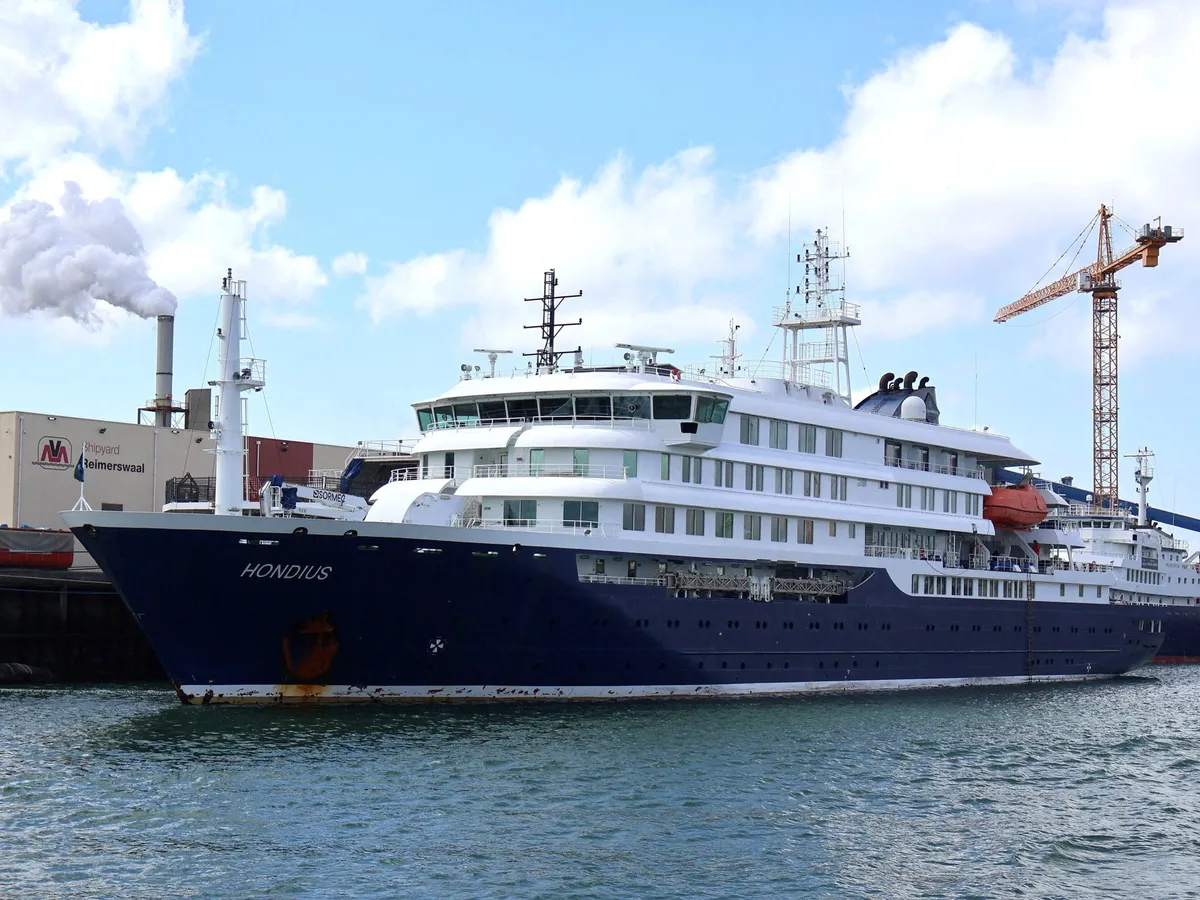
EXPLAINERWorld Health Organization says risk to the general public remains low despite suspected outbreak on the MV Hondius.Three dead due to suspected outbreak of rare hantavirus on cruise shipBy Sarah Shamim, Agence France Presse, Reuters and The Associated PressPublished On 4 May 2026Three people who were on board a Netherlands-based cruise ship in the Atlantic have died during a suspected outbreak of the hantavirus, authorities say. The virus is a rare infection transmitted to humans by rodents.On Monday, the World Health Organization (WHO) said the risk posed by the hantavirus to the wider public remained low despite the deaths on the MV Hondius cruise ship.So what is the hantavirus, how does it spread and should people be worried?Who caught the hantavirus on the MV Hondius?The MV Hondius was sailing from Ushuaia, Argentina, to Cape Verde. Currently anchored off Cape Verde, the ship was considering sailing to Las Palmas or Tenerife for disembarkation, Reuters reported on Monday.Three people who were on the ship have been confirmed dead, although they are all only suspected of being infected with hantavirus. Three other people are ill. Of those, only one – a British national – has been confirmed as infected with the virus.In a statement on Sunday, the WHO said one hantavirus case had been confirmed and at least five other passengers were suspected of being infected.“Of the six affected individuals, three have died, and one is currently in intensive care in South Africa,” the WHO said.“Detailed investigations are ongoing, including further laboratory testing and epidemiological investigations. Medical care and support are being provided to passengers and crew. Sequencing of the virus is also ongoing.”The WHO added that it was “facilitating coordination” between countries to evacuate the two other passengers showing symptoms.Earlier on Sunday, South Africa’s National Department of Health reported the outbreak of a “severe acute respiratory illness” that it said had killed at least two people while a third person was in intensive care in Johannesburg, according to the AFP news agency.Department spokesperson Foster Mohale confirmed the patient being treated in Johannesburg had tested positive for the hantavirus.Mohale told reporters that authorities had not yet confirmed the nationalities of the deceased. The person in intensive care was reported by AFP and media in the United Kingdom to be a 69-year-old Briton.A 70-year-old was the first to develop symptoms. He died on the ship, and his body was transferred to the island of Saint Helena, a British territory in the South Atlantic, the spokesman said.The patient’s 69-year-old wife also fell sick and was evacuated to South Africa but died in a Johannesburg hospital, he added.What is the hantavirus?The hantavirus is a family of viruses that cause two illnesses. One is known as hantavirus pulmonary syndrome and primarily affects the lungs. The other, haemorrhagic fever with renal syndrome (HFRS), attacks the kidneys.The first receives the most attention because it has a fatality rate of about 40 percent.The death rate for the second type varies from 1 percent to 15 percent of patients, according to the US Centers for Disease Control and Prevention (CDC).Authorities have not confirmed which of these two illnesses has spread on the cruise ship, but it is believed to be the pulmonary hantavirus, international media have reported.The virus is most commonly spread by infected rodents, which can carry it in their urine, saliva or droppings.When these materials dry out and become airborne, humans can become infected by inhaling the contaminated particles.Hantaviruses can spread directly between people although this is rare, according to the WHO.The name of the virus is derived from the Hantan River area of South Korea, where the infection was identified in the 1970s, according to The Lancet medical journal.Studies indicated hantaviruses have been around for centuries with outbreaks documented in Asia and Europe.It wasn’t until the early 1990s that a previously unknown group of hantaviruses emerged in the southwestern United States as the cause of an acute respiratory disease now known as hantavirus pulmonary syndrome.The CDC began tracking the virus after a 1993 outbreak in the Four Corners region, where the states of Arizona, Colorado, New Mexico and Utah meet.Where is the hantavirus commonly found?hantavirus pulmonary syndrome is most commonly found in North and South America.According to the Canadian government, about 200 cases of hantavirus pulmonary illness occur each year worldwide.Concert pianist Betsy Arakawa, wife of actor Gene Hackman, died from hantavirus pulmonary syndrome in New Mexico in 2025, according to autopsy results.In the Eastern Hemisphere, haemorrhagic fever and kidney failure associated with HFRS have been more commonly reported.What are the symptoms?hantavirus pulmonary syndrome usually begins with flu-like symptoms, such as fatigue and fever, between one and eight weeks after exposure, according to the CDC.Four to 10 days later, coughing, shortness of breath and fluid in the lungs appear.Diagnosis in the first 72 hours of infection is difficult, the CDC said, and symptoms can easily be mistaken for the flu.HFRS usually develops within a week or two after exposure.How is the hantavirus treated and prevented?There is no specific therapy for a hantavirus infection, so treatment focuses on supportive care, including rest and fluids. In the case of hantavirus pulmonary syndrome, patients may require breathing support, such as a ventilator.Experts said exposure to the hantavirus can be minimised by deterring and eliminating rodents from areas where people are. Avoid vacuuming or sweeping dried droppings, which can aerosolise the virus.How risky is the hantavirus for the wider public?The WHO said the hantavirus poses a low risk to the wider public.“The risk to the wider public remains low. There is no need for panic or travel restrictions,” the WHO’s regional director for Europe, Dr Hans Henri P Kluge, said in a statement.
SRCAl Jazeera
LANGEN
LEANCenter
WORDS941
ENT12
MON · 2026-05-04 · 13:25 GMTBRIEF NSR-2026-0504-73606
NSR-2026-0504-73606News Report·EN·Public Health
What is hantavirus, suspected in deaths of three people on cruise ship?
Three individuals have died and others are ill following a suspected hantavirus outbreak on the MV Hondius cruise ship. The ship was sailing from Ushuaia, Argentina, to Cape Verde, where it is currently anchored.
Sarah ShamimAl JazeeraFiled 2026-05-04 · 13:25 GMTLean · CenterRead · 4 min
Al JazeeraFIG 01
Reading time
4min
Word count
941words
Sources cited
4cited
Entities identified
12entities
Quality score
100%
§ 01
Briefing Summary
AI-generatedNEWSAR · AI
Three individuals have died and others are ill following a suspected hantavirus outbreak on the MV Hondius cruise ship. The ship was sailing from Ushuaia, Argentina, to Cape Verde, where it is currently anchored. While three deaths are linked to the suspected outbreak, only one passenger, a British national, has been confirmed to have hantavirus. The World Health Organization (WHO) stated that the risk to the general public remains low and is coordinating with countries for the evacuation of affected passengers. Investigations are ongoing to confirm the cause of illness and deaths.
Confidence 0.90Sources 4Claims 5Entities 12
§ 02
Article analysis
Model · rule-basedFraming
Public Health
Human Interest
Tone
Measured
AI-assessed
CalmNeutralAlarmist
Factuality
0.90 / 1.00
Factual
LowHigh
Sources cited
4
Well sourced
FewMany
§ 03
Key claims
5 extracted01
The World Health Organization (WHO) states the risk of hantavirus to the general public remains low.
factualWorld Health Organization
Confidence
1.00
02
A patient being treated in Johannesburg tested positive for hantavirus, according to South Africa's National Department of Health.
factualSouth Africa’s National Department of Health
Confidence
0.95
03
Hantavirus is a rare infection transmitted to humans by rodents and causes two illnesses: hantavirus pulmonary syndrome and haemorrhagic fever with renal syndrome (HFRS).
factual
Confidence
0.90
04
One British national has been confirmed as infected with hantavirus; three others are suspected.
factualWorld Health Organization
Confidence
0.90
05
Three people have died on the MV Hondius cruise ship due to a suspected outbreak of hantavirus.
factualAuthorities
Confidence
0.80
§ 04
Full report
4 min read · 941 words§ 05
Entities
12 identifiedKey playerOppositionContextPositiveNeutralNegative
Organizations5
Locations6
§ 06
Keywords & salience
10 termshantavirus
1.00
cruise ship outbreak
0.90
rodent-borne infection
0.80
mv hondius
0.70
world health organization
0.60
public health risk
0.50
severe acute respiratory illness
0.50
viral sequencing
0.40
south africa
0.40
epidemiological investigations
0.40
§ 07
Topic connections
Interactive graph No topic relationship data available yet. This graph will appear once topic relationships have been computed.