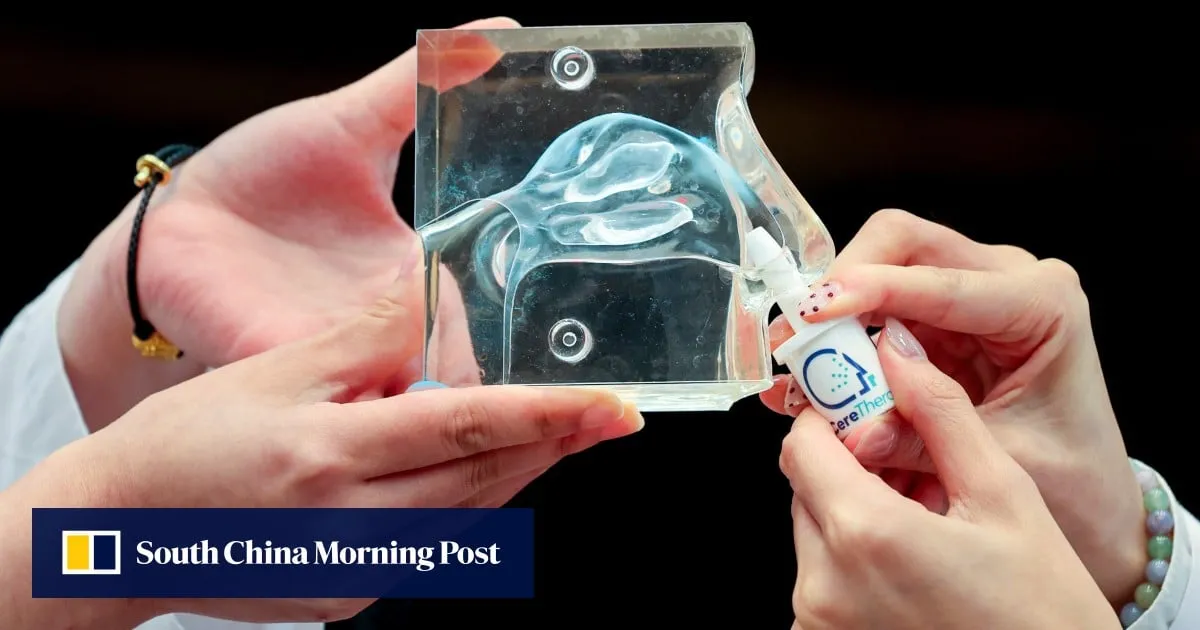
Researchers at the University of Hong Kong (HKU) say they have developed a world-first nasal spray that delivers neurotherapeutic powder directly to the brain as first aid for ischemic stroke patients, with clinical trials expected by 2030.The treatment is intended for initial use by paramedics, before being rolled out to high-risk groups in care facilities and eventually the general public through pharmacies.It was developed by the Li Ka Shing Faculty of Medicine at HKU and the university’s Advanced Biomedical Instrumentation Centre.
SRCSouth China Morning Post
LANGEN
LEANCenter-Right
WORDS81
ENT4
TUE · 2026-05-05 · 09:25 GMTBRIEF NSR-2026-0505-73833
NSR-2026-0505-73833News Report·EN·Technology
Hong Kong researchers develop ‘world-first’ nasal spray for rapid stroke aid
Researchers at the University of Hong Kong have developed a novel nasal spray designed to provide rapid first aid for ischemic stroke patients. This world-first treatment delivers neurotherapeutic powder directly to the brain, aiming to mitigate stroke damage.
Kristen CheungSouth China Morning PostFiled 2026-05-05 · 09:25 GMTLean · Center-RightRead · 1 min
South China Morning PostFIG 01
Reading time
1min
Word count
81words
Sources cited
0cited
Entities identified
4entities
Quality score
100%
§ 01
Briefing Summary
AI-generatedNEWSAR · AI
Researchers at the University of Hong Kong have developed a novel nasal spray designed to provide rapid first aid for ischemic stroke patients. This world-first treatment delivers neurotherapeutic powder directly to the brain, aiming to mitigate stroke damage. The spray is intended for initial administration by paramedics, with plans for wider rollout to high-risk individuals in care facilities and eventually the general public via pharmacies. The development was a collaborative effort between HKU's Li Ka Shing Faculty of Medicine and its Advanced Biomedical Instrumentation Centre. Clinical trials for this innovative stroke aid are anticipated to commence by 2030.
Confidence 0.85Claims 4Entities 4
§ 02
Article analysis
Model · rule-basedFraming
Technology
Public Health
Tone
Measured
AI-assessed
CalmNeutralAlarmist
Factuality
0.80 / 1.00
Factual
LowHigh
Sources cited
0
No named sources
FewMany
§ 03
Key claims
4 extracted01
The treatment is intended for initial use by paramedics.
factualUniversity of Hong Kong researchers
Confidence
0.90
02
The nasal spray delivers neurotherapeutic powder directly to the brain as first aid for ischemic stroke patients.
factualUniversity of Hong Kong researchers
Confidence
0.90
03
Researchers at the University of Hong Kong (HKU) have developed a nasal spray for rapid stroke aid.
factualUniversity of Hong Kong researchers
Confidence
0.90
04
Clinical trials for the nasal spray are expected by 2030.
predictionUniversity of Hong Kong researchers
Confidence
0.70
§ 04
Full report
1 min read · 81 words§ 05
Entities
4 identifiedKey playerOppositionContextPositiveNeutralNegative
Organizations3
Locations1
§ 06
Keywords & salience
8 termsstroke aid
1.00
nasal spray
1.00
ischemic stroke
0.90
neurotherapeutic powder
0.80
university of hong kong
0.70
first aid
0.60
clinical trials
0.50
paramedics
0.40
§ 07
Topic connections
Interactive graph Network visualization showing 11 related topics
View Full Graph Person Organization Location Event|Click node to navigate|Edge numbers = shared articles