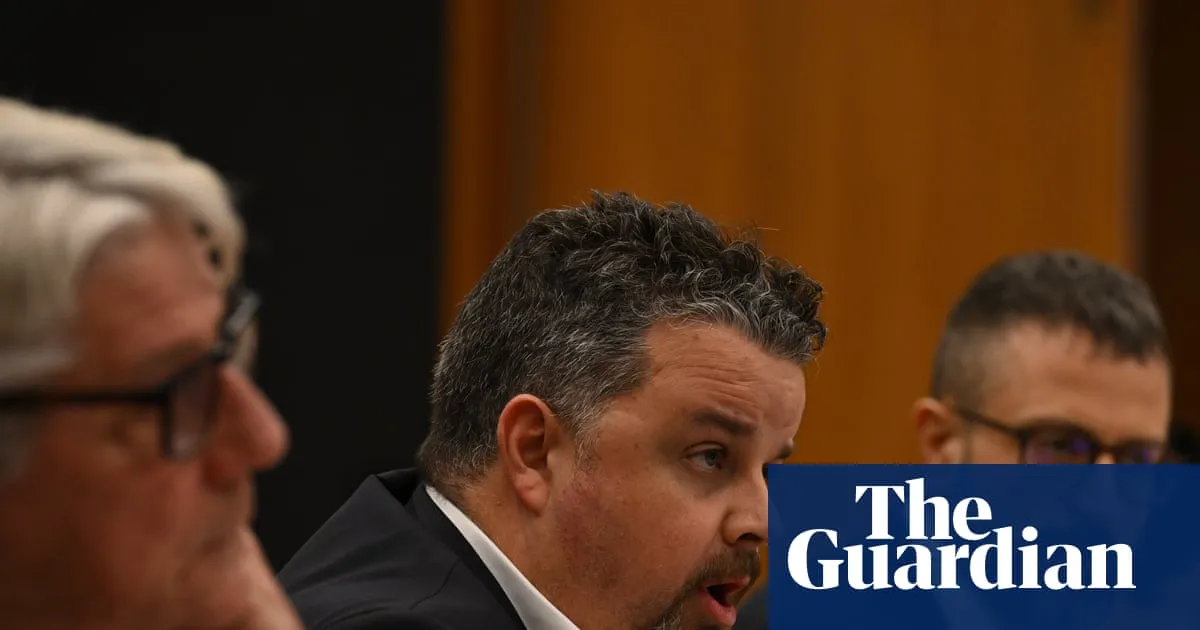
James Cullen (centre), chief of staff to Chris Minns. The NSW court of appeal ruled that the power to compel his evidence was invalid. Photograph: Dean Lewins/AAP View image in fullscreen James Cullen (centre), chief of staff to Chris Minns. The NSW court of appeal ruled that the power to compel his evidence was invalid. Photograph: Dean Lewins/AAP ‘Not a good look’: witnesses refuse to appear before NSW parliamentary hearings after court ruling Chris Minns’ chief of staff launched legal action to avoid giving evidence. Since the court ruled in his favour, others are doing the same Follow our Australia news live blog for latest updates Get our breaking news email, free app or daily news podcast Witnesses are refusing to appear before New South Wales parliamentary inquiries due to a recent court ruling, in a move labelled as having a “completely unacceptable” impact on public interest investigations. In December, the NSW court of appeal ruled that provisions of the Parliamentary Evidence Act allowing for arrest warrants were invalid on the basis that they impaired the court’s institutional integrity. Changes to the more than 100-year-old act come after James Cullen, the chief of staff of the premier, Chris Minns, launched legal action in October to avoid facing an inquiry examining the leaking of confidential minutes from a report into the proposed sale of Rosehill Racecourse in Sydney. The president of the legislative council, Ben Franklin, proposed to seek a warrant for his arrest through the court under 1901 provisions covering witnesses who are not parliamentarians and ignore summons. It followed an earlier confrontation between the premier’s and police minister’s staff and another parliamentary committee over the Dural caravan investigation. Five staffers, including Cullen, eventually agreed to appear after they were threatened with arrest. In March this year, the Australian high court granted special leave for an appeal against the court of appeal, which is unlikely to be heard until September. After the judgment, witnesses have already chosen not to appear before parliamentary inquiries in 2026. Anthony Whealy KC, the chair of the Centre for Public Integrity and former assistant commissioner to Icac, said it was “completely unacceptable that parliament cannot compel witnesses to appear before it in matters of intense public interest”. “It’s not a good look for the Minns government, and it’s not a good look for the democratic principles that are enshrined in the power of parliament to have proper information before it.” The former court of appeal judge said the loss of powers which were similar to those in other states undermined inquiries which were often the precursor to Icac investigations. Last week Brigid Glanville, an external media consultant to the Director of Public Prosecutions (DPP), did not appear before an upper house inquiry into identity protections for court proceedings involving children, including a DPP decision to pitch a story to 2GB relating to a sentencing hearing involving a young person. The chair, Greens MLC Sue Higginson, told the inqury on Friday that Glanville, who was present at the meeting where the decision was made, had declined to appear before the committee on multiple occasions or provide a written statement, and had not made herself available to be served a summons to give evidence. Instead, the director of the DPP, Sally Dowling, fronted the inquiry alone. Asked if she had discussed the court of appeal decision with DPP staff, Dowling said she had. “The decision in Cullen, as all significant constitutional decisions were, was sent via our internal email system to every staff member in the organisation. We are a law firm,” she said. In a statement, a spokesperson for Glanville’s employer, GRACosway, said she had declined the invitation to appear, “as is her right”. “It is important to note that as a result of the [court of appeal] decision … the parliament cannot force people to give evidence at most NSW parliamentary inquiries.” Higginson told Guardian Australia the incident showed “just how important these witness powers are”. “Key witnesses … are simply not turning up to give evidence,” she said. In March, another witness did not appear before an inquiry into mould and maggot issues at Calvary Mater hospital in Newcastle. James O’Brien, the facilities director at Honeywell, the maintenance subcontractor at the hospital, cited the court of appeal decision, the ABC reported. The court of appeal decision has resulted in a stalemate which has seen the Minns government, in minority in both houses, unable to pass several bills in the upper house, where the opposition and crossbenchers can unite to hold the balance of power. The opposition and the crossbench passed a bill in March in an attempt to fix the invalid provisions, which would allow the upper house president to issue a warrant instead of a court, but it is now sitting in the lower house without government support. It has prompted the opposition to attempt to attach the amendments to unrelated bills, effectively stalling the passage of multiple pieces of Minns government legislation. On Tuesday, Franklin ruled that this practice is allowed after the government sought to block it, which may force Labor to negotiate changes to the parliamentary evidence laws. The premier on Tuesday said he would consider a fix to the invalid laws, but said he would wait for the high court’s decision “before we muck around with the legislative changes”. He rejected the idea the status quo after the court of appeal decision was harming democracy. “I don’t think so. We’ve got a division of powers in New South Wales, we’ve got a strong judiciary, we’ve got an independent corruption watchdog.” Explore more on these topics New South Wales New South Wales politics Australian law Chris Minns news Share Reuse this content
SRCThe Guardian - World News
LANGEN
LEANCenter-Left
WORDS952
ENT12
TUE · 2026-05-05 · 15:00 GMTBRIEF NSR-2026-0505-73927
NSR-2026-0505-73927News Report·EN·Legal & Judicial
‘Not a good look’: witnesses refuse to appear before NSW parliamentary hearings after court ruling
Witnesses are refusing to appear before New South Wales parliamentary inquiries following a NSW Court of Appeal ruling in December. The court found provisions of the Parliamentary Evidence Act allowing for arrest warrants to be invalid, impacting the ability to compel evidence.
Penry BuckleyThe Guardian - World NewsFiled 2026-05-05 · 15:00 GMTLean · Center-LeftRead · 4 min
The Guardian - World NewsFIG 01
Reading time
4min
Word count
952words
Sources cited
3cited
Entities identified
12entities
Quality score
100%
§ 01
Briefing Summary
AI-generatedNEWSAR · AI
Witnesses are refusing to appear before New South Wales parliamentary inquiries following a NSW Court of Appeal ruling in December. The court found provisions of the Parliamentary Evidence Act allowing for arrest warrants to be invalid, impacting the ability to compel evidence. This decision stemmed from legal action taken by James Cullen, chief of staff to Premier Chris Minns, to avoid testifying at an inquiry into leaked racecourse sale minutes. The ruling has led to concerns about the integrity of public interest investigations, with some witnesses opting not to attend hearings. The High Court has granted special leave for an appeal, with a hearing expected later this year.
Confidence 0.90Sources 3Claims 5Entities 12
§ 02
Article analysis
Model · rule-basedFraming
Legal & Judicial
Political Strategy
Tone
Mixed Tone
AI-assessed
CalmNeutralAlarmist
Factuality
0.70 / 1.00
Factual
LowHigh
Sources cited
3
Well sourced
FewMany
§ 03
Key claims
5 extracted01
Anthony Whealy KC stated it is 'completely unacceptable that parliament cannot compel witnesses to appear before it in matters of intense public interest'.
quoteAnthony Whealy KC
Confidence
1.00
02
The NSW court of appeal ruled that provisions of the Parliamentary Evidence Act allowing for arrest warrants were invalid.
factual
Confidence
1.00
03
James Cullen, chief of staff to Chris Minns, launched legal action to avoid giving evidence.
factual
Confidence
0.90
04
Witnesses are refusing to appear before NSW parliamentary inquiries due to a recent court ruling.
factual
Confidence
0.90
05
The loss of powers undermines inquiries which are often the precursor to Icac investigations.
factualAnthony Whealy KC
Confidence
0.80
§ 04
Full report
4 min read · 952 words§ 05
Entities
12 identifiedKey playerOppositionContextPositiveNeutralNegative
People4
Organizations5
§ 06
Keywords & salience
10 termscourt ruling
1.00
parliamentary hearings
1.00
compel evidence
0.90
witnesses refuse to appear
0.90
parliamentary evidence act
0.80
public interest investigations
0.70
institutional integrity
0.60
legal action
0.50
arrest warrants
0.50
democratic principles
0.40
§ 07
Topic connections
Interactive graph No topic relationship data available yet. This graph will appear once topic relationships have been computed.