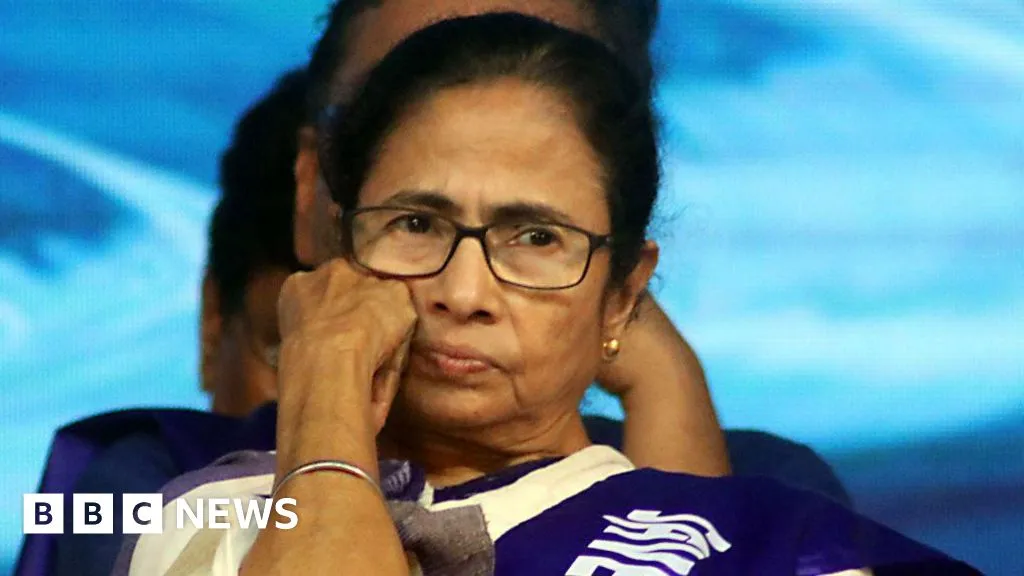
"Mamata, like [Prime Minister and BJP leader] Narendra Modi, has been a politician all her life," says Mukulika Banerjee, an anthropologist at the London School of Economics. "Her opponents were elite bhadralok Communist men - members of Bengal's educated, upper-caste middle-class elite - who looked down on her dark skin and lack of 'respectable' norms." Her early success "only intensified her commitment to stand by the common man - squatting with vendors, arriving wherever there was trouble, dressing simply and making it her hallmark style"."Those early battles made her fearless, realising she could make others feel the same, if she stood by them," says Mukulika Banerjee.Everyone called her 'Didi' - elder sister - because that was the role she came to embody: "a fiercely protective figure who would lay down her life for you", she adds.Unlike most prominent women in Indian politics, Mamata emerged without dynastic backing or a powerful mentor."No-one set up their own party, took on an invincible force like the Communists, ousted them after 34 years and then held power for three terms," Mukulika Banerjee says."And unlike other female politicians, she actively brought other women forward." (Her party fielded 52 women candidates in this election.) The India-today-group" class="entity-link entity-organization" data-entity-id="122793" data-entity-type="organization">The India Today Group via Getty ImagesBanerjee during a hunger strike against plans to build a car factory in BengalFor years, Banerjee's charisma, welfare schemes for women and the rural poor, and Bengal's strong regional identity blunted anti-incumbency, corruption allegations and the BJP's rise."Her success rested on a careful balance: projecting herself as both an uncompromising street fighter and an austere, maternal figure delivering welfare to those living with economic insecurity," says Proma Raychaudhury of Krea University.Even critics conceded that Banerjee possessed an instinctive feel for the emotional grammar of her electorate. But charisma rarely sustains political systems forever.Political scientist Dwaipayan Bhattacharyya once described Bengal under the Communists as a "party society", where the party became embedded in everyday rural life and livelihoods. Banerjee's party inherited this structure but transformed it. Unlike the disciplined cadre organisation of the Communists, Banerjee's party revolved around her own charisma and authority.Bhattacharyya described the TMC as a kind of political "franchisee model": local strongmen, and grassroots leaders were allowed to expand their influence - and often their business interests - in exchange for loyalty to Banerjee. "The franchise model has made the TMC vulnerable," Bhattacharyya presciently wrote in 2023."Its leaders' voracious appetite for material gains has made transactional interests undermine even a pretence of ethical politics, straining the party's bonding with the people."Under Banerjee, Bengal was also grappling with a mounting financial crisis. The state's debt deepened, while the central bank estimated that just four of her welfare schemes for women consumed nearly a quarter of its own-source revenue. Vacant government jobs, a major teachers' recruitment scam and growing concerns over women's safety further eroded the government's standing.India Today Group via Getty ImagesBanerjee at a public meeting to protest against the acquisition of farm land for industry by the Communist government in Bengal Now, after defeat, Banerjee faces a different and perhaps more existential challenge: political survival.Bengal's politics has long been unforgiving to defeated ruling parties, with leaders and local strongmen quickly gravitating to the new centre of power.Political analyst Sayantan Ghosh says many Trinamool leaders may drift towards the BJP - some voluntarily, others under pressure - raising the possibility of a "split within the party itself".The TMC's "apparent lack of ideological cohesion", argues Raychaudhury, could make both the party and its leader especially vulnerable after defeat.For Banerjee personally, the adjustment may be jarring after decades at the centre of power."It will be a difficult phase for her," says Ghosh. "Since first winning in the late 1980s, Mamata without office or authority is something Bengal politics has rarely seen."Sondeep Shankar/Getty ImagesBanerjee at an election campaign for the Congress party in Kolkata in 1991Writing the political obituary of the 71-year-old leader may still be premature. Even so, this defeat could mark a more fundamental rupture than the crises she has survived before.Mukulika Banerjee argues that politicians like Mamata thrived in what was once a "reasonably level playing field". That, she says, is "no longer the case" - alluding to the single-party dominance of Modi's BJP. Monday's verdict, she suggests, reflects not just discontent but that imbalance.Which leaves some final questions.
SRCBBC News - World
LANGEN
LEANCenter
WORDS715
ENT12
TUE · 2026-05-05 · 23:27 GMTBRIEF NSR-2026-0506-74003
NSR-2026-0506-74003Analysis·EN·Human Interest
India's fiercest female politician faces a fight for survival
West Bengal Chief Minister Mamata Banerjee, a lifelong politician, faces a significant challenge to her political survival. Known for her populist appeal and "elder sister" persona, Banerjee rose to power by challenging the established Communist elite and has since led her Trinamool Congress (TMC) party for three terms.
BBC News - WorldFiled 2026-05-05 · 23:27 GMTLean · CenterRead · 3 min
BBC News - WorldFIG 01
Reading time
3min
Word count
715words
Sources cited
3cited
Entities identified
12entities
Quality score
100%
§ 01
Briefing Summary
AI-generatedNEWSAR · AI
West Bengal Chief Minister Mamata Banerjee, a lifelong politician, faces a significant challenge to her political survival. Known for her populist appeal and "elder sister" persona, Banerjee rose to power by challenging the established Communist elite and has since led her Trinamool Congress (TMC) party for three terms. Her success was built on a blend of street-fighter image and maternal welfare provision, resonating with the electorate. However, her political model, centered on her personal charisma and a less structured party organization, is now being tested by anti-incumbency sentiment and the rising influence of the BJP.
Confidence 0.90Sources 3Claims 5Entities 12
§ 02
Article analysis
Model · rule-basedFraming
Human Interest
Political Strategy
Tone
Mixed Tone
AI-assessed
CalmNeutralAlarmist
Factuality
0.40 / 1.00
Mixed
LowHigh
Sources cited
3
Well sourced
FewMany
§ 03
Key claims
5 extracted01
The TMC's leaders' 'voracious appetite for material gains' has undermined ethical politics and strained the party's bond with the people.
quoteDwaipayan Bhattacharyya
Confidence
0.90
02
The TMC's 'franchisee model,' where local leaders expanded influence for loyalty, has made the party vulnerable.
quoteDwaipayan Bhattacharyya
Confidence
0.90
03
Mamata Banerjee's political success rested on projecting herself as both an uncompromising street fighter and an austere, maternal figure.
quoteProma Raychaudhury
Confidence
0.90
04
Mamata Banerjee emerged without dynastic backing or a powerful mentor, unlike most prominent women in Indian politics.
quoteMukulika Banerjee
Confidence
0.90
05
Bengal is grappling with a mounting financial crisis, with deepening state debt.
factual
Confidence
0.80
§ 04
Full report
3 min read · 715 words§ 05
Entities
12 identifiedKey playerOppositionContextPositiveNeutralNegative
People5
Organizations5
§ 06
Keywords & salience
10 termsfemale politician
1.00
political survival
0.90
mamata banerjee
0.80
indian politics
0.70
charisma
0.60
regional identity
0.50
welfare schemes
0.50
grassroots leaders
0.40
election
0.40
political strategy
0.40
§ 07
Topic connections
Interactive graph Network visualization showing 7 related topics
View Full Graph Person Organization Location Event|Click node to navigate|Edge numbers = shared articles