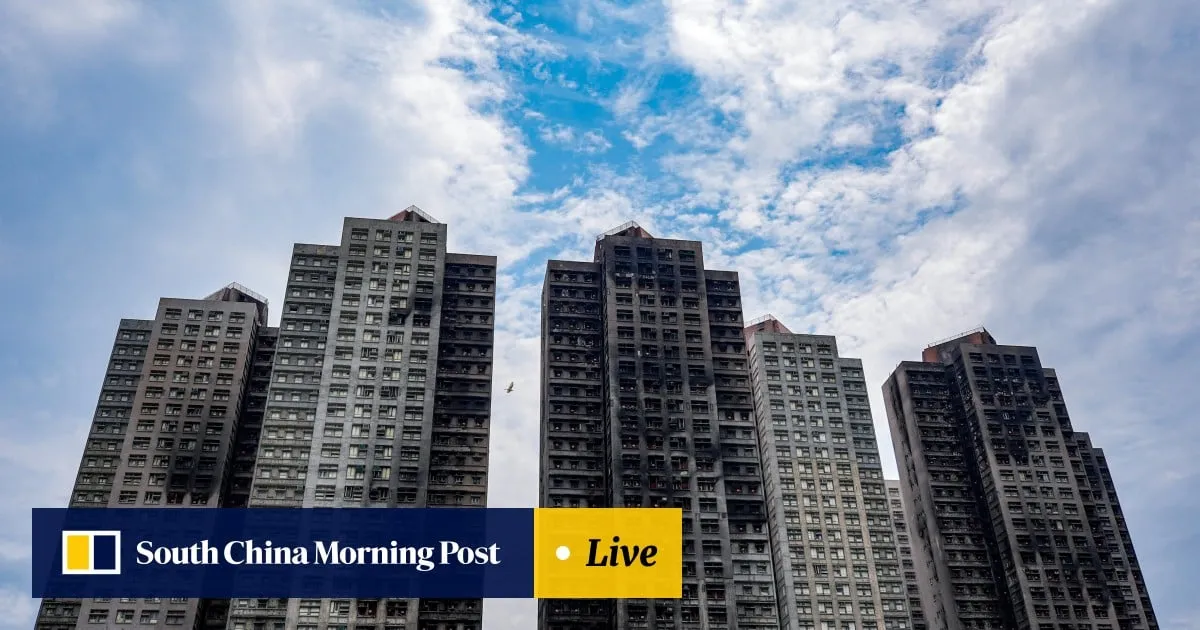
This story has been made freely available as a public service to our readers. Please consider supporting SCMP’s journalism by subscribing.All eyes are on the Housing Bureau’s Independent Checking Unit (ICU), whose officers are scheduled to testify before a judge-led panel on Wednesday about their role in Hong Kong’s Tai Po blaze.Senior maintenance surveyor Andy Ku Siu-ping will be the only witness giving live evidence in the first of three sessions of the fourth round of evidential hearings.The unit, responsible for overseeing maintenance of government-built residential complexes, has long been criticised for failing to act on residents’ complaints about flammable polyfoam boards and substandard scaffolding mesh at Tai Po’s Wang Fuk Court before the fire.Pressed by committee lead counsel Victor Dawes to explain the ICU’s responsibilities on Wednesday morning, Ku admits the unit had failed to properly monitor safety issues such as the use of substandard scaffolding and flammable polyfoam boards.The inferno broke out at the residential estate on November 26, 2025, when it was undergoing facade renovation. The blaze was Hong Kong’s deadliest since 1948, killing 168 people and displacing almost 5,000.ICU surveyors had also allegedly “tipped off” the project consultant before inspecting the fire retardancy of scaffolding nets.In written submissions, the unit’s officers said they could not act on the use of polyfoam boards because no regulations governed their temporary use – a claim rebutted by the Buildings Department before the committee.At a previous session, the committee heard that the Urban Renewal Authority, which oversees the Smart Tender system through which Wang Fuk Court homeowners selected Will Power Architects as project consultant and Prestige Engineer and Construction as the main contractor, had a limited role in addressing alleged bid-rigging in the project.Peter Wong Se-king, the authority’s director of building rehabilitation, conceded that the Smart Tender system could not effectively tackle tender manipulation and might give residents a “false sense of security”, vowing to address the issue through a strengthened system.Follow our live reporting as the hearing continues.More of our coverage:
SRCSouth China Morning Post
LANGEN
LEANCenter-Right
WORDS332
ENT12
WED · 2026-05-06 · 04:03 GMTBRIEF NSR-2026-0506-74048
NSR-2026-0506-74048News Report·EN·Legal & Judicial
Tai Po fire probe: Housing Bureau’s checking unit failed to follow up on safety issues
An investigation into Hong Kong's deadly Tai Po fire, which killed 168 people in November 2025, has revealed failures by the Housing Bureau's Independent Checking Unit (ICU). The ICU, responsible for government housing maintenance, admitted to not properly monitoring safety issues like substandard scaffolding and flammable polyfoam boards at Wang Fuk Court before the blaze.
Jess Ma,Brian WongSouth China Morning PostFiled 2026-05-06 · 04:03 GMTLean · Center-RightRead · 2 min
South China Morning PostFIG 01
Reading time
2min
Word count
332words
Sources cited
3cited
Entities identified
12entities
Quality score
100%
§ 01
Briefing Summary
AI-generatedNEWSAR · AI
An investigation into Hong Kong's deadly Tai Po fire, which killed 168 people in November 2025, has revealed failures by the Housing Bureau's Independent Checking Unit (ICU). The ICU, responsible for government housing maintenance, admitted to not properly monitoring safety issues like substandard scaffolding and flammable polyfoam boards at Wang Fuk Court before the blaze. Despite residents' complaints, the ICU allegedly failed to act, with one officer admitting the unit did not adequately oversee these safety concerns. The ICU also reportedly alerted a project consultant before inspecting scaffolding nets for fire retardancy. The Buildings Department disputed the ICU's claim that no regulations covered the temporary use of polyfoam boards. The fire occurred during facade renovation at the residential estate.
Confidence 0.90Sources 3Claims 5Entities 12
§ 02
Article analysis
Model · rule-basedFraming
Legal & Judicial
Public Health
Tone
Measured
AI-assessed
CalmNeutralAlarmist
Factuality
0.80 / 1.00
Factual
LowHigh
Sources cited
3
Well sourced
FewMany
§ 03
Key claims
5 extracted01
The Tai Po blaze was Hong Kong’s deadliest since 1948, killing 168 people and displacing almost 5,000.
statistic
Confidence
1.00
02
The Urban Renewal Authority's Smart Tender system could not effectively tackle tender manipulation and might give residents a “false sense of security”.
quotePeter Wong Se-king (URA)
Confidence
0.90
03
The Housing Bureau’s Independent Checking Unit (ICU) failed to properly monitor safety issues like substandard scaffolding and flammable polyfoam boards.
factualAndy Ku Siu-ping (ICU)
Confidence
0.90
04
ICU officers allegedly "tipped off" the project consultant before inspecting fire retardancy of scaffolding nets.
factualarticle's reporting based on previous sessions
Confidence
0.70
05
No regulations governed the temporary use of polyfoam boards, preventing ICU action.
factualICU officers (written submissions)
Confidence
0.60
§ 04
Full report
2 min read · 332 words§ 05
Entities
12 identifiedKey playerOppositionContextPositiveNeutralNegative
People3
Organizations5
§ 06
Keywords & salience
10 termsindependent checking unit
1.00
tai po fire
1.00
safety issues
0.90
flammable polyfoam boards
0.80
substandard scaffolding
0.80
housing bureau
0.70
facade renovation
0.60
urban renewal authority
0.50
smart tender system
0.50
bid-rigging
0.40
§ 07
Topic connections
Interactive graph No topic relationship data available yet. This graph will appear once topic relationships have been computed.