In the southern suburbs of Beirut, the neighbourhood of Hay el Sellom is barely recognisable.What was once a densely populated, lively community is now a landscape of collapsed concrete, twisted metal and exposed wires. Homes have been reduced to layers of rubble. Staircases lead nowhere. The sounds of everyday life have been replaced by silence.Despite repeated Israeli attacks since the start of the Iran war on other parts of Beirut's southern suburbs, where Hezbollah holds sway, residents say this neighbourhood remained calm until the afternoon of 8 April.Beirut's southern suburbs had faced repeated Israeli evacuation orders and air strikes since the start of the war, but residents told us few people left Hay El Sellom, as they had nowhere to go. They also said that this neighbourhood had remained relatively calm.On that Wednesday, Mohammed's son Abbas was at home asleep when the building was hit by an Israeli air strike. "The three floors above mine all fell into one room," Mohammed says. "They all came down together… on top of him."It was part of a deadly wave of strikes that begun at 14.15 local time and saw about 100 targets across Lebanon hit in the space of just 10 minutes, according to Israel.The destruction wrought in this brief window would surpass that of any other day in this war. The stated targets included Hezbollah command centres and military sites, but among the casualties were many ordinary Lebanese citizens.The death toll for the day reached 361, according to the Lebanese authorities, with more than 1,000 injured.'This is the second home I've lost'In the weeks after the attack, the BBC visited some of the areas hit to piece together what happened on that day. We met Mohammed in the ruins of his apartment."This is the second home I've lost," he says. "In the last war [in 2024] I lost a home. And in this war I lost another."I wish it was just my home that I lost, and that my son survived. This brick can be rebuilt. But nothing will bring back my son."He is adamant that everyone who died were residents of the building. "If I thought there was even a 1% chance that someone from Hezbollah lived here, I wouldn't have stayed," he says. "I would never risk my son's life.""Maybe, since I'm 45 years old, I wouldn't worry about the risk to myself but a young man with his whole life ahead of him - I would not put him in a building if anyone was there."Following the death of his son, Mohammed expressed his sympathies for Hezbollah, asking it to defend Lebanon, in an interview with local media. That's a sentiment echoed by many people we spoke to in areas that have been consistently attacked by Israel.Hezbollah – an Iran-backed militia and political party based in Lebanon – had fired rockets into Israel on 2 March, in response to US and Israeli attacks on Iran. A wider Israeli occupation of southern Lebanon followed, and further attempts to destroy the Hezbollah leadership.Earlier on 8 April, a temporary ceasefire between the United States and Iran had been announced, a pause in a wider regional war that had already reshaped the Middle East.Even though Israel said Lebanon would not be included, people on the ground were cautiously hopeful – until the assault began.'It all became silent'By analysing verified footage, social media posts and satellite imagery and comparing these with eyewitness accounts, we have identified at least five strikes that hit Hay el Sellom in quick succession.Some Israeli media reported Ali Mohammed Ghulam Dahini was killed in the neighbourhood, and say he was a senior Hezbollah figure. We also found a memorial poster which describes him as a Hezbollah fighter. We asked the Israel Defense Forces (IDF) if Dahini was a target, but it did not respond to this question, nor did it provide specific information about who or what was being targeted in Hay el Sellom.The narrow streets of Hay el Sellom are strewn with rubble and twisted metalWhat is clear is the scale of civilian casualties. The Lebanese health ministry has told us more than 80 people were killed in this neighbourhood. Our analysis shows that at least 15 of those who died were children.The narrow roads that run between tightly packed buildings in Hay el Sellom slowed rescue efforts. Residents describe people trapped under rubble, calling out for help, sending messages and waiting.One of the first to arrive at a nearby hospital was Ghassan Jawad. He had been asleep when the building collapsed around him and his family."I suddenly found myself underground," he says. "I thought I was dead." He remembers the sound of people screaming. "I started to pray because I knew that was it."Then, he says, something unexpected happened. "My cat started digging. She made a small hole so I could breathe."After about 10 minutes, he heard voices above him, as neighbours began digging through the rubble. "They brought hammers and metal bars," he says. "They dug me out." But others did not survive."I could hear people dying," he says quietly. "I heard my mother praying next to me… then her voice stopped." His mother, two sisters and their children were all killed. "It became silent," he says. "Completely silent."Simultaneous strikeJust four miles away, in central Beirut, another neighbourhood was also struck -Corniche al Mazraa, one of the city's busiest areas. At 14:15 a gym class was in progress, a restaurant was preparing food, and a barber was mid-cut.Then with no prior warning the explosions came, killing 16 people, according to the Lebanese Health Ministry.It was the first time this neighbourhood had been targeted in the latest war.Noha, a fitness instructor, was at work seven storeys above street level when two bombs hit a confectionary company's warehouse, causing a powerful blast that damaged surrounding buildings.SuppliedCCTV cameras across Corniche al Mazraa recorded the moment of the attackShe told me that she had often watched from a distance as the southern suburbs of Beirut were pounded, never thinking that the attacks would reach the heart of the city. "For us, this happened without warning," she says."I looked out and found the world was black. I found people all covered in blood. I found people on the floor."Noha questions why the area was struck. "The target was civilian. Certainly, a civilian target," she says. "We are the ones who were hurt."We searched for evidence of a Hezbollah target and could not find one. We also asked the IDF, but it did not respond."We came here for safety," Kawkab says.Al Zahraa's cleric, Sheikh Sadiq Naboulsi, was also killed in the attack. He had deep ideological and family ties to Hezbollah, although did not himself hold an official position. Another man killed here - Mohammed Ma'ani - was a senior Hezbollah official in the group's liaison and co-ordination unit. The IDF declined to confirm whether either men were the intended targets.It has also been possible to identify seven of the other nine individuals reportedly killed here. All the available evidence suggests they were civilians.EPAThe two sisters died while attending prayers at the al Zahraa mosqueThe IDF says it targeted 250 Hezbollah operatives that day but has not provided a full list of names. Lebanon's health ministry disputes this, saying the vast majority of those killed were civilians. Asked what steps were taken to protect civilians, the IDF said it made "extensive efforts to mitigate harm to uninvolved individuals".The IDF also said that most of the targeted sites were located "within the heart of the civilian population, as part of Hezbollah's cynical exploitation of Lebanese civilians as human shields to safeguard its operations".Hezbollah denies this, stating that Israel targets civilians as a pressure tactic. The group, proscribed as a terrorist organisation by the UK, US and some gulf Arab states, added that it never wanted war and is acting in self-defence.
SRCBBC News - World
LANGEN
LEANCenter
WORDS1 308
ENT10
TUE · 2026-05-05 · 21:22 GMTBRIEF NSR-2026-0505-74050
NSR-2026-0505-74050News Report·EN·Human Interest
'Nothing will bring back my son': How 10 minutes of bombing by Israel shattered lives in Lebanon
On April 8th, a rapid series of Israeli airstrikes, targeting approximately 100 locations across Lebanon in just ten minutes, caused widespread devastation, particularly in Beirut's southern suburbs. The neighborhood of Hay el Sellom, previously calm and densely populated, was reduced to rubble.
BBC News - WorldFiled 2026-05-05 · 21:22 GMTLean · CenterRead · 6 min
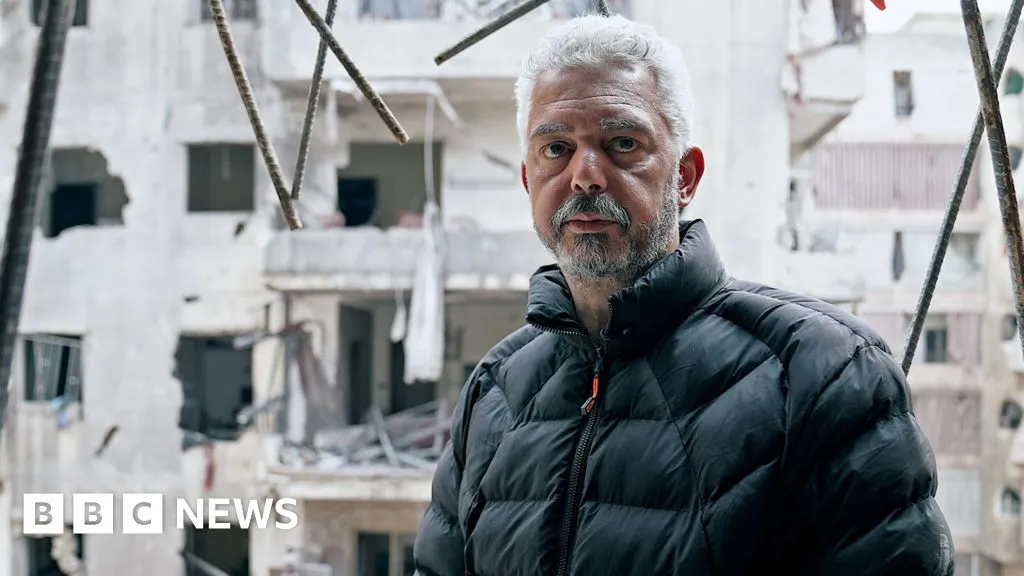
BBC News - WorldFIG 01
Reading time
6min
Word count
1 308words
Sources cited
3cited
Entities identified
10entities
Quality score
100%
§ 01
Briefing Summary
AI-generatedNEWSAR · AI
On April 8th, a rapid series of Israeli airstrikes, targeting approximately 100 locations across Lebanon in just ten minutes, caused widespread devastation, particularly in Beirut's southern suburbs. The neighborhood of Hay el Sellom, previously calm and densely populated, was reduced to rubble. Among the casualties was Abbas, a young man killed when his apartment building collapsed. His father, Mohammed, expressed profound grief, stating that while homes can be rebuilt, his son cannot be. Residents of Hay el Sellom maintained that the building struck housed only civilians and that they would not have remained if Hezbollah members were present. The strikes, reportedly aimed at Hezbollah command centers and military sites, resulted in 361 deaths and over 1,000 injuries nationwide on that day.
Confidence 0.90Sources 3Claims 5Entities 10
§ 02
Article analysis
Model · rule-basedFraming
Human Interest
Conflict
Tone
Mixed Tone
AI-assessed
CalmNeutralAlarmist
Factuality
0.70 / 1.00
Factual
LowHigh
Sources cited
3
Well sourced
FewMany
§ 03
Key claims
5 extracted01
Mohammed states that everyone who died in his building were residents and not Hezbollah members.
quoteMohammed
Confidence
1.00
02
Mohammed lost his son Abbas in an Israeli air strike on his apartment building in Hay el Sellom.
quoteMohammed
Confidence
1.00
03
The death toll for April 8th reached 361, with over 1,000 injured, according to Lebanese authorities.
statisticLebanese authorities
Confidence
0.90
04
A 10-minute Israeli bombing campaign on April 8th destroyed approximately 100 targets across Lebanon.
statisticIsrael
Confidence
0.90
05
Hezbollah fired rockets into Israel on March 2nd, leading to Israeli occupation and attempts to destroy Hezbollah leadership.
factual
Confidence
0.80
§ 04
Full report
6 min read · 1 308 words§ 05
Entities
10 identifiedKey playerOppositionContextPositiveNeutralNegative
Organizations2
Locations5
§ 06
Keywords & salience
9 termsisraeli attacks
1.00
lebanon
0.90
beirut
0.90
civilian casualties
0.80
hezbollah
0.70
air strike
0.60
destruction
0.60
loss of life
0.50
displacement
0.40
§ 07
Topic connections
Interactive graph No topic relationship data available yet. This graph will appear once topic relationships have been computed.