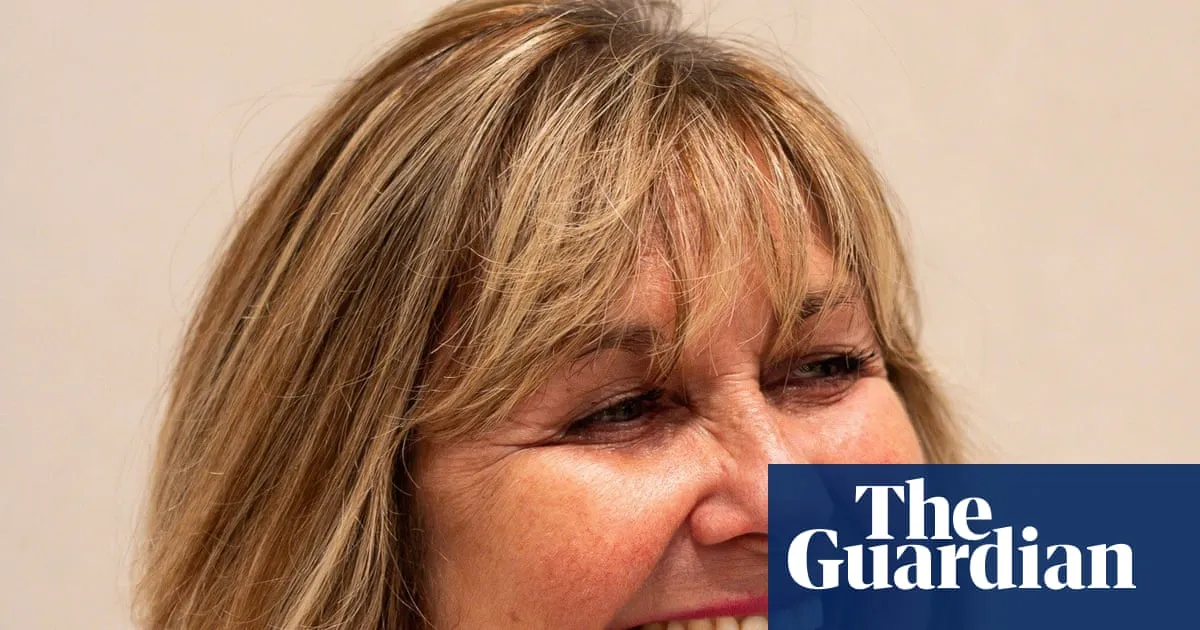
An opera singer who hid her deafness for more than 30 years has described “life-changing” surgery that has the potential to become the norm for thousands of NHS patients.Janine Roebuck, 72, from London, had double cochlear implants fitted to restore her hearing, a method now being trialled nationwide to see whether it can transform the lives of thousands more people.Under current guidelines from the National Institute for Health and Care Excellence (Nice), the vast majority of deaf adults are only eligible for one cochlear implant.This is based on analysis suggesting that offering two is not cost effective for the NHS and a lack of evidence in the area.To address this, the National Institute for Health and Care Research (NIHR), which receives government funding, is backing a study into two implants for adults, led by Addenbrooke’s hospital and the University of Cambridge.Roebuck suffers from the inherited condition sensorineural hearing loss, which accounts for about 70% of all cases of genetic hearing loss.The condition has been carried down through generations of her family.In 2019, she underwent cochlear implant surgery on the NHS for one ear, as per the guidelines, but decided to pay to have the other ear done at the same time.For more than 30 years, she had hid her deteriorating hearing, despite being a mezzo-soprano, performing in operas, operettas and musicals, including at the Royal Opera House in London. She has now retired.She said having the surgery was “the best thing I’ve ever done in my life”, adding: “Having two implants is light years away from just one.“Sound quality is so much better, sounds are fuller, clearer, louder and more natural.“It’s much easier to tell where sounds are coming from, especially in busy spaces.“If you’re out in public, it can be hard to follow who is speaking, making joining in with conversations almost impossible.“As a result, you have debilitating concentration fatigue at the end of every day.”She described how the surgery has dramatically improved her life, adding: “With bilateral implants, I no longer consider myself to be deaf. They have been utterly life-changing and, for me, have broken a generational curse.“Struggling to hear can be extremely isolating and many people experience anxiety or depression as a result. The implants are life-changing. They reconnect you to the world and, most importantly, people.“Communication is surely the longing of every human heart. I also feel safer and more secure having the two implants.I am more aware of and connected to what’s happening in the world around me.“And, if anything goes wrong with one of the implants, I’m not suddenly plunged into a world of total silence.”Roebuck said her father had the same condition and “dealt with it graciously and bravely”. Her grandfather and his brothers and sisters struggled too.She said having the implants switched on gave her joy and over the next six months she discovered new sounds.The new trial will run in 14 hospitals and includes more than 250 adults. They will receive either one (unilateral) or two (bilateral) implants so results can be compared. Those in the trial will need to have become deaf later in life and cannot already have an implant.Matthew Smith, an ear, nose and throat surgeon at Addenbrooke’s hospital, and Prof Debi Vickers, a speech and hearing scientist in the department of clinical neurosciences at the University of Cambridge, are leading the study.Smith said: “We know from giving bilateral implants to children that it can have a transformative effect on their quality of life and interactions with other people.“Through this study, we can offer the same opportunity to adults who have become deaf, and understand the potential added value of bilateral cochlear implants, not just in terms of hearing, but also how they enrich quality of life.”Vickers said: “Children routinely receive bilateral cochlear implants.“These can provide three-dimensional hearing, enabling them to hear more naturally than unilateral, with improved access to sound and better engagement with society.“Adults tell us, and I agree, that they should be given the same hearing opportunities as children.“In turn, these will result in reduced social isolation, enriched communication, improved mental health, and better overall quality of life”.Once the trial finishes, it will be submitted to Nice for review.Ralph Holme, director of research at the RNID, said: “It’s wonderful to hear just how life‑changing this experience has been for Janine, and the impact it’s had on her quality of life.”
SRCThe Guardian - World News
LANGEN
LEANCenter-Left
WORDS726
ENT8
WED · 2026-05-06 · 07:00 GMTBRIEF NSR-2026-0506-74091
NSR-2026-0506-74091News Report·EN·Human Interest
Opera singer who hid deafness for 30 years hails ‘life-changing’ surgery
Opera singer Janine Roebuck, 72, has undergone "life-changing" double cochlear implant surgery to restore her hearing after hiding deafness for over 30 years. Roebuck, who suffers from inherited sensorineural hearing loss, received the implants, with the second ear privately funded initially.
PA MediaThe Guardian - World NewsFiled 2026-05-06 · 07:00 GMTLean · Center-LeftRead · 3 min
The Guardian - World NewsFIG 01
Reading time
3min
Word count
726words
Sources cited
3cited
Entities identified
8entities
Quality score
100%
§ 01
Briefing Summary
AI-generatedNEWSAR · AI
Opera singer Janine Roebuck, 72, has undergone "life-changing" double cochlear implant surgery to restore her hearing after hiding deafness for over 30 years. Roebuck, who suffers from inherited sensorineural hearing loss, received the implants, with the second ear privately funded initially. This procedure is now being trialled nationwide by the NIHR, led by Addenbrooke's hospital and the University of Cambridge, to assess the benefits of bilateral implants for adults. Current NHS guidelines typically only approve one implant per adult due to cost-effectiveness concerns and a lack of evidence, but this study aims to address that. Roebuck describes the bilateral implants as significantly improving sound quality, spatial awareness, and her ability to communicate, effectively ending her self-perceived deafness and reconnecting her to the world.
Confidence 0.90Sources 3Claims 5Entities 8
§ 02
Article analysis
Model · rule-basedFraming
Human Interest
Public Health
Tone
Measured
AI-assessed
CalmNeutralAlarmist
Factuality
0.70 / 1.00
Factual
LowHigh
Sources cited
3
Well sourced
FewMany
§ 03
Key claims
5 extracted01
Janine Roebuck stated that having two implants is 'light years away from just one', with 'fuller, clearer, louder and more natural' sound quality.
quoteJanine Roebuck
Confidence
1.00
02
Current NICE guidelines generally limit deaf adults to one cochlear implant due to cost-effectiveness and lack of evidence for two.
factualNational Institute for Health and Care Excellence (Nice)
Confidence
1.00
03
Double cochlear implants are being trialled nationwide to assess their potential to transform lives for thousands of NHS patients.
factual
Confidence
1.00
04
An opera singer hid her deafness for over 30 years and underwent 'life-changing' double cochlear implant surgery.
factualJanine Roebuck
Confidence
1.00
05
Sensorineural hearing loss, an inherited condition, accounts for about 70% of all genetic hearing loss cases.
statistic
Confidence
0.90
§ 04
Full report
3 min read · 726 words§ 05
Entities
8 identifiedKey playerOppositionContextPositiveNeutralNegative
Organizations6
NH
National Health Service
GovernmentContext
3x
80
NI
National Institute for Health and Care Research
GovernmentContext
70
NI
National Institute for Health and Care Excellence
GovernmentContext
70
UO
University of Cambridge
EducationalContext
60
AH
Addenbrooke’s hospital
EducationalContext
60
RO
Royal Opera House
EducationalContext
50
Locations1
§ 06
Keywords & salience
10 termscochlear implants
1.00
hearing loss
0.90
opera singer
0.80
nhs
0.70
sensorineural hearing loss
0.60
bilateral implants
0.60
national institute for health and care excellence
0.50
genetic hearing loss
0.50
national institute for health and care research
0.40
addenbrooke’s hospital
0.40
§ 07
Topic connections
Interactive graph No topic relationship data available yet. This graph will appear once topic relationships have been computed.