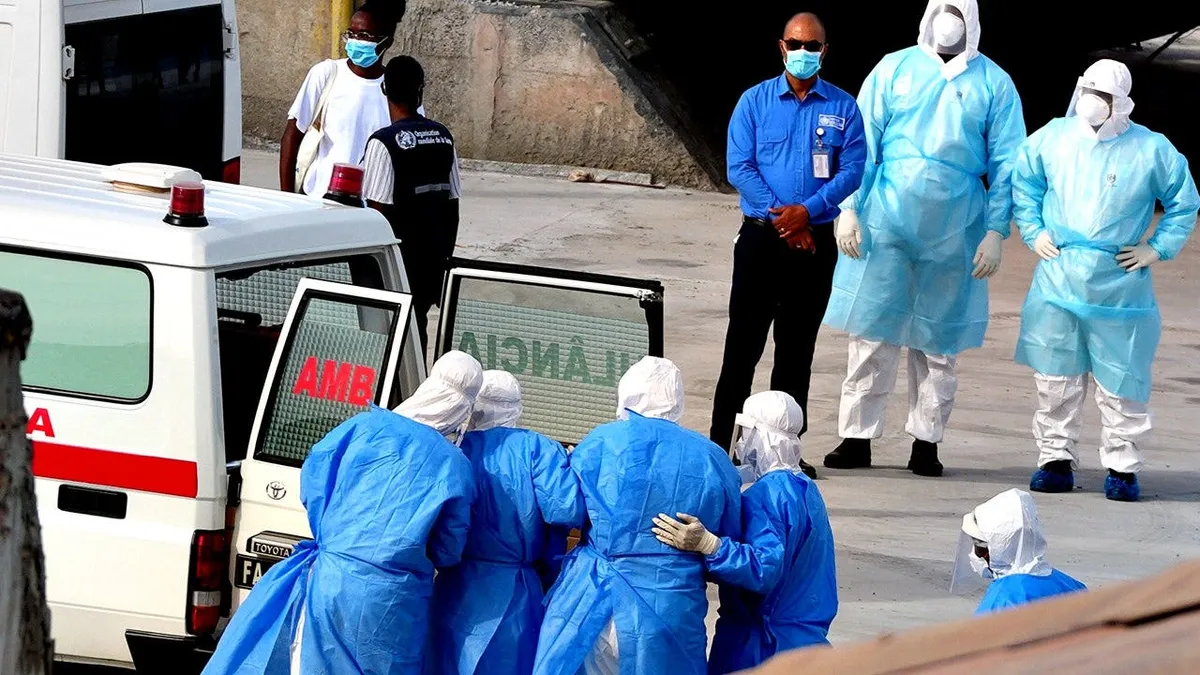
Fox News Media Fox News MediaFox BusinessFox NationFox News AudioFox WeatherOutkickFox NoticiasBooks Outbreaks 3 passengers dead and contact tracing underway across Europe and Africa after Andes strain confirmed NEWYou can now listen to Fox News articles! A bird-watching tour in a region that had never recorded a hantavirus case is now at the center of an urgent investigation, as Argentine officials examine whether a Dutch couple unknowingly brought the deadly virus aboard a cruise ship after a stop at a landfill. Argentina’s leading hypothesis is that a Dutch couple may have been exposed to rodents while visiting the landfill during the tour in the city of Ushuaia, contracting the virus before boarding the cruise ship, two Argentine officials investigating the origins of the outbreak told The Associated Press on Wednesday.Hantavirus usually spreads by inhaling contaminated rodent droppings. The World Health Organization (WHO) said human-to-human transfer is uncommon, but possible. Authorities previously said Ushuaia and surrounding Tierra del Fuego province had never recorded a hantavirus case. RARE HANTAVIRUS HUMAN-TO-HUMAN TRANSMISSION SUSPECTED ON LUXURY CRUISE SHIP WHERE 3 HAVE DIED Health workers in protective gear evacuate patients from the MV Hondius cruise ship into an ambulance at a port in Praia, Cape Verde, on May 6, 2026. (Misper Apawu/AP) The Dutch-flagged MV Hondius ship is at the center of an outbreak that has already killed three passengers and sickened several others. Contact tracing is underway across Europe and Africa to track possible spread among passengers who have since disembarked.Testing in Switzerland, Africa" class="entity-link entity-location" data-entity-id="534" data-entity-type="location">South Africa and Senegal has confirmed that this is the Andes strain, according to authorities. The WHO says the variant is found primarily in Argentina and Chile and can spread through close contact, though rare. The MV Hondius cruise ship is anchored at a port in Praia, Cape Verde, on May 6, 2026. (Misper Apawu/AP) Swiss officials said a man who returned from the cruise sought treatment after developing symptoms and was immediately isolated. They said he tested positive for the Andes strain.WHO Director-General Tedros Adhanom Ghebreyesus said Wednesday that three suspected cases were evacuated from the vessel and are being transported to the Netherlands for treatment.The Associated Press contributed to this report.
SRCFox News - World
LANGEN
LEANCenter-Right
WORDS362
ENT12
WED · 2026-05-06 · 17:01 GMTBRIEF NSR-2026-0506-74226
NSR-2026-0506-74226News Report·EN·Public Health
Argentina investigators zero in on possible origin point of hantavirus in deadly cruise outbreak
Argentine investigators are focusing on a bird-watching tour in Ushuaia as the potential origin point for a deadly hantavirus outbreak on the cruise ship MV Hondius. The leading hypothesis suggests a Dutch couple may have contracted the Andes strain of the virus from rodent droppings at a landfill visited during the tour before boarding the ship.
Stephen SoraceFox News - WorldFiled 2026-05-06 · 17:01 GMTLean · Center-RightRead · 2 min
Fox News - WorldFIG 01
Reading time
2min
Word count
362words
Sources cited
4cited
Entities identified
12entities
Quality score
100%
§ 01
Briefing Summary
AI-generatedNEWSAR · AI
Argentine investigators are focusing on a bird-watching tour in Ushuaia as the potential origin point for a deadly hantavirus outbreak on the cruise ship MV Hondius. The leading hypothesis suggests a Dutch couple may have contracted the Andes strain of the virus from rodent droppings at a landfill visited during the tour before boarding the ship. This strain, typically found in Argentina and Chile, can spread through close contact, though human-to-human transmission is rare. The outbreak has resulted in three confirmed deaths among passengers, with contact tracing ongoing across Europe and Africa. Cases have been confirmed in Switzerland, South Africa, and Senegal, with three suspected cases evacuated for treatment in the Netherlands.
Confidence 0.90Sources 4Claims 5Entities 12
§ 02
Article analysis
Model · rule-basedFraming
Public Health
Human Interest
Tone
Mixed Tone
AI-assessed
CalmNeutralAlarmist
Factuality
0.90 / 1.00
Factual
LowHigh
Sources cited
4
Well sourced
FewMany
§ 03
Key claims
5 extracted01
Contact tracing is underway across Europe and Africa for passengers who disembarked the cruise ship.
factualAuthorities
Confidence
0.95
02
Three passengers have died and several others are sickened due to the Andes strain of hantavirus confirmed on the MV Hondius cruise ship.
factualAuthorities
Confidence
0.95
03
Ushuaia and the surrounding Tierra del Fuego province had never previously recorded a hantavirus case.
factualAuthorities
Confidence
0.90
04
The Andes strain of hantavirus can spread through close contact, though human-to-human transmission is uncommon.
factualWorld Health Organization
Confidence
0.90
05
Argentine officials are investigating a bird-watching tour in Ushuaia as a possible origin point for a hantavirus outbreak on a cruise ship.
factualArgentine officials
Confidence
0.90
§ 04
Full report
2 min read · 362 words§ 05
Entities
12 identifiedKey playerOppositionContextPositiveNeutralNegative
Organizations1
Locations11
§ 06
Keywords & salience
8 termshantavirus
1.00
andes strain
0.90
cruise outbreak
0.80
rodent droppings
0.70
contact tracing
0.60
mv hondius
0.50
ushuaia
0.40
landfill
0.40
§ 07
Topic connections
Interactive graph Network visualization showing 51 related topics
View Full Graph Person Organization Location Event|Click node to navigate|Edge numbers = shared articles