Like a long-promised train that finally trundles into view, the green light for Northern Powerhouse Rail was better late than never. It arrived to relief rather than rejoicing from Labour mayors. They were happy, at last, to get moving.A brief recap: the world’s most expensive and long-delayed rail line, HS2, was originally due to speed passengers from London to Birmingham and north on two separate legs to Manchester and Leeds.The northern legs were lopped off in 2023 by Rishi Sunak, the then prime minister, to widespread indignation from Labour leaders.That left Northern Powerhouse Rail (NPR), a new east-west network originally designed to replace the region’s Victorian-era tracks with a fully electrified high-speed line. But that too was significantly scaled back under successive Conservative governments.And now, 11 years and six prime ministers since it was first conceived, a new version of NPR is on the horizon. So too is a Birmingham-Manchester line, albeit in about 20 years.Hailed by the government as “the biggest transformation to travel in the north in a generation”, the proposals were warmly welcomed by Labour mayors and business groups. But big questions remain.Whitehall officials haunted by the ghost of HS2 have committed only £1.1bn to the project up to 2029, imposing a “cap” of £45bn on spending thereafter.Any costs over that will have to be funded by northern leaders, most likely through increasing business rates (like the Crossrail levy in London), an as yet nonexistent tourist tax, or borrowing.How much the likes of Manchester" class="entity-link entity-location" data-entity-id="1694" data-entity-type="location">Greater Manchester and Liverpool will need to stump up is unclear – it depends on the scope, design and nature of the plans – but it is expected to be in the billions. Would highly-taxed businesses swallow another overhead?The timing is also vague. The first phase – an upgrade of the lines connecting Sheffield, Leeds, Bradford and York, with a new station for Bradford – is expected to be completed “in the 2030s”.The following two phases (or three, depending how you count it) would follow after that. The Birmingham-Manchester line is not expected to even start until the 2040s, so unblocking the Midlands bottleneck is a distant prospect.Labour mayors have given their backing to the plans. Yet arriving at this stage took months of behind-the-scenes arm wrestling with Whitehall.One mayor said Treasury mandarins kept presenting “the cheapest” options, which is why NPR was not announced around the time of Labour party conference in September. “The starting point was all wrong [but] we’ve ended up with something that’s workable.”Andy Burnham, the Manchester" class="entity-link entity-location" data-entity-id="1694" data-entity-type="location">Greater Manchester mayor, held out until the last minute over concerns about the funding and a perceived lack of commitment to his vision for an underground terminal at Piccadilly, the city’s bustling main station.They are expected to present a united front beside Rachel Reeves when the chancellor speaks at a rail depot in Yorkshire on Wednesday – but whether that fragile peace will hold is doubtful.Burnham is not the only mayor who did not get everything what he wanted; Tracy Brabin, the West Yorkshire mayor, has been irritated by the government’s dithering over a tram network for Leeds, Europe’s biggest city without a mass-transit system.Four years ago, Labour accused the Conservative government of “the great train robbery” when Boris Johnson abandoned plans for a new high-speed line between Manchester and Leeds and HS2 from Birmingham to the latter.Instead, the then transport secretary, Grant Shapps, announced a new fast line between Warrington, Manchester and the edge of West Yorkshire, with upgrades across the Pennines. Liverpool and Hull losing out.The latest proposals look similar to those Labour described as a “betrayal” at the time. There will be a partly new line between Liverpool and Manchester and a new station in Bradford but the rest of the 70-mile route is already being upgraded as part of an £11bn programme announced in 2015.Again, Hull misses out. Its Lib Dem council leader, Mike Ross, decried it as an “absolutely shocking failure by Labour”. A long-anticipated plan to reopen the Leamside line, running from Gateshead to County Durham, has been backed by the government, although government officials have yet to sign off the business proposal so this “once-in-a-generation project” – as the Labour mayor of the North East, Kim McGuinness, has called it – is still at the early stages.Ambitions for the new services to be “high speed” appear to have been shelved. The phrase does not appear once in Labour’s “landmark” announcement, although ministers say the improvements will cut outrageously-long journey times.Anyone travelling the 29 miles between Liverpool and Manchester airport will have wondered why it can take just short of an hour and half, when the longer journey between London Paddington and Reading takes just 22 minutes.In Whitehall, officials previously sceptical of upgrading northern trains now see the benefits. They believe poor transport is to blame for the north’s cities lagging behind other major European countries on productivity.Getting the north’s biggest combined authorities – Manchester" class="entity-link entity-location" data-entity-id="1694" data-entity-type="location">Greater Manchester, Liverpool city region, South Yorkshire, West Yorkshire and the North East – to UK average productivity levels would add £15bn a year to Treasury coffers, according to government estimates.In a sluggish economy, many of these areas are already going in the right direction: Manchester" class="entity-link entity-location" data-entity-id="1694" data-entity-type="location">Greater Manchester is growing four times as fast as the UK average, Sheffield and Newcastle are growing twice as fast. Liverpool, Leeds, York and Hull are all growing faster than London on economic value per person.Yet everywhere except London and the south-east remain less productive than the UK average in terms of output per hours worked – significantly so in the Midlands, Yorkshire, Humberside and the north-east.All of this, of course, is contingent on Labour winning the next election – and potentially the one after that. Having finally got moving, mayors will hope that this time they will eventually reach their destination.
SRCThe Guardian - World News
LANGEN
LEANCenter-Left
WORDS963
ENT12
WED · 2026-01-14 · 10:29 GMTBRIEF NSR-2026-0114-7436
NSR-2026-0114-7436News Report·EN·Economic Impact
Northern Powerhouse Rail plans welcomed but big questions remain
After years of delays and revisions, a new version of Northern Powerhouse Rail (NPR) is on the horizon, along with a Birmingham-Manchester line. The project, aimed at upgrading the north's rail infrastructure, has been welcomed by Labour mayors and business groups.
Josh Halliday North of England editorThe Guardian - World NewsFiled 2026-01-14 · 10:29 GMTLean · Center-LeftRead · 4 min
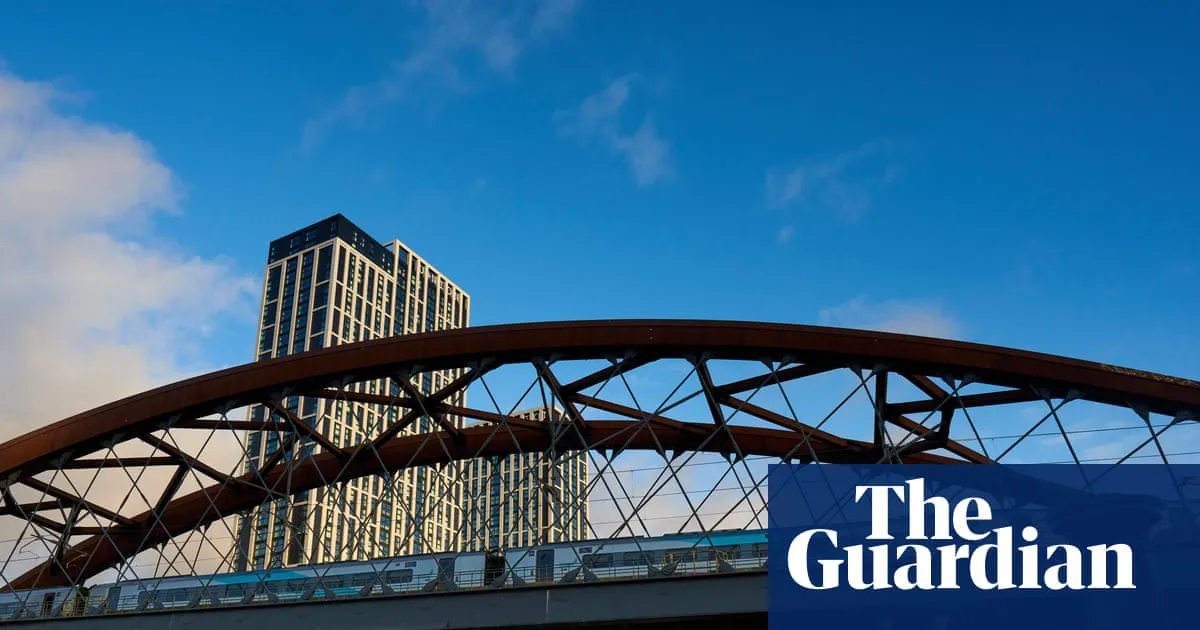
The Guardian - World NewsFIG 01
Reading time
4min
Word count
963words
Sources cited
3cited
Entities identified
12entities
Quality score
100%
§ 01
Briefing Summary
AI-generatedNEWSAR · AI
After years of delays and revisions, a new version of Northern Powerhouse Rail (NPR) is on the horizon, along with a Birmingham-Manchester line. The project, aimed at upgrading the north's rail infrastructure, has been welcomed by Labour mayors and business groups. However, significant questions remain about funding, as the government has capped its contribution, potentially requiring northern leaders to raise billions through local taxes or borrowing. The first phase, upgrading lines in Yorkshire, is expected in the 2030s, with subsequent phases and the Birmingham-Manchester line following later. The project's scope, design, and exact costs are still unclear, leading to concerns about the financial burden on businesses and the timeline for completion.
Confidence 0.90Sources 3Claims 5Entities 12
§ 02
Article analysis
Model · rule-basedFraming
Economic Impact
Political Strategy
Tone
Measured
AI-assessed
CalmNeutralAlarmist
Factuality
0.70 / 1.00
Factual
LowHigh
Sources cited
3
Well sourced
FewMany
§ 03
Key claims
5 extracted01
Any costs over £45bn will have to be funded by northern leaders.
factual
Confidence
1.00
02
Whitehall officials have committed only £1.1bn to the project up to 2029.
factual
Confidence
1.00
03
Northern Powerhouse Rail was significantly scaled back under successive Conservative governments.
factual
Confidence
1.00
04
The Birmingham-Manchester line is not expected to even start until the 2040s.
factual
Confidence
0.90
05
The first phase is expected to be completed in the 2030s.
factual
Confidence
0.90
§ 04
Full report
4 min read · 963 words§ 05
Entities
12 identifiedKey playerOppositionContextPositiveNeutralNegative
§ 06
Keywords & salience
9 termsnorthern powerhouse rail
1.00
rail infrastructure
0.80
hs2
0.70
government funding
0.70
labour mayors
0.60
transport investment
0.60
project delays
0.50
business rates
0.50
east-west network
0.40
§ 07
Topic connections
Interactive graph No topic relationship data available yet. This graph will appear once topic relationships have been computed.