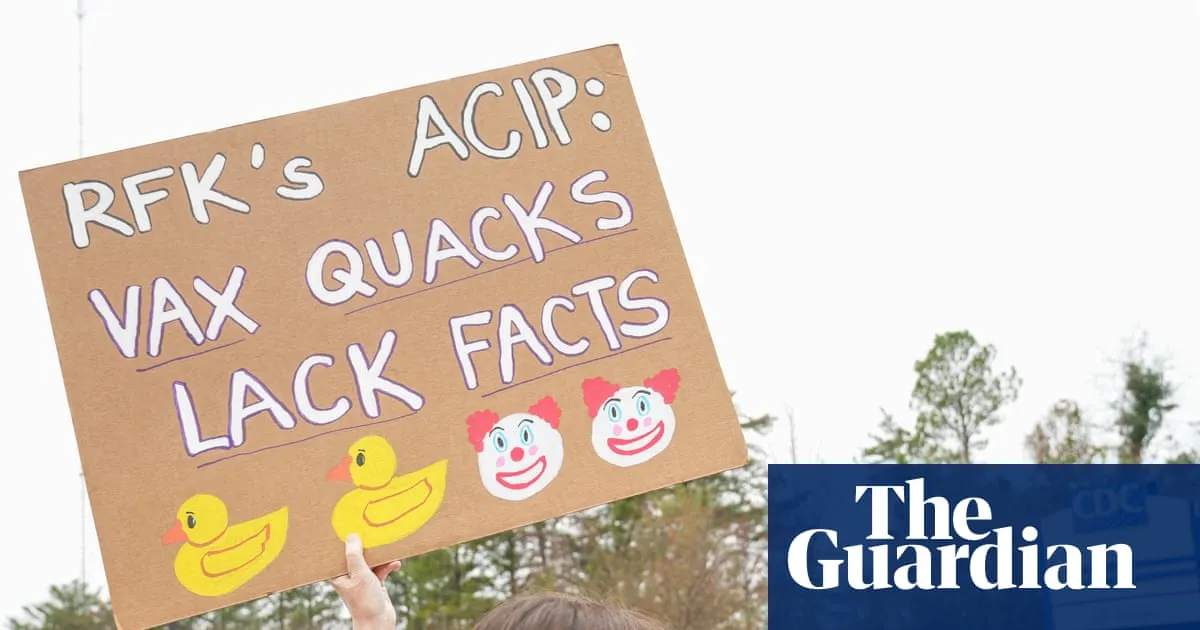
A series of high-profile and under-the-radar decisions by US health agencies have scientists and doctors questioning the extent of the agencies’ control over public communications – and they say the debate is obscuring the most important part, which is informing the public about key updates in science and medicine.Studies on the safety of vaccines against shingles and Covid were reportedly quashed before publication by officials at the US Food and Drug Administration (FDA). The news follows the hasty halt on publication of a study on the effectiveness of Covid boosters by the top acting official at the US Centers for Disease Control and Prevention (CDC), and research terminated or never approved in the first place because of keywords such as “hesitancy” and “misinformation” at the National Institutes of Health (NIH).The decisions threaten the reputations of US health agencies and the public’s trust in science and policy – and the surrounding tumult threatens to obscure important information to the public and the scientific community, experts say.“The science and the basis of why we were even doing these studies has been sort of lost in the mist,” said Michelle Barron, professor of infectious diseases at the University of Colorado School of Medicine and a co-author on the study on Covid vaccines unexpectedly halted by Jay Bhattacharya, who is currently leading the CDC in the absence of a Senate-confirmed director. “It’s, I think, incredibly important to recognize that Covid shots are still important. Flu shots are important. Measles shots are important.”The chill on communications extends beyond government employees and federally funded research.When Elias Kass submitted his presentation to conference organizers, he thought they might tell him he had too many slides or the presentation would run too long. Instead, the organizer told him that a CDC representative reviewed the presentation and flagged two major issues: Kass mentioned “equity” and “a pregnant person”. If he didn’t change his slides, he would not be able to present, the organizer said in an email obtained by The Guardian.Kass is a naturopathic physician and vaccine advocate in Seattle who made the presentation to receive continuing education credits. The credits, offered through a conference on immunizations at the end of March, were certified by the CDC.“When you think about how unimportant and little I am, and the fact that they still were able to reach me to tell me to change my slides – it was shocking,” Kass said. The changes were required because of recent executive orders from Donald Trump on diversity, equity, and inclusion and gender, the organizer said.“It is saying that the executive order is the end of the story. It gets to dictate what words we use. And that’s just – that is censorship,” Kass said. “There’s no review, there’s no voting, there’s zero oversight, and he gets to decide what I, as a nobody, get to put on my PowerPoint slide in a presentation.”The CDC representative made suggestions on how to change the presentation, but Kass decided to make his own changes. The slide on equity was referencing another source, so Kass quoted the entire text, and he highlighted the source of the quote: the CDC. He changed “a pregnant person” to “person who is pregnant”. Kass also changed another smaller issue, a reference to a brand name for a medication. Presentations like his should be reviewed, he said – but for accuracy and evidence, not for “the president’s feelings about words”.It was a troubling interaction given other high-profile attempts to control communications, Kass said.A study on how well the latest Covid boosters prevent hospitalizations and urgent-care visits was recently pulled from publication at the last minute by Bhattacharya, who says he pulled the study because it had methodological weaknesses. But a leaked copy of the study, published by Inside Medicine, shows its design is typical for research on vaccine effectiveness in the real world.“This is a very standard methodology. It should not have been considered controversial,” said Barron.There was nothing unusual about the paper, Jeremy Faust, an emergency physician at Brigham and Women’s hospital, assistant professor at Harvard Medical School and editor of Inside Medicine, agreed. It went through the usual scientific review by the CDC, and the editor-in-chief of the Morbidity and Mortality Weekly Report (MMWR) signed off on it.The editor is “supposed to have independence – the top administrator of the CDC should only intervene in extraordinary circumstances, and this is not an extraordinary paper”, Faust said. “It is a run-of-the-mill standard-issue paper, and the intervention says more about his political views and agenda than it does about the science.” And making decisions will erode trust in future pronouncements about the vaccines, Faust said. “It makes people skeptical about any future evidence.”The Covid booster is 50% effective against emergency visits and 55% effective against urgent-care visits among adults, the study found. The study compared people who had received the latest booster against those who didn’t – a group that probably included people who had received previous shots and had Covid before. Even so, the vaccine was helpful – an important data point for patients to consider.“People should be talking about it. Unfortunately, there’s so much other stuff that gets discussed that we kind of forget that,” Barron said.Booster rates have “all gone down significantly, and I think it’s because of all this confusion, and also just not really talking about it”, she added. “External controversies” were creating “noise” that drowns out the science, she said.“Having access to vaccines and allowing individuals to make those decisions, either by themselves or with their consultation with their practitioner who takes care of them, is key,” Barron said. “But you have to have access to it. If you have zero access, then you’re not even allowed to make that decision.”The decisions to restrict information about routine vaccines are also alarming because they signal potential restrictions on the shots themselves in the future.“I think that this HHS is slowly moving against seasonal vaccines generally,” Faust said.“This is not accurate. Any claims like this that do not come directly from the department are speculative,” said Emily Hilliard, an HHS spokesperson.Robert F Kennedy Jr, secretary of the US Department of Health and Human Services (HHS), had spent his “entire career undermining vaccines”, and other officials like Bhattacharya and Marty Makary, the FDA commissioner, appear to think seasonal vaccines for flu, Covid and RSV have been over-recommended, Faust said, adding: “I think … they want to destroy the infrastructure, undermine the science, that has led to the recommendations they don’t like.”
SRCThe Guardian - World News
LANGEN
LEANCenter-Left
WORDS1 083
ENT9
THU · 2026-05-07 · 13:00 GMTBRIEF NSR-2026-0507-74419
NSR-2026-0507-74419News Report·EN·Public Health
‘People should be talking about it’: moves to curtail vaccine information obscures important science, doctors say
US health agencies, including the FDA, CDC, and NIH, are reportedly curtailing the publication and dissemination of vaccine research, raising concerns among scientists and doctors. Studies on the safety of shingles and Covid vaccines, as well as the effectiveness of Covid boosters, have allegedly been halted or suppressed.
Melody SchreiberThe Guardian - World NewsFiled 2026-05-07 · 13:00 GMTLean · Center-LeftRead · 5 min
The Guardian - World NewsFIG 01
Reading time
5min
Word count
1 083words
Sources cited
3cited
Entities identified
9entities
Quality score
100%
§ 01
Briefing Summary
AI-generatedNEWSAR · AI
US health agencies, including the FDA, CDC, and NIH, are reportedly curtailing the publication and dissemination of vaccine research, raising concerns among scientists and doctors. Studies on the safety of shingles and Covid vaccines, as well as the effectiveness of Covid boosters, have allegedly been halted or suppressed. Research has also been terminated or denied approval due to keywords like "hesitancy" and "misinformation." These actions, along with external review of presentations for keywords like "equity" and "pregnant person," are seen by experts as obscuring vital scientific information and potentially eroding public trust in health agencies and science. The debate over these communication restrictions is overshadowing the importance of informing the public about ongoing vaccine science and updates.
Confidence 0.90Sources 3Claims 4Entities 9
§ 02
Article analysis
Model · rule-basedFraming
Public Health
Political Strategy
Tone
Mixed Tone
AI-assessed
CalmNeutralAlarmist
Factuality
0.60 / 1.00
Mixed
LowHigh
Sources cited
3
Well sourced
FewMany
§ 03
Key claims
4 extracted01
A naturopathic physician was told to change presentation slides by a CDC representative due to keywords like 'equity' and 'pregnant person'.
quoteElias Kass
Confidence
0.95
02
The halt on vaccine studies obscures important scientific updates and public health information.
quoteMichelle Barron
Confidence
0.90
03
Decisions by health agencies threaten public trust in science and policy.
quoteexperts
Confidence
0.90
04
US health agencies have reportedly quashed or halted studies on vaccine safety and effectiveness.
factualarticle
Confidence
0.80
§ 04
Full report
5 min read · 1 083 words§ 05
Entities
9 identifiedKey playerOppositionContextPositiveNeutralNegative
Organizations5
Locations1
§ 06
Keywords & salience
10 termsvaccine information
1.00
public health communication
0.90
scientific integrity
0.80
cdc
0.70
fda
0.70
trust in science
0.60
nih
0.60
misinformation
0.50
vaccine hesitancy
0.50
medical research
0.40
§ 07
Topic connections
Interactive graph Network visualization showing 12 related topics
View Full Graph Person Organization Location Event|Click node to navigate|Edge numbers = shared articles