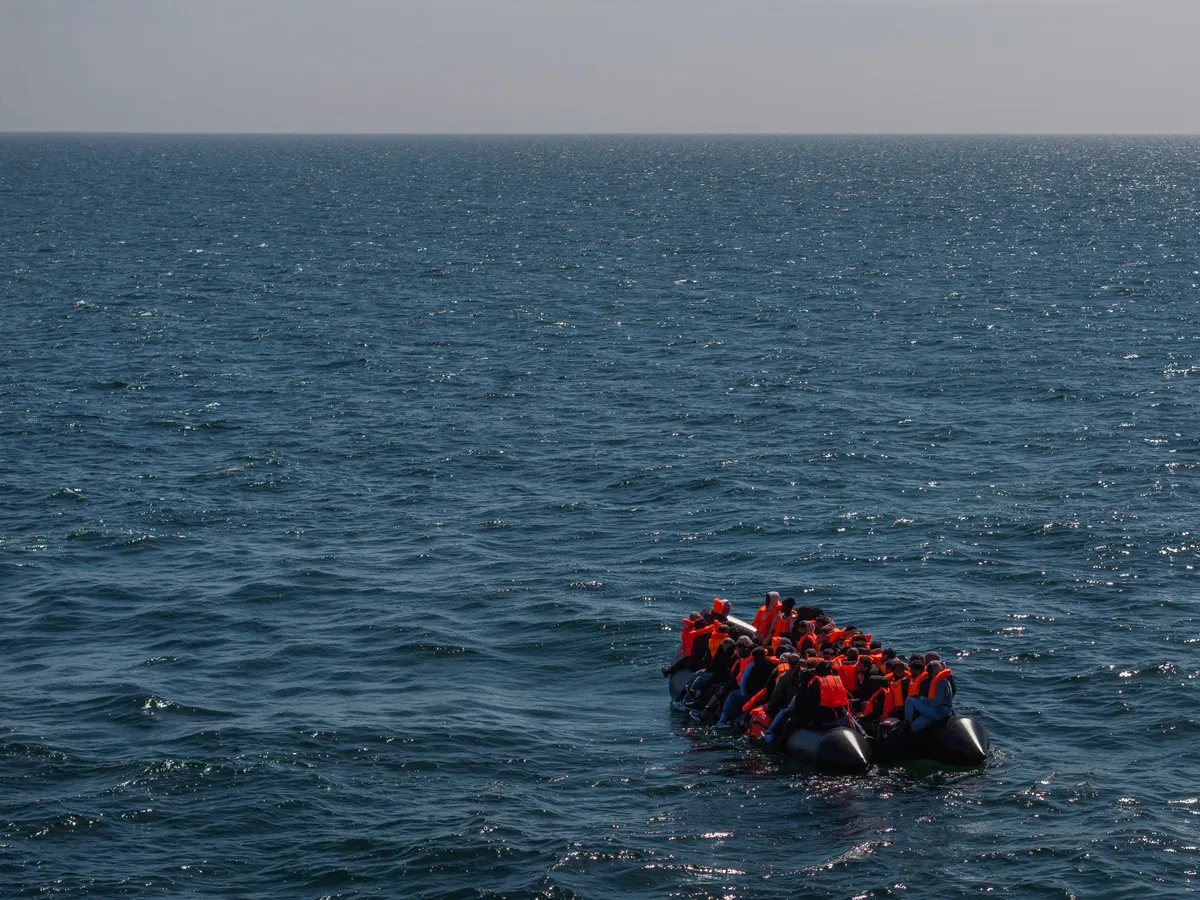
The Global Compact is working, but shifting routes are making journeys more dangerous.Regional Director of IOM for MENA.Published On 8 May 2026As governments gather in New York for the second International Migration Review Forum (IMRF) to assess progress on global migration commitments, a central question looms: is the Global Compact for Migration improving conditions for people on the move?The answer is yes.Adopted in 2018, the Global Compact for Safe, Orderly and Regular Migration is the first international agreement aimed at making migration safer and more humane through cooperation. For the Middle East and North Africa, the International Organization for Migration’s Global Overview of Migration Routes (2025), which tracks migration patterns, risks and deaths along major routes worldwide, offers a mixed picture. Some routes are shifting, but the risks people face remain severe, and in some cases are worsening.Across the Mediterranean, arrival numbers alone can be misleading. In 2025, just more than 66,500 people reached Italy and Malta via the Central Mediterranean Route, almost identical to the year before. Arrivals to Greece, Cyprus and Bulgaria along the Eastern Mediterranean Route fell by about 30 percent, while the Western Mediterranean Route saw a modest rise. The Western African Atlantic Route to the Canary Islands recorded a dramatic 62 percent drop.Taken in isolation, these figures might suggest reduced pressure on Europe’s borders. But lower arrivals do not automatically mean safer journeys. On the Eastern Mediterranean Route, deaths and disappearances nearly doubled in a single year. On the Western African Atlantic Route, deaths barely declined despite the steep drop in arrivals – meaning the probability of dying at sea increased. And on the Central Mediterranean Route, more than 1,300 people are known to have died in 2025, keeping it among the world’s deadliest migration corridors.
SRCAl Jazeera
LANGEN
LEANCenter
WORDS291
ENT12
FRI · 2026-05-08 · 06:35 GMTBRIEF NSR-2026-0508-74616
NSR-2026-0508-74616Analysis·EN·Human Interest
Migration is getting riskier even as progress is made
Despite progress made by the Global Compact for Safe, Orderly and Regular Migration, adopted in 2018, migration journeys are becoming riskier. The International Organization for Migration's 2025 Global Overview of Migration Routes indicates that while some migration routes are shifting, the dangers faced by migrants remain severe, and in some instances, are escalating.
Othman BelbeisiAl JazeeraFiled 2026-05-08 · 06:35 GMTLean · CenterRead · 2 min
Al JazeeraFIG 01
Reading time
2min
Word count
291words
Sources cited
1cited
Entities identified
12entities
Quality score
100%
§ 01
Briefing Summary
AI-generatedNEWSAR · AI
Despite progress made by the Global Compact for Safe, Orderly and Regular Migration, adopted in 2018, migration journeys are becoming riskier. The International Organization for Migration's 2025 Global Overview of Migration Routes indicates that while some migration routes are shifting, the dangers faced by migrants remain severe, and in some instances, are escalating. For example, the Eastern Mediterranean Route saw a significant increase in deaths and disappearances, and the Western African Atlantic Route experienced a rise in the probability of dying at sea, even with fewer arrivals. The Central Mediterranean Route continues to be one of the deadliest migration corridors globally. These trends highlight that reduced arrival numbers do not necessarily equate to safer journeys for those migrating.
Confidence 0.90Sources 1Claims 5Entities 12
§ 02
Article analysis
Model · rule-basedFraming
Human Interest
Diplomatic
Tone
Mixed Tone
AI-assessed
CalmNeutralAlarmist
Factuality
0.70 / 1.00
Factual
LowHigh
Sources cited
1
Limited
FewMany
§ 03
Key claims
5 extracted01
More than 1,300 people died on the Central Mediterranean Route in 2025.
statisticIOM's Global Overview of Migration Routes (2025)
Confidence
1.00
02
Deaths and disappearances nearly doubled on the Eastern Mediterranean Route in a single year.
statisticIOM's Global Overview of Migration Routes (2025)
Confidence
1.00
03
In 2025, just over 66,500 people reached Italy and Malta via the Central Mediterranean Route.
statisticIOM's Global Overview of Migration Routes (2025)
Confidence
1.00
04
Migration is getting riskier even as progress is made on global migration commitments.
factualarticle
Confidence
0.90
05
The Global Compact for Migration is improving conditions for people on the move.
factualarticle
Confidence
0.80
§ 04
Full report
2 min read · 291 words§ 05
Entities
12 identifiedKey playerOppositionContextPositiveNeutralNegative
Locations9
§ 06
Keywords & salience
10 termsglobal compact for migration
1.00
migration routes
0.90
migration risks
0.90
international migration review forum
0.80
international organization for migration
0.70
safer migration
0.60
eastern mediterranean route
0.50
western african atlantic route
0.50
central mediterranean route
0.50
deaths and disappearances
0.40
§ 07
Topic connections
Interactive graph Network visualization showing 5 related topics
View Full Graph Person Organization Location Event|Click node to navigate|Edge numbers = shared articles