Keir Starmer hates to lose. Unsurprisingly, he refused to walk away and end his premiership as Labour’s local election losses began to trickle in on Friday morning. Upon entering Downing Street in July 2024 after leading Labour to a historic general election victory, Starmer promised the public that his government would “fight every day until you believe again”.Now, Starmer is faced with the uncomfortable truth that the frustrated yet united coalition that brought him into No 10 hoping for change is completely fractured and its discontent cannot be dismissed as early midterm blues.The challenge Labour faces is multidirectional, which could prove difficult for strategists around Starmer who have been focused on the threat of Reform. Photograph: Stefan Rousseau/PAThe cracks are showing very close to the political backyards of Starmer and his top team. Reform UK has pushed through into Labour’s old working-class heartlands across parts of England" class="entity-link entity-location" data-entity-id="4432" data-entity-type="location">Northern England and the Midlands, many of which voted for Brexit. Meanwhile, the Greens undermined Labour’s progressive base with mayoralty wins in Hackney and Lewisham.Soft left members of the parliamentary Labour party believe Starmer should see the losses, and the fragmentation of politics, as a sign to re-engage progressive voters who feel cast aside. But it is clear the challenge Labour faces is multidirectional, which could prove difficult for strategists around Starmer who have been focused on the threat of Reform.On Starmer’s local council of Camden, the Labour group leader, Richard Olszewski, failed to win a seat in the Holborn and Covent Garden ward, losing out to the Greens, although the Greens appeared disappointed not to be able to eat into Starmer’s old local ward of Kentish Town.The Greens gained 17 seats on Manchester council, which could frustrate those close to Andy Burnham, the regional mayor. Photograph: Ryan Jenkinson/GettyIn Sunderland, the education secretary Bridget Phillipson’s patch, Reform won full control of the city council. In Wigan, the culture secretary Lisa Nandy’s constituency, Reform won 24 of the 25 seats available on the council. Labour lost its majority in Tameside, a Greater Manchester borough it had held for 47 years, to Reform, which may come as worrying news to allies of Angela Rayner, the Ashton-under-Lyne MP. The chief whip Jonathan Reynold’s Stalybridge and Hyde constituency is also nearby.Luke Tryl, the UK director of the research group More in Common, told the Guardian: “Labour cabinet ministers and a whole raft of senior Labour figures are facing a real challenge from Reform. The right vote is growing, which means Reform can turn people out and there are Labour-to-Reform switchers.”Meanwhile, the Greens gained 17 seats on Manchester council, making it the second largest party, which could frustrate those close to Andy Burnham, the regional mayor, who is understood to have plans for a “radical rewiring” of the state as part of a Labour leadership bid.The Labour first minister, Eluned Morgan, lost her seat in the Senedd elections, an indicator of a near wipeout for Labour. Photograph: Finnbarr Webster/GettyThe danger is not just that Labour is losing seats to Reform, the Greens and, in areas such as Blackburn, to independents, but that the losses are geographically uneven. And the picture is darker in the devolved nations.In Wales, the Labour first minister, Eluned Morgan, lost her seat in the Senedd elections, an indicator of a near wipeout for Labour, leaving the Cabinet Office minister, Nick Thomas-Symonds, in trouble in his Torfaen seat. Douglas Alexander, the Scotland secretary, may feel nervous about his Lothian East seat given Labour’s poor performances in Glasgow and North Lanarkshire in the Holyrood elections.Tryl said: “The scale of this is beyond midterm blues. I’m struggling to see how Starmer gets another hearing from the electorate, given his impact. He is seen as a big part of this. In focus groups, people regularly say that he hasn’t brought about the change he promised and he represents a continuation of what we’ve had with the Tories. There’s also a perception of weakness, alongside the sheer number of U-turns the government has made so early on.”
SRCThe Guardian - World News
LANGEN
LEANCenter-Left
WORDS667
ENT12
FRI · 2026-05-08 · 19:03 GMTBRIEF NSR-2026-0508-74772
NSR-2026-0508-74772Analysis·EN·Political Strategy
Cracks showing for Labour close to backyards of Starmer’s top team
Recent local election results reveal significant challenges for the Labour Party, particularly in areas close to the constituencies of Keir Starmer and his top team. Reform UK has made inroads into traditional Labour heartlands in northern England and the Midlands, while the Green Party has gained ground in progressive urban areas.
Aletha Adu Political correspondentThe Guardian - World NewsFiled 2026-05-08 · 19:03 GMTLean · Center-LeftRead · 3 min
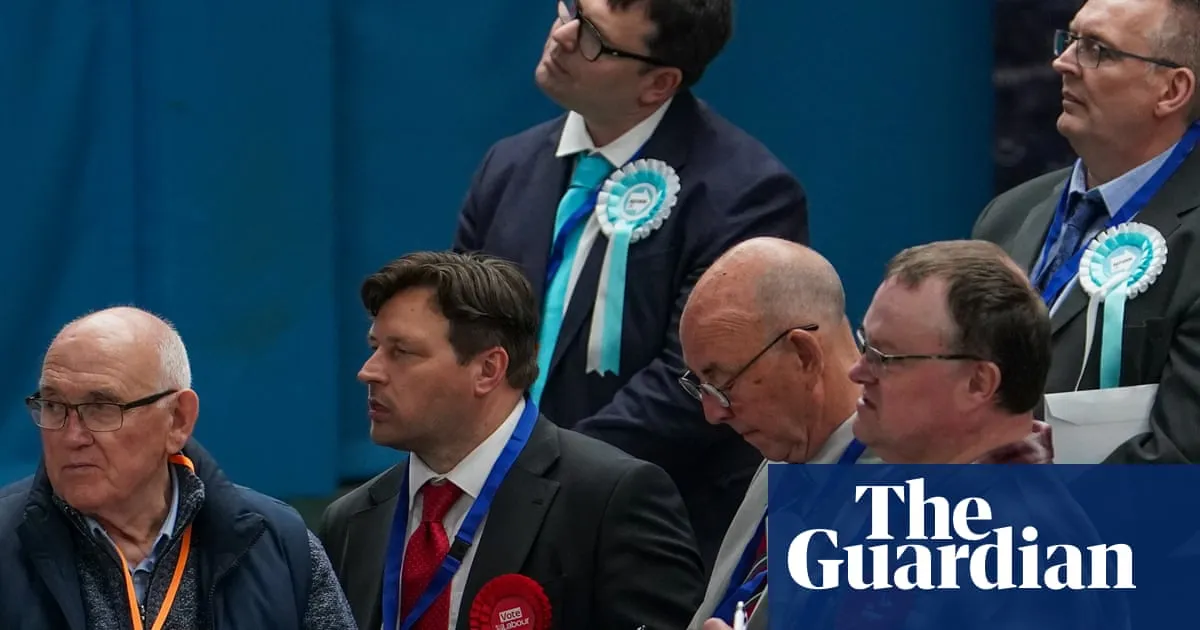
The Guardian - World NewsFIG 01
Reading time
3min
Word count
667words
Sources cited
1cited
Entities identified
12entities
Quality score
100%
§ 01
Briefing Summary
AI-generatedNEWSAR · AI
Recent local election results reveal significant challenges for the Labour Party, particularly in areas close to the constituencies of Keir Starmer and his top team. Reform UK has made inroads into traditional Labour heartlands in northern England and the Midlands, while the Green Party has gained ground in progressive urban areas. These losses are occurring in the backyards of key Labour figures, including Bridget Phillipson, Lisa Nandy, and potentially Angela Rayner and Jonathan Reynolds. The fragmentation of the vote, with gains for both Reform and the Greens, presents a multidirectional threat that Labour strategists, who have focused on Reform, may find difficult to address. These results suggest a broader discontent beyond typical midterm blues, impacting Labour's ability to retain support in diverse areas.
Confidence 0.90Sources 1Claims 5Entities 12
§ 02
Article analysis
Model · rule-basedFraming
Political Strategy
Human Interest
Tone
Sensational
AI-assessed
CalmNeutralAlarmist
Factuality
0.60 / 1.00
Mixed
LowHigh
Sources cited
1
Limited
FewMany
§ 03
Key claims
5 extracted01
Luke Tryl states that Labour faces a real challenge from Reform UK, with the right vote growing and Labour-to-Reform switchers.
quoteLuke Tryl
Confidence
1.00
02
Labour experienced local election losses on Friday morning.
factual
Confidence
1.00
03
The Greens gained 17 seats on Manchester council, becoming the second largest party.
factual
Confidence
0.95
04
The Greens have undermined Labour's progressive base with mayoralty wins in Hackney and Lewisham.
factual
Confidence
0.90
05
Reform UK has gained ground in Labour's traditional working-class heartlands in northern England and the Midlands.
factual
Confidence
0.90
§ 04
Full report
3 min read · 667 words§ 05
Entities
12 identifiedKey playerOppositionContextPositiveNeutralNegative
People7
Organizations3
§ 06
Keywords & salience
8 termslabour local election losses
1.00
keir starmer
0.90
reform uk
0.80
political fragmentation
0.70
greens
0.60
progressive voters
0.50
working-class heartlands
0.50
labour strategists
0.40
§ 07
Topic connections
Interactive graph Network visualization showing 51 related topics
View Full Graph Person Organization Location Event|Click node to navigate|Edge numbers = shared articles