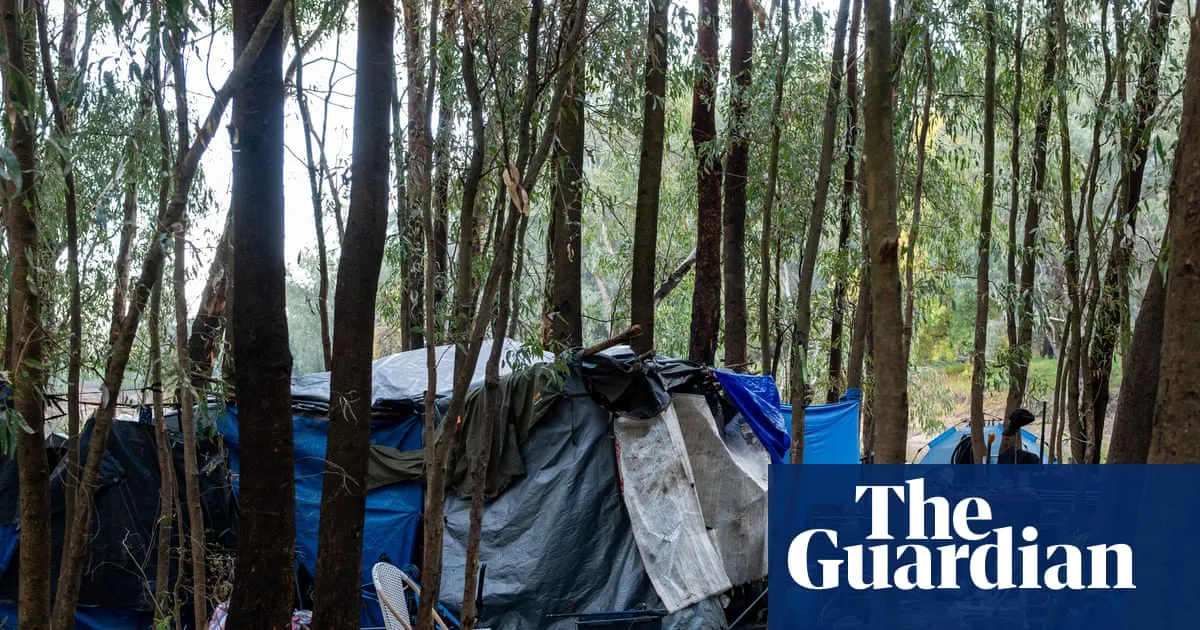
Fourteen rough sleepers are dying in public parks or countryside areas each year on average in Australia, an analysis of hidden death reports reveals.The deaths of a young international student sleeping rough in Hyde Park, a young homeless mother who died of sepsis in Australia" class="entity-link entity-location" data-entity-id="706" data-entity-type="location">Western Australia, and a newborn baby at a makeshift homeless camp near Wagga beach have prompted an outpouring of grief and shock in recent weeks.The deaths have triggered renewed focus on Australia’s homelessness crisis and the lack of social and emergency housing options, which are pushing vulnerable rough sleepers into precarious situations.An analysis of coronial records, most of which are not public, reveals disturbing numbers of homelessness deaths in public parks and countryside areas, including riverbanks.Between 2010 and 2020, 54 rough sleepers died in public parks, the analysis shows.Eighty-five homeless Australians died in countryside areas – including in bushland, desert, beaches and riverbanks – in the same period.The analysis was commissioned by The Guardian as part of an ongoing, years-long investigation into homelessness deaths, and conducted by the National Coronial Information Service, which has access to non-public reports about deaths made to state coroners.Since 2024, The Guardian has examined more than 600 homelessness deaths that show systemic failures – the lack of crisis and social housing, under-resourcing of homelessness services and gaps in the health system – are contributing to vastly premature deaths among those sleeping rough, resulting in a three-decade life expectancy gap with the general population.Data from the Australian Institute of Health and Welfare shows the social housing waitlist for those in “greatest need” has continued to worsen each year since 2015, hitting record levels in June 2024.In the past two years, AIHW data also shows the number of people already homeless when they first accessed homelessness services has increased by 11% and the number of people sleeping rough at the start of support surged by 25%.On Saturday, a 37-year-old mother was taken to hospital after one of her newborn twin babies died. The woman had been living in a homeless camp near Wagga beach, on the banks of the Murrumbidgee River.Residents of the camp told the ABC they had nowhere else to go.In WA, Mary Ann Miller, a young Aboriginal mother of seven, died of sepsis on 28 March after being evicted from public housing. She was waiting on housing despite being a victim of alleged family violence.The two deaths come months after a young Nepali man, Bikram Lama, was found dead in Hyde Park.Lama had been sleeping rough near the busy entrance to St James Station, and died in his sleeping bag in bushes above a tunnel entrance. His body lay there for up to a week before being discovered.Authorities are still waiting on a DNA test to officially confirm Lama’s identity, after requesting samples from his family in a remote village in Makwampur, south of Kathmandu.Support workers say his death highlights significant gaps in support services for non-residents – those who came to Australia legally but have had their visas lapse.University of Notre Dame professor Lisa Wood, who has led groundbreaking research into homelessness deaths, said the circumstances of the deaths were shocking and must bring the nation “to a crossroads moment in its homelessness response”.“It is a sobering indictment of societal abandonment and systemic failure,” she said. “Few would dispute that Australia is in the midst of a homelessness and housing crisis. Governments have announced substantial investments in response, yet much of this policy effort appears premised on the assumption that we can simply build our way out of the homelessness crisis.”Wood said housing must be explicitly recognised as a human right with clear statutory obligations to house people who are homeless, similar to the situation in Scotland.“We must prioritise immediate accommodation and housing options for those who are most vulnerable,” she said. “A woman who is pregnant and those with young children must be at the very top of this list, as is the case in countries such as England and Ireland. This commitment is urgently needed in Australia.”Kate Colvin, Homelessness Australia chief executive, said next week’s federal budget must invest more in social housing and homelessness supports to stop the deaths.“In just a few weeks homelessness has killed a baby, a young mother and a student,” Colvin said. “How many more people need to die before governments deliver the social housing and homelessness support people need to be safe?”The federal government committed $10bn through the Housing Australia Future Fund in 2023, promising to deliver 55,000 social and affordable homes by mid‑2029.The latest government data suggests about 6,000 social and affordable homes have been delivered since May 2022.‘The Albanese government has invested in new social housing, but they need to keep delivering to meet the enormous unmet need for social homes that has been created by decades of neglect,” Colvin said.St Vincent’s hospital Sydney’s homeless outreach team, which was attempting to assist Lama, said his non-resident status effectively denied him a pathway out of homelessness.“Tomorrow I will encounter another Bikram: unwell, homeless, at risk,” Erin Longbottom, manager of the St Vincent’s homeless health nursing unit, wrote in an op-ed for The Guardian on Thursday. “It’s a human being standing in front of me who needs my help. Why does the system tell me I have to qualify the lifesaving care I can offer depending on their visa status?”
SRCThe Guardian - World News
LANGEN
LEANCenter-Left
WORDS889
ENT10
SAT · 2026-05-09 · 20:00 GMTBRIEF NSR-2026-0509-74952
NSR-2026-0509-74952Analysis·EN·Social Justice
‘A sobering indictment’: 14 homeless people die a year in public parks or countryside in Australia, analysis finds
An analysis of coronial records in Australia reveals that an average of fourteen homeless individuals die annually in public parks or countryside areas. Between 2010 and 2020, 54 rough sleepers died in public parks and 85 in countryside locations.
Christopher KnausThe Guardian - World NewsFiled 2026-05-09 · 20:00 GMTLean · Center-LeftRead · 4 min
The Guardian - World NewsFIG 01
Reading time
4min
Word count
889words
Sources cited
3cited
Entities identified
10entities
Quality score
100%
§ 01
Briefing Summary
AI-generatedNEWSAR · AI
An analysis of coronial records in Australia reveals that an average of fourteen homeless individuals die annually in public parks or countryside areas. Between 2010 and 2020, 54 rough sleepers died in public parks and 85 in countryside locations. These deaths, including those of a young student, a mother, and a newborn, highlight systemic failures such as a lack of social and emergency housing, under-resourced services, and health system gaps. Data indicates worsening social housing waitlists and an increase in people experiencing homelessness upon accessing services. These factors contribute to significantly reduced life expectancies for those sleeping rough.
Confidence 0.90Sources 3Claims 5Entities 10
§ 02
Article analysis
Model · rule-basedFraming
Social Justice
Human Interest
Tone
Mixed Tone
AI-assessed
CalmNeutralAlarmist
Factuality
0.80 / 1.00
Factual
LowHigh
Sources cited
3
Well sourced
FewMany
§ 03
Key claims
5 extracted01
The number of people sleeping rough at the start of support surged by 25% in the past two years.
statisticAustralian Institute of Health and Welfare
Confidence
1.00
02
The social housing waitlist for those in 'greatest need' has worsened each year since 2015, hitting record levels in June 2024.
statisticAustralian Institute of Health and Welfare
Confidence
1.00
03
Between 2010 and 2020, 54 rough sleepers died in public parks and 85 died in countryside areas.
statisticThe Guardian analysis
Confidence
1.00
04
An average of 14 rough sleepers die each year in public parks or countryside areas in Australia.
statisticThe Guardian analysis
Confidence
1.00
05
Systemic failures like lack of housing and under-resourced services contribute to vastly premature deaths among rough sleepers.
factualThe Guardian analysis
Confidence
0.90
§ 04
Full report
4 min read · 889 words§ 05
Entities
10 identifiedKey playerOppositionContextPositiveNeutralNegative
Organizations4
§ 06
Keywords & salience
10 termsrough sleepers
1.00
homelessness deaths
1.00
homelessness crisis
1.00
social housing
0.90
emergency housing
0.80
systemic failures
0.70
countryside areas
0.60
public parks
0.60
life expectancy gap
0.50
coronial records
0.40
§ 07
Topic connections
Interactive graph Network visualization showing 51 related topics
View Full Graph Person Organization Location Event|Click node to navigate|Edge numbers = shared articles