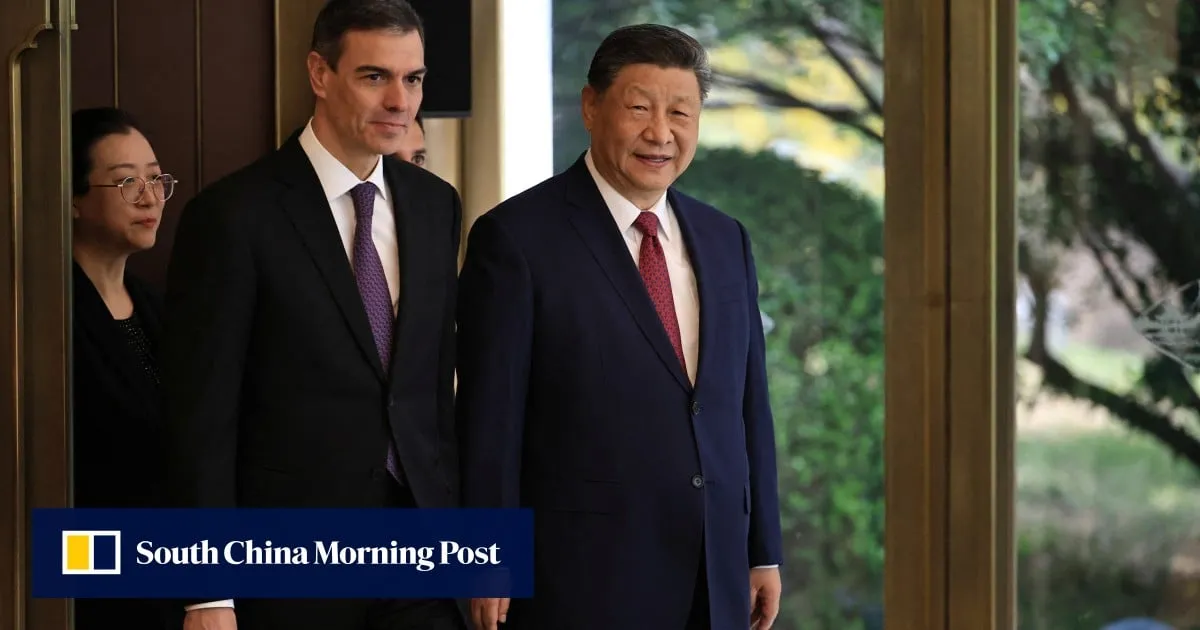
Spanish Prime Minister Pedro Sanchez’s diplomatic balancing act during his visit to China last month marked a sharp contrast with a European Union grappling with geopolitical upheaval and economic stagnation.Sanchez pushed for closer ties with Beijing while raising concerns over a persistent bilateral trade deficit and the Ukraine war, an approach that analysts said could serve as a diplomatic template for Brussels amid its fraying relationship with Washington.According to Wang Hanyi, a research fellow at the Shanghai International Studies University, the Spanish leader “achieved a delicate equilibrium between high-level strategic rhetoric and pragmatic cooperation”.
SRCSouth China Morning Post
LANGEN
LEANCenter-Right
WORDS94
ENT9
SUN · 2026-05-10 · 09:00 GMTBRIEF NSR-2026-0510-75047
NSR-2026-0510-75047Analysis·EN·Diplomatic
Could Spain’s ‘compliment sandwich’ approach to China work for the EU?
Spanish Prime Minister Pedro Sanchez recently visited China, employing a diplomatic strategy that balanced calls for closer ties with Beijing against concerns about the trade deficit and the Ukraine war. This approach, described as a "compliment sandwich," aimed for a "delicate equilibrium between high-level strategic rhetoric and pragmatic cooperation." Analysts suggest this method could offer a potential template for the European Union as it navigates its complex relationship with China, especially amidst geopolitical shifts and economic challenges.
Nayan SethSouth China Morning PostFiled 2026-05-10 · 09:00 GMTLean · Center-RightRead · 1 min
South China Morning PostFIG 01
Reading time
1min
Word count
94words
Sources cited
1cited
Entities identified
9entities
Quality score
100%
§ 01
Briefing Summary
AI-generatedNEWSAR · AI
Spanish Prime Minister Pedro Sanchez recently visited China, employing a diplomatic strategy that balanced calls for closer ties with Beijing against concerns about the trade deficit and the Ukraine war. This approach, described as a "compliment sandwich," aimed for a "delicate equilibrium between high-level strategic rhetoric and pragmatic cooperation." Analysts suggest this method could offer a potential template for the European Union as it navigates its complex relationship with China, especially amidst geopolitical shifts and economic challenges. The visit occurred last month, with Sanchez's actions contrasting with the EU's current struggles.
Confidence 0.85Sources 1Claims 4Entities 9
§ 02
Article analysis
Model · rule-basedFraming
Diplomatic
Political Strategy
Tone
Measured
AI-assessed
CalmNeutralAlarmist
Factuality
0.40 / 1.00
Mixed
LowHigh
Sources cited
1
Limited
FewMany
§ 03
Key claims
4 extracted01
Wang Hanyi stated that Sanchez achieved a 'delicate equilibrium between high-level strategic rhetoric and pragmatic cooperation'.
quoteWang Hanyi
Confidence
1.00
02
Sanchez raised concerns over a trade deficit and the Ukraine war while pushing for closer ties with Beijing.
factual
Confidence
0.90
03
Spanish Prime Minister Pedro Sanchez pursued a diplomatic balancing act during his visit to China.
factual
Confidence
0.90
04
Analysts suggest Spain's approach could be a diplomatic template for the EU's relationship with Washington.
predictionanalysts
Confidence
0.70
§ 04
Full report
1 min read · 94 words§ 05
Entities
9 identifiedKey playerOppositionContextPositiveNeutralNegative
Organizations2
Locations4
§ 06
Keywords & salience
8 termsdiplomatic balancing act
1.00
geopolitical upheaval
0.90
economic stagnation
0.80
eu-china relations
0.70
ukraine war
0.60
trade deficit
0.50
eu-us relations
0.40
pragmatic cooperation
0.40
§ 07
Topic connections
Interactive graph Network visualization showing 33 related topics
View Full Graph Person Organization Location Event|Click node to navigate|Edge numbers = shared articles