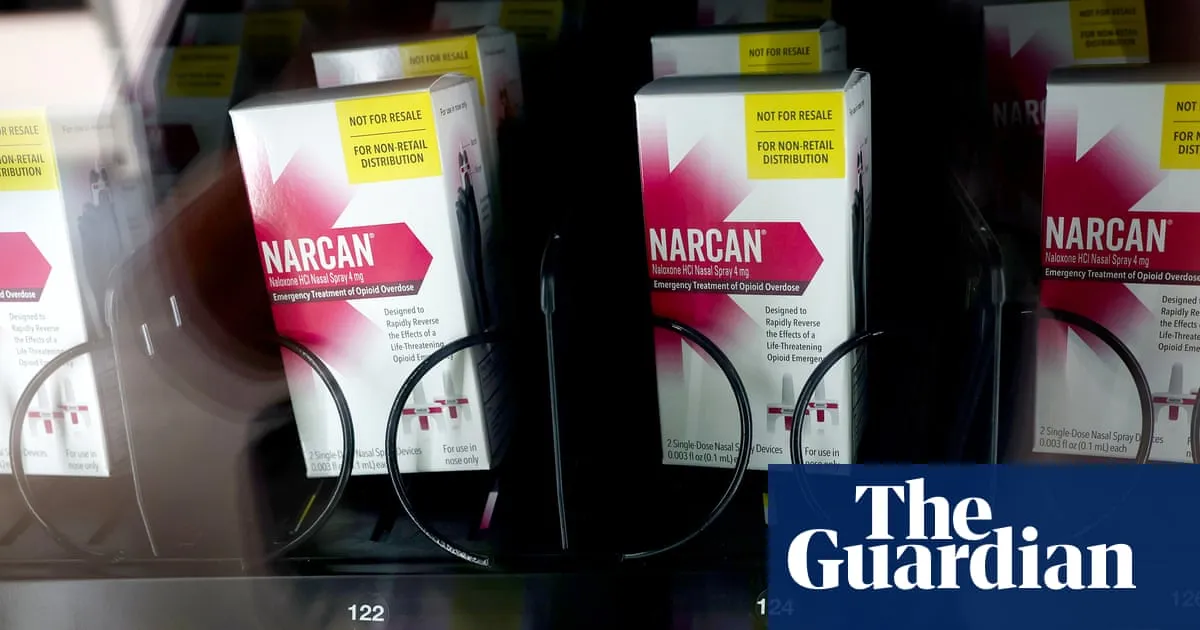
Within just a few weeks, the Trump administration has proposed multiple contradictory policies related to overdose prevention – some that could help save lives and others that experts say could further strain health resources and put people at risk for overdose.These policies include a new prohibition on funding for fentanyl test strips, which help people avoid overdoses; proposed budget cuts that would gut the country’s overdose prevention efforts; and an ambitious drug control strategy that will be impossible to implement if the aforementioned cuts go through.An April letter from the Substance Abuse and Mental Health Services Administration (Samhsa) indicated the agency would no longer fund test strips for fentanyl and other dangerous adulterants that are “intended for use by people using drugs”. Dr Nabarun Dasgupta, director of the University of North Carolina’s Opioid Data Lab, said defunding test strips “is a win for the cartels”, noting that it will take away people’s ability to identify impure products and flag it to their dealers.This is the latest in a series of Trump administration attacks on harm reduction – a public health strategy first pioneered by Aids activists that helps people reduce the inherent risks that come with sex and drug use. Over the past few years, public health departments across the country have helped people prevent overdoses by ramping up harm reduction interventions such as test strips, which allow people to test their drug supply and avoid overdosing; nasal naloxone, an easy-to-administer nose spray that can reverse opioid overdoses; and public health messaging to “never use alone”, which helps ensure someone is there to administer naloxone in case of an overdose.The Trump administration appears to be stripping away these interventions one by one.In January, the Centers for Disease Control and Prevention (CDC) moved to block “never use alone” messaging while simultaneously ensuring that it would still consider supporting fentanyl test strips. Now Samhsa is stripping funding for fentanyl test strips, which can help people avoid overdosing altogether, while emphasizing that it will continue to support naloxone access. Dasgupta said it was ironic that the administration is agreeing to fund medication that can reverse an overdose, but not test strips that can prevent the overdose from happening in the first place.“It just doesn’t make any sense,” Dasgupta said.The picture gets even more confusing in the context of the Trump administration’s other recent policy announcements. In April, it proposed budget cuts that, if enacted, would strip away $10bn in funding for addiction and overdose prevention and research, according to the Drug Policy Alliance. The following month, the White House announced an ambitious National Drug Control Strategy.Maritza Perez Medina, director of federal affairs for the Drug Policy Alliance, said she agrees with many aspects of the strategy, which expands access to naloxone and treatment, but questioned: “If you support these things, then why are you defunding them?”Medina said that Medicaid cuts under the One Big Beautiful Bill Act will already lead hospitals to close and reduce the availability of addiction treatment.For this policy to be implemented, Congress will have to reject Trump’s proposed budget cuts, says Richard Baum, former acting director of the White House’s national drug control policy under Trump and others. The apparent contradiction between the two proposals stems from a lack of coordination between government agencies. Baum said that the drug control policy is largely informed by the office of national drug control policy, whereas the office of management and budget is behind the White House’s budget proposal.The drug strategy includes initiatives to expand technology to help with drug interdiction, as well as wastewater surveillance to help track what’s in the drug supply. The Trump administration has cut funding for similar initiatives in the past. Dasgupta finds the focus on wastewater surveillance particularly perplexing given the attack on test strips. Wastewater contains urine that can provide clues as to what drugs people are taking, but it’s not a complete picture.“Things that disappear in urine, like nitazines, will not be showing up in wastewater at any reliable level,” Dasgupta said.Nitazines are ultra-potent synthetic opioids that have become more common in the drug supply in the wake of international crackdowns on fentanyl.“The drug supply changes from hour to hour in the same location, and what your individual patient is taking is not something that you can just guess from the aggregate,” Dasgupta said. Tools that allow individuals to check their drugs, like test strips, can actually help people change behavior and avoid danger.Medina agreed that with test strips “they may choose not to take that drug. They may choose to use slower. They may choose to use with a friend.”The White House and the office of national drug control policy did not respond to the Guardian’s request for comment.Dasgupta pointed to individual drug-checking services, including test strips and more advanced mass spectrometry testing, as more in line with precision medicine and the latest in medical technology than wastewater surveillance. Notably, he called the drug strategy “kind of weak sauce”, because it emphasizes technology that was cutting edge a decade ago. He added: “We have better tools now.”
SRCThe Guardian - World News
LANGEN
LEANCenter-Left
WORDS844
ENT10
SUN · 2026-05-10 · 12:00 GMTBRIEF NSR-2026-0510-75101
NSR-2026-0510-75101Analysis·EN·Public Health
How the Trump White House works against itself in its efforts to prevent overdoses
The Trump administration has implemented contradictory policies regarding overdose prevention. Recent actions include prohibiting funding for fentanyl test strips, which help users identify dangerous substances in drugs, and proposing budget cuts to overdose prevention efforts.
Hannah Harris GreenThe Guardian - World NewsFiled 2026-05-10 · 12:00 GMTLean · Center-LeftRead · 4 min
The Guardian - World NewsFIG 01
Reading time
4min
Word count
844words
Sources cited
3cited
Entities identified
10entities
Quality score
100%
§ 01
Briefing Summary
AI-generatedNEWSAR · AI
The Trump administration has implemented contradictory policies regarding overdose prevention. Recent actions include prohibiting funding for fentanyl test strips, which help users identify dangerous substances in drugs, and proposing budget cuts to overdose prevention efforts. Experts argue that defunding test strips benefits drug cartels by removing a crucial harm reduction tool. This follows previous actions, such as the CDC blocking "never use alone" messaging while considering support for test strips. While the administration continues to support naloxone, which reverses overdoses, critics find it contradictory to cut funding for preventative measures like test strips. These conflicting policies create confusion and potentially undermine efforts to save lives.
Confidence 0.90Sources 3Claims 5Entities 10
§ 02
Article analysis
Model · rule-basedFraming
Public Health
Political Strategy
Tone
Mixed Tone
AI-assessed
CalmNeutralAlarmist
Factuality
0.70 / 1.00
Factual
LowHigh
Sources cited
3
Well sourced
FewMany
§ 03
Key claims
5 extracted01
The administration proposed a prohibition on funding for fentanyl test strips.
factual
Confidence
0.95
02
The administration is supporting naloxone access but not test strips, which is ironic and makes no sense.
quoteDr Nabarun Dasgupta
Confidence
0.90
03
Defunding test strips is 'a win for the cartels' and removes ability to identify impure products.
quoteDr Nabarun Dasgupta
Confidence
0.90
04
The Trump administration has proposed contradictory policies on overdose prevention within weeks.
factual
Confidence
0.90
05
Proposed budget cuts could strip away $10bn in funding for addiction and overdose prevention.
statisticDrug Policy Alliance
Confidence
0.85
§ 04
Full report
4 min read · 844 words§ 05
Entities
10 identifiedKey playerOppositionContextPositiveNeutralNegative
Organizations7
Locations1
§ 06
Keywords & salience
8 termsoverdose prevention
1.00
harm reduction
0.90
fentanyl test strips
0.90
trump administration
0.80
naloxone
0.70
contradictory policies
0.60
public health strategy
0.50
budget cuts
0.40
§ 07
Topic connections
Interactive graph Network visualization showing 51 related topics
View Full Graph Person Organization Location Event|Click node to navigate|Edge numbers = shared articles