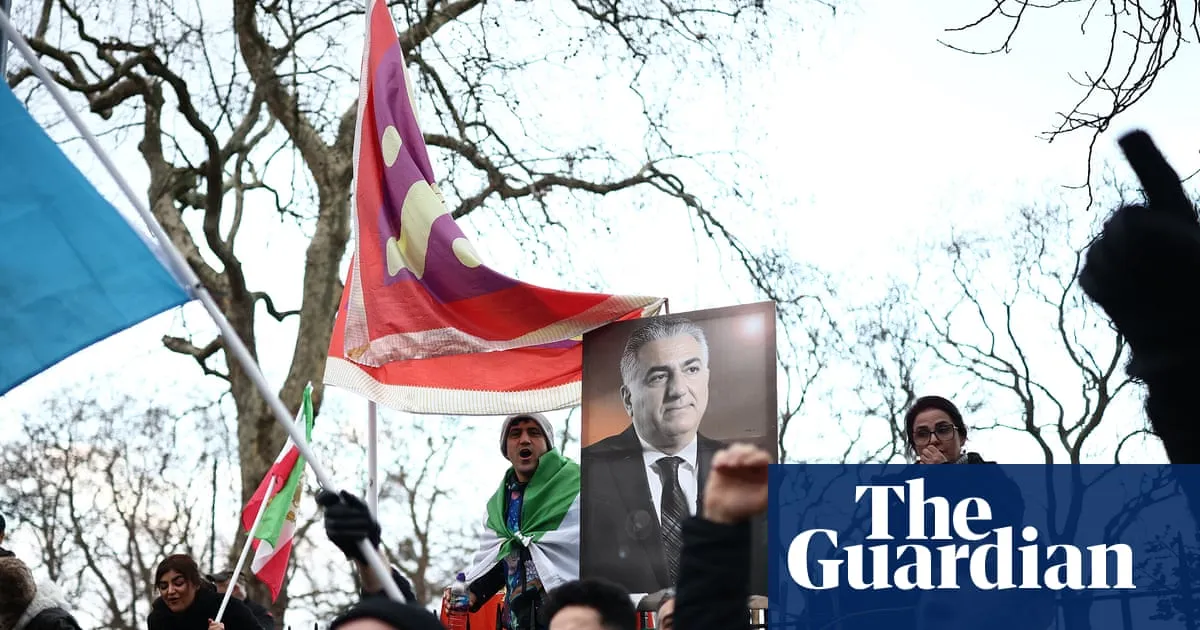
When asked to predict whether fissures are appearing at the top of the Iranian state that may imply Ayatollah Ali Khamenei’s days as supreme leader are numbered, western diplomats adopt a haunted demeanour, perhaps recalling one of western diplomacy’s greatest collective disasters.Before the fall of the Iran" class="entity-link entity-person" data-entity-id="11585" data-entity-type="person">Shah of Iran in January 1979, insouciant diplomats based in Tehran were sending cables to their capitals offering total reassurance that Mohammad Reza Pahlavi’s hold on power was utterly secure. In September 1978, the US Defence Intelligence Agency, for instance, reported that “the shah is expected to remain actively in power over the next 10 years”. A state department report suggested “the shah would not have to stand down until 1985 at the earliest”.Sir Anthony Parsons, then the UK ambassador in Tehran, sent a message to the Foreign Office dated May 1978 saying: “I do not believe there is a serious risk of an overthrow of the regime while the shah is at the helm.”Parsons later wrote an anguished book asking whether as British ambassador he could “have anticipated that the forces of opposition to the shah – the religious class, the bazaar, the students – would combine to destroy him”. He concluded that his inability to predict an event that he compared in import to the French Revolution was not due to a lack of information, but from a failure to interpret the information correctly.The experience of 1979 means the intelligence assessments now coming out of western embassies will be starting with a caveat and probably ending with a question mark.In contrast, academic experts on Iran do not see much indication today of the kind of mass defections from the regime that Reza Pahlavi, the former shah’s son, has been predicting. He recently claimed that 50,000 officers in the Islamic Revolutionary Guard Corps (IRGC) were preparing to desert, a claim he has since had to revise.Vali Nasr, author of the book Iran’s Grand Strategy, told the Council on Foreign Relations (CFR), a US thinktank: “There is no sign of any defections from within the regime or that it has in any way fractured. I am not certain the balance of forces necessarily lies with the protesters. Crowds win when the other side falls.”Ray Takeyh, senior fellow of Middle East studies at the CFR, agreed, saying: “This is not yet a national movement. There are a lot fence-sitters trying to figure which way they want to go. They will have to feel some degree of immunity to do as they did in 1978.”It is true that before the repression, and before the threats from Donald Trump started, evidence had emerged of differences in approach to handling the crisis, for instance, between the reformist president, Masoud Pezeshkian, and the head of the judiciary, Gholam-Hossein Mohseni-Eje’i. On the third day of the protests, for example, Pezeshkian said: “Don’t go after America or blame anyone … It is we who must properly manage our problems; it is we who must find a way to solve the problems.” Even on Sunday, after the crackdown had started, he told state TV: “We hear the protesters and have made every effort to solve their problems.”As the protests spread, and became more radicalised, Pezeshkian’s strategy of self-criticism and legitimising the protests lost out to those saying this was a national security crisis. The opaque true power centres inside Iran – the 86-year-old supreme leader, the IRGC and the Supreme National Security Council – clearly decided the contrition needed to end. No one at the top of government dissented, as far as it is known.It was notable that the main person addressing the crowds in Revolution Square in Tehran on Monday was not Pezeshkian, but Mohammad Bagher Ghalibaf, the speaker of the parliament and a former IRGC commander. Ghalibaf threatened to set the region on fire – a clear warning that if Iran was attacked, the regime regarded US bases in countries such as Qatar as legitimate targets. The foreign minister, Abbas Araghchi, by contrast has spent 18 months trying to strengthen relations with Doha, Cairo and Riyadh.Mohammad Ali Shabani, the respected editor of the Amwaj website, said that historically in Iran protests had led to a regime rebalancing in favour of repression. The judiciary chief, for instance, is now calling for swift punishment of the rioters.Some of Iran’s most experienced IRGC figures, including its chief, Hossein Salami, were killed in Israel’s attacks in June, but their ethos remains. It is true that the ease of the Israeli decapitation in June meant the IRGC lost some of its prestige in society, but the new generation of leaders swiftly appointed by the supreme leader are cut from the same ideological cloth.Moreover senior figures in the government have so far cohered around the message that the security forces had no choice but to confront an Israeli-inspired insurrection.The violence that descended on Iran on Thursday and Friday is being portrayed as the 11th and 12th days of the US-Israeli attack in June. With newspapers heavily censored or unavailable, stories that challenge this narrative are not easily available to many Iranians, save through word of mouth.But if it is confirmed that about 2,000 people have been killed, this represents a qualitatively different scale of repression to previous convulsions.There is a palpable sense of shock from officials. There are also private admissions that this is an unsustainable way of governing, and the underlying issues have to be grasped even if reforms involve taking on the banks and IRGC’s dominance of the economy. It is these economic reforms that challenge Iran’s elite that may create a true split at the top of the government – which is why they have always been postponed.Takeyh warned that the status quo was no longer sustainable: “The regime has created a cycle, because the underlying causes of dissent – economic mismanagement, corruption, foreign policy disasters that have cost billions, and the lack of opportunity – cannot be addressed by the regime.”One way or another, it is this impasse, once the mourning is over, that will have to be addressed.
SRCThe Guardian - World News
LANGEN
LEANCenter-Left
WORDS1 007
ENT10
WED · 2026-01-14 · 18:33 GMTBRIEF NSR-2026-0114-7522
NSR-2026-0114-7522Analysis·EN·Diplomatic
Western diplomats wary of predicting end days for Iran’s regime
Western diplomats are hesitant to predict the downfall of Iran's current regime, wary of repeating the miscalculations made before the 1979 revolution. Prior to the Shah's fall, Western intelligence agencies and diplomats confidently asserted his stability, failing to foresee the revolution.
Patrick WintourThe Guardian - World NewsFiled 2026-01-14 · 18:33 GMTLean · Center-LeftRead · 5 min
The Guardian - World NewsFIG 01
Reading time
5min
Word count
1 007words
Sources cited
5cited
Entities identified
10entities
Quality score
100%
§ 01
Briefing Summary
AI-generatedNEWSAR · AI
Western diplomats are hesitant to predict the downfall of Iran's current regime, wary of repeating the miscalculations made before the 1979 revolution. Prior to the Shah's fall, Western intelligence agencies and diplomats confidently asserted his stability, failing to foresee the revolution. This historical experience has made them cautious in assessing current fissures within the Iranian leadership. Unlike Reza Pahlavi, the Shah's son, who predicts mass defections, academic experts see little evidence of widespread dissent within the regime. Analysts at the Council on Foreign Relations note the lack of significant defections and emphasize that the protests have not yet evolved into a national movement with widespread support.
Confidence 0.90Sources 5Claims 5Entities 10
§ 02
Article analysis
Model · rule-basedFraming
Diplomatic
Political Strategy
Tone
Measured
AI-assessed
CalmNeutralAlarmist
Factuality
0.60 / 1.00
Mixed
LowHigh
Sources cited
5
Well sourced
FewMany
§ 03
Key claims
5 extracted01
In September 1978, the US Defence Intelligence Agency reported that “the shah is expected to remain actively in power over the next 10 years”.
quoteUS Defence Intelligence Agency
Confidence
1.00
02
Before the fall of the Shah of Iran in January 1979, diplomats reassured their capitals that Mohammad Reza Pahlavi’s power was secure.
factualArticle's own claim based on historical record
Confidence
0.90
03
Ray Takeyh said: “This is not yet a national movement. There are a lot fence-sitters trying to figure which way they want to go.
quoteRay Takeyh
Confidence
0.80
04
Vali Nasr said: “There is no sign of any defections from within the regime or that it has in any way fractured.
quoteVali Nasr
Confidence
0.80
05
Reza Pahlavi claimed that 50,000 officers in the Islamic Revolutionary Guard Corps (IRGC) were preparing to desert.
predictionReza Pahlavi
Confidence
0.70
§ 04
Full report
5 min read · 1 007 words§ 05
Entities
10 identifiedKey playerOppositionContextPositiveNeutralNegative
People4
Organizations3
§ 06
Keywords & salience
9 termsiran regime
0.90
1979 revolution
0.80
diplomatic assessment
0.70
shah of iran
0.70
political stability
0.60
western diplomats
0.60
intelligence failure
0.50
ayatollah ali khamenei
0.50
islamic revolutionary guard corps
0.40
§ 07
Topic connections
Interactive graph Network visualization showing 51 related topics
View Full Graph Person Organization Location Event|Click node to navigate|Edge numbers = shared articles