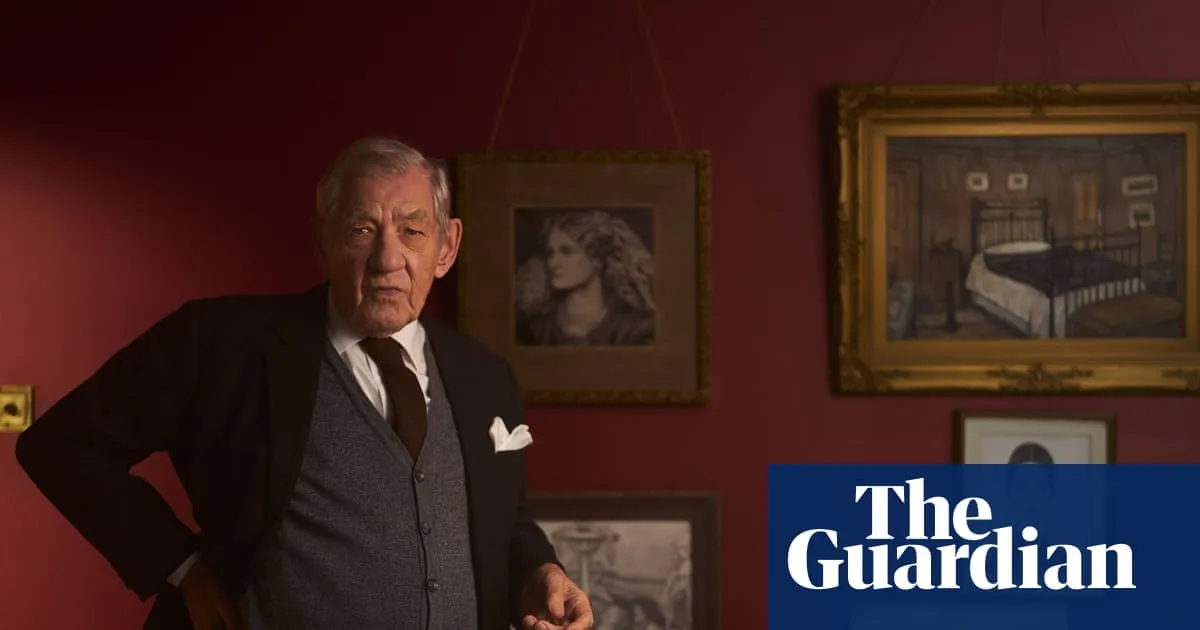
Fifteen years ago, Sir Ian McKellen was among the leading arts figures who criticised the Tate for not showing its collection of paintings by LS Lowry in its London galleries and questioned whether the “matchstick men painter” had been sidelined as too northern and provincial.Now, 50 years after Lowry’s death, McKellen is to star in a BBC documentary that will reveal a trove of previously unheard audio tapes recorded with Lowry in the 1970s during his final four years of life.The interview is the longest the artist ever gave and was recorded in his living room, his “private sanctuary”. The tapes are said to reveal Lowry’s authentic voice, which McKellen will lip-sync on screen.The Lancashire-born actor described the role as a “unique privilege”.“These tapes reveal an intimate insight into the artist’s thoughts – his ambitions, regrets and his humour. Anyone like me, who admires his paintings and drawings, will be intrigued and delighted that the artist is brought back to life through his own words,” McKellen said.LS Lowry in 1960 in Middleton, Manchester" class="entity-link entity-location" data-entity-id="1694" data-entity-type="location">Greater Manchester. Photograph: Robert Smithies/The GuardianLowry is admired for his unique depictions of working-class urban life, mill scenes and industrial landscapes, peopled with his distinctive matchstick men. He learned his craft in the evenings at Manchester’s Municipal College of Art and then at Salford School of Art while working as a rent collector by day.The tapes offer personal insights as he reminisced about his life, discussing experiences that shaped him from his childhood. The film-makers noted the “surprising exchange” between the enigmatic artist and a young fan – Angela Barratt – whose interviews “capture Lowry in his most intimate, reflective moments”.The documentary, titled L.S. Lowry: The Unheard Tapes, is also billed as a portrait of urban life in the north of England in the 20th century, exploring the transformation of Salford and Manchester" class="entity-link entity-location" data-entity-id="1694" data-entity-type="location">Greater Manchester, the region Lowry depicted so prolifically and whose shifting industrial landscape profoundly influenced his work.Richard Grossick, representing the Lowry estate, said: “It is good fortune that these compelling recordings of interviews have survived and are being used in this way.”Of McKellen, he added: “It is hard to imagine any other actor better equipped to channel the rhythmical allure of Mr Lowry’s distinctive bygone Lancastrian tones.”Michael Simpson, the director of visual arts at the Lowry, a theatre and gallery space in Salford which now holds the tapes, said they reveal “an artist of wit, contradiction and perhaps surprising depth, far removed from the myth of the ‘simple man’”.In 2013, Tate Britain finally staged a large Lowry exhibition, which was billed as the first of its kind held by a public institution since the artist’s death.Going to Work by LS Lowry depicts factory workers outside Mather and Platt engineering firm in Newton Heath, Manchester, 1943. Photograph: IWM/Imperial War Museums/GettyLongstanding admirers of Lowry include Julian Spalding, who staged exhibitions of his work as the director of galleries for the cities of Sheffield and Manchester at a time when he said the artist was “excluded” from London galleries and dismissed as a provincial northerner.Spalding has long accused the art establishment of displaying a snobbish elitism towards Lowry because he was from the north of England and popular with the public. He added: “Lowry wasn’t allowed in the picture at all. But he’s one of the big figures of British art of the 20th century – and he was totally sidelined.”The role of Angela will be played by Annabel Smith, who is appearing at the Royal Court theatre in The Shitheads.The BBC Arts Arena documentary L.S. Lowry: The Unheard Tapes will be released on BBC Two and BBC iPlayer soon.
SRCThe Guardian - World News
LANGEN
LEANCenter-Left
WORDS601
ENT10
WED · 2026-01-14 · 18:37 GMTBRIEF NSR-2026-0114-7524
NSR-2026-0114-7524News Report·EN·Human Interest
Ian McKellen to star as LS Lowry in documentary revealing trove of unheard tapes
Ian McKellen will star in a BBC documentary, "L.S. Lowry: The Unheard Tapes," which features newly discovered audio recordings of the artist L.S.
Dalya AlbergeThe Guardian - World NewsFiled 2026-01-14 · 18:37 GMTLean · Center-LeftRead · 3 min
The Guardian - World NewsFIG 01
Reading time
3min
Word count
601words
Sources cited
5cited
Entities identified
10entities
Quality score
100%
§ 01
Briefing Summary
AI-generatedNEWSAR · AI
Ian McKellen will star in a BBC documentary, "L.S. Lowry: The Unheard Tapes," which features newly discovered audio recordings of the artist L.S. Lowry from the 1970s. The tapes, the longest interview Lowry ever gave, were recorded in his home and offer personal insights into his life and work. McKellen, a long-time admirer of Lowry, will lip-sync the artist's voice, bringing Lowry's own words to the screen. The documentary explores Lowry's life, the urban landscape of the 20th-century North of England, and the transformation of Salford and Greater Manchester, the areas that heavily influenced his art. The film aims to provide an intimate portrait of the artist through his own reflections and experiences.
Confidence 0.90Sources 5Claims 5Entities 10
§ 02
Article analysis
Model · rule-basedFraming
Human Interest
Political Strategy
Tone
Measured
AI-assessed
CalmNeutralAlarmist
Factuality
0.80 / 1.00
Factual
LowHigh
Sources cited
5
Well sourced
FewMany
§ 03
Key claims
5 extracted01
The documentary is billed as a portrait of urban life in the north of England in the 20th century.
factual
Confidence
1.00
02
In 2013, Tate Britain staged a large Lowry exhibition, the first of its kind held by a public institution since the artist’s death.
factual
Confidence
1.00
03
These tapes reveal an intimate insight into the artist’s thoughts – his ambitions, regrets and his humour.
quoteIan McKellen
Confidence
1.00
04
The interview is the longest the artist ever gave and was recorded in his living room.
factual
Confidence
1.00
05
Ian McKellen will star in a BBC documentary revealing unheard audio tapes recorded with LS Lowry in the 1970s.
factual
Confidence
1.00
§ 04
Full report
3 min read · 601 words§ 05
Entities
10 identifiedKey playerOppositionContextPositiveNeutralNegative
People3
Organizations2
§ 06
Keywords & salience
10 termsls lowry
1.00
ian mckellen
0.90
documentary
0.80
unheard tapes
0.80
artist's voice
0.70
industrial landscapes
0.60
working-class urban life
0.60
greater manchester
0.50
salford
0.50
lancashire
0.40
§ 07
Topic connections
Interactive graph No topic relationship data available yet. This graph will appear once topic relationships have been computed.