EXPLAINERIsrael and Hezbollah have increased their attacks on each other in recent days, despite a ceasefire officially in place.Smoke rises from an Israeli strike in southern Lebanon as seen from Marjayoun [Karamallah Daher/Reuters]Published On 11 May 2026The ceasefire in Lebanon that started on April 16 is increasingly coming under strain, with both Israel and Hezbollah ramping up attacks against each other.The ceasefire began after six weeks of fighting between Israel and Hezbollah. But the following day, Lebanon’s army reported several violations by Israeli forces. Since then, both Israel and Hezbollah have continued attacks.Recommended Stories list of 3 itemslist 1 of 3Ex-Israeli PM: Hezbollah is the enemy of Lebanon and must be disarmedlist 2 of 3Iran war day 73: Trump and Tehran clash over latest peace proposalslist 3 of 3Iran says US making ‘unreasonable’ demands in negotiations to end warend of listIs even the pretence of a ceasefire over? What could happen?Here’s what we know:What are Israel’s most recent attacks?Since Israel began its war on Lebanon on March 2, at least 2,846 people have been killed and more than a million displaced.Israel’s offensive has included a major ground invasion and the occupation of southern Lebanon. On Sunday, the Lebanese Health Ministry said Israeli attacks across the country had killed 51 people, including two medical workers.“The Israeli enemy continues to violate international laws and humanitarian norms, adding more crimes against paramedics, as it directly targeted two points of the Health Authority in Qalawiya and Tibnin, Bint Jbeil district, in two raids,” the ministry said.Since Israel’s war on Lebanon began on March 2, the United Nations says at least 103 Lebanese medical workers have been killed and 230 injured in more than 130 Israeli strikes.“We’re under threat every second, every day,” Ali Safiuddin, the head of the Lebanese Civil Defence in Tyre in southern Lebanon, told Al Jazeera on Sunday. “We ask ourselves if we’re going to survive or if we’re going to die, we know we’ve already given up our lives by working here. We’ve lost so many people and it feels like we’re already gone as well.”Al Jazeera’s Obaida Hitto, reporting from Tyre, said on Sunday that “international humanitarian laws are clear: medical personnel and first responders, like the Lebanese Civil Defence, must be protected in armed conflict, but on this front line, the question isn’t whether another strike is coming. It’s how many people will be left to answer the calls for help”.Dr Tahir Mohammed, a war surgeon, and humanitarian worker who’s worked in both Gaza and Lebanon, told Al Jazeera that he saw parallels in Israeli actions in both places.“We used to see our colleagues in Gaza come through the door all the time. I’ve had colleagues, nurses, medical students killed by Israeli weapons, and so to see the same policy of targeting healthcare workers in Lebanon … it’s consistent,” he said.“If Israel had their way, they would absolutely occupy the entire southern region of Lebanon, and they would do it tomorrow. They have no care for life. I’ve seen it with my own eyes,” Mohammed added.Israeli attacks continued on Monday.An Israeli air strike on the town of Abba killed two people and wounded five, Lebanon’s National News Agency (NNA) said. Warplanes renewed their raids on the town of Kfar Remman for the second time in less than an hour, NNA added.The Israeli military issued a new warning for southern Lebanon, telling residents of nine areas to flee before potential Israeli strikes. The areas are: Ar-Rihan (Jezzine), Jarjouaa, Kfar Reman, al-Numairiyah, Arab Salim, al-Jumayjimah, Machghara, Qlayaa (Western Bekaa) and Harouf.Israel has repeatedly said that it is only targeting Hezbollah infrastructure, which is primarily in the south of Lebanon. But last week, Israel also bombed Beirut’s southern suburbs for the first time since the ceasefire began.What have Hezbollah attacked?The Lebanese armed group has continued striking Israeli forces.Early on Monday, Hezbollah said it carried out 24 attacks targeting Israeli army positions, soldiers and military vehicles in southern Lebanon over the past 24 hours.Targets included Israeli troop gatherings, Merkava tanks, bulldozers, military equipment and newly established command centres in several border areas, including Khiam, Deir Seryan, Tayr Harfa, Bayyada, Rashaf and Naqoura.Operations involved explosive drones, rocket barrages, artillery shelling and guided missiles, with Hezbollah claiming “confirmed hits” in several attacks.The Israeli military said it had intercepted “a suspicious aerial target” in southern Lebanon in an apparent reference to a drone launched by Hezbollah.The Jerusalem Post said the Israeli military is struggling to respond to First Person View (FPV) drones launched by Hezbollah.The newspaper said Hezbollah is using fibre optic threads to guide the drones and evade Israeli wireless jamming devices.The Jerusalem Post noted that Hezbollah had released video of an FPV drone striking an Iron Dome battery on the northern border on Sunday.During its visit to southern Lebanon last week, senior Israeli officials “outlined several new pilot programmes to better identify and shoot down FPVs”, but added that the “military is still trying to catch up in real time”.On Monday, Hezbollah said its fighters targeted an Israeli military position in a house in Baydar al-Faqani in the town of Taybeh, forcing a retreat. Fighters attacked the position three times until an Israeli helicopter intervened to evacuate the wounded, the group said.The Israeli army has not yet commented on the attack, but said three soldiers were injured by a booby-trap drone explosion in southern Lebanon.The army earlier announced that a soldier was killed by a drone launched by Hezbollah near the Lebanese border.So is the ceasefire just a pretence?In theory, the ceasefire between Israel and Hezbollah does exist, but both warring parties have escalated attacks since it began.The ceasefire followed a previous one, which had ostensibly been in effect since November 27, 2024. Since then, the United Nations counted more than 10,000 Israeli ceasefire violations and hundreds of Lebanese deaths.“I don’t think the pretence of a truce was ever actually there, but I think Israel can continue [attacks] just as it can sign a peace agreement,” Israeli analyst Ori Goldberg told Al Jazeera.“Israel doesn’t really care and will do as it is told. So far, the IDF [Israeli army] wants a win and a chance to apply its might, but that can change in a heartbeat,” he said.Israel has repeatedly told the Lebanese government that Hezbollah must be disarmed for any ceasefire to last.Hezbollah has long been considered the strongest military force in Lebanon, though it has been weakened by the war with Israel, and the killing of most of its leaders. Despite that, it retains the support of Lebanon’s Shia community, from which it emerged.Hezbollah has said that Israel needs to withdraw from southern Lebanon, which was part of the ceasefire deal agreed in 2024. Fighting flared in October 2023 after Hezbollah fired rockets at Israel in solidarity with Palestinians in Gaza. At least 3,768 Lebanese were killed and 1.2 million displaced in Israeli attacks then.Government leaders in Beirut have long been uneasy about Hezbollah’s influence in Lebanon. Last December, the government said it was close to completing the disarmament of Hezbollah south of the Litani River before a year-end deadline as part of the 2024 ceasefire deal with Israel.At the start of the latest conflict, the Lebanese government outlawed Hezbollah’s military wing.But in January, Israel said Hezbollah still had a presence close to the border and was rebuilding its military capabilities “faster than the [Lebanese] army is dismantling [them]”.
SRCAl Jazeera
LANGEN
LEANCenter
WORDS1 228
ENT12
MON · 2026-05-11 · 15:02 GMTBRIEF NSR-2026-0511-75349
NSR-2026-0511-75349Analysis·EN·Conflict
Israeli killings in Lebanon rise: Is even the pretence of a ceasefire over?
A ceasefire officially in place since April 16 is under severe strain as Israel and Hezbollah escalate attacks against each other in Lebanon. This increase in hostilities follows six weeks of prior fighting.
Priyanka ShankarAl JazeeraFiled 2026-05-11 · 15:02 GMTLean · CenterRead · 5 min
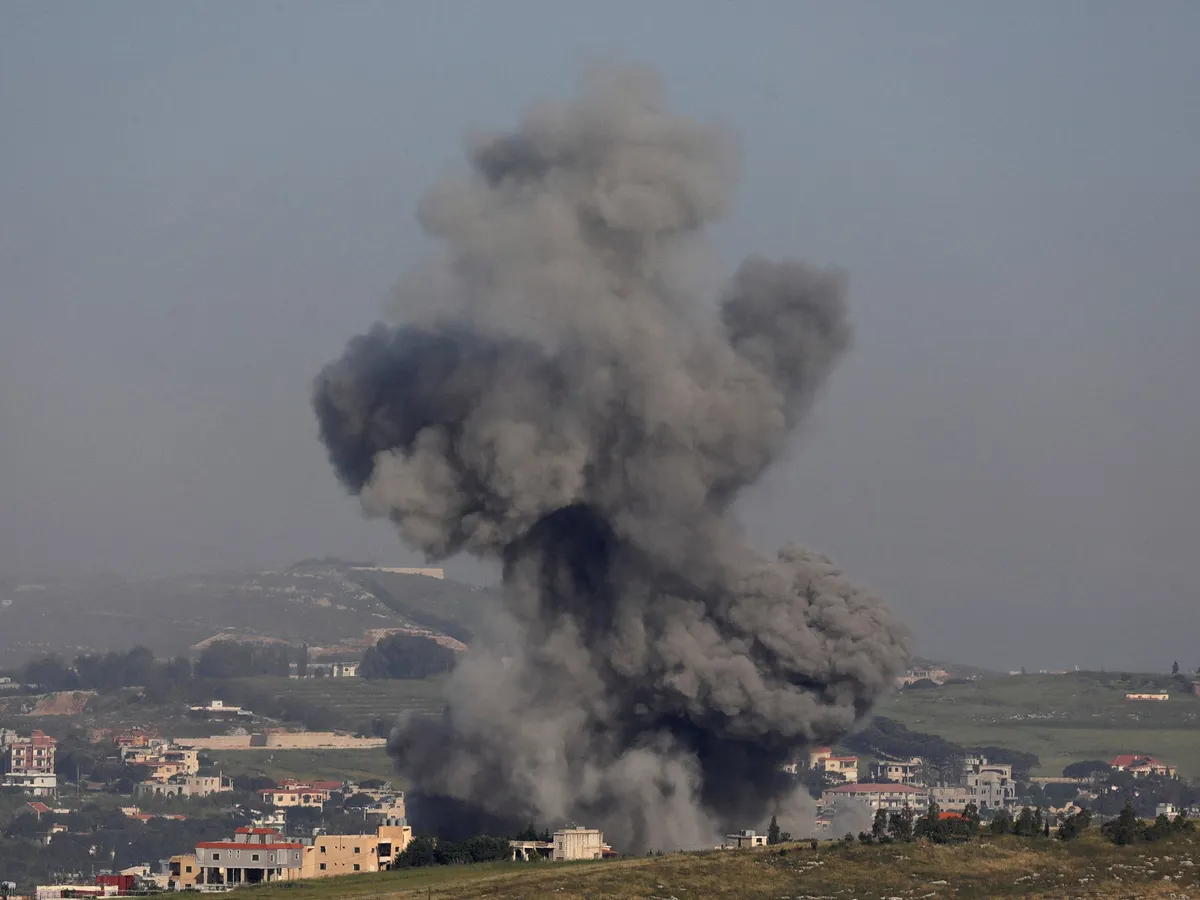
Al JazeeraFIG 01
Reading time
5min
Word count
1 228words
Sources cited
5cited
Entities identified
12entities
Quality score
100%
§ 01
Briefing Summary
AI-generatedNEWSAR · AI
A ceasefire officially in place since April 16 is under severe strain as Israel and Hezbollah escalate attacks against each other in Lebanon. This increase in hostilities follows six weeks of prior fighting. Since Israel's war on Lebanon began on March 2, over 2,800 people have been killed and more than a million displaced. Recent Israeli attacks have targeted civilians and medical workers, with the Lebanese Health Ministry reporting 51 deaths on Sunday alone, including two paramedics. The UN states over 100 Lebanese medical workers have been killed since the conflict started. The article questions whether the ceasefire is still being observed amidst these ongoing violations.
Confidence 0.90Sources 5Claims 5Entities 12
§ 02
Article analysis
Model · rule-basedFraming
Conflict
Human Rights
Tone
Sensational
AI-assessed
CalmNeutralAlarmist
Factuality
0.60 / 1.00
Mixed
LowHigh
Sources cited
5
Well sourced
FewMany
§ 03
Key claims
5 extracted01
International humanitarian laws are clear: medical personnel and first responders must be protected in armed conflict.
quoteAl Jazeera's Obaida Hitto
Confidence
1.00
02
Since Israel’s war on Lebanon began on March 2, the United Nations says at least 103 Lebanese medical workers have been killed and 230 injured in more than 130 Israeli strikes.
statisticUnited Nations
Confidence
0.90
03
The ceasefire in Lebanon that started on April 16 is increasingly coming under strain, with both Israel and Hezbollah ramping up attacks against each other.
factual
Confidence
0.90
04
On Sunday, the Lebanese Health Ministry said Israeli attacks across the country had killed 51 people, including two medical workers.
statisticLebanese Health Ministry
Confidence
0.85
05
Since Israel began its war on Lebanon on March 2, at least 2,846 people have been killed and more than a million displaced.
statisticLebanese Health Ministry
Confidence
0.80
§ 04
Full report
5 min read · 1 228 words§ 05
Entities
12 identifiedKey playerOppositionContextPositiveNeutralNegative
Locations6
§ 06
Keywords & salience
10 termsisraeli killings
1.00
ceasefire
1.00
hezbollah
0.90
lebanon
0.90
israel
0.90
armed conflict
0.80
international humanitarian laws
0.70
medical workers
0.60
attacks
0.50
ground invasion
0.40
§ 07
Topic connections
Interactive graph No topic relationship data available yet. This graph will appear once topic relationships have been computed.