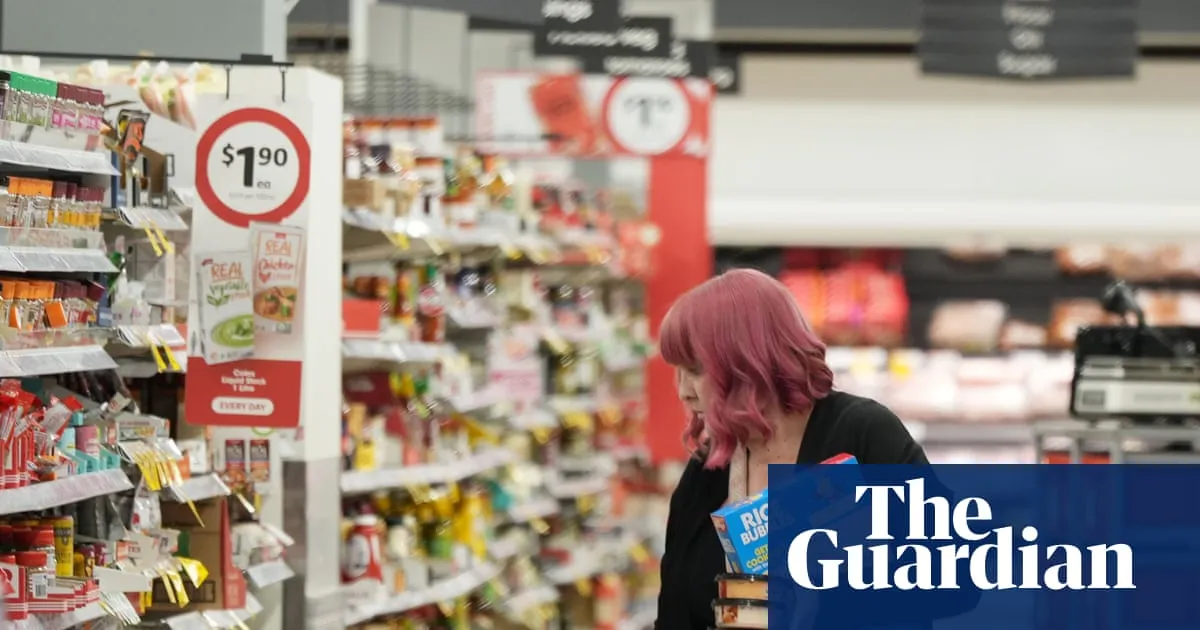
Foods in supermarkets boasting environmental terms such as “natural” or “sustainable” are mostly just using marketing speak, rather than verified claims, Australian researchers have found.More than 27,000 packaged foods sold at Coles, Woolworths, Aldi, IGA and Harris Farm supermarkets in Sydney were assessed by researchers from the George Institute for Global Health.Nearly four in 10 products carried some sort of sustainability claim, the study in Public Health Nutrition found.Associate Prof Alexandra Jones, the institute’s program lead for food governance, said the majority of claims were self-declared by the manufacturer, without independent verification.“Consumers are increasingly trying to make food choices that are good for the planet, and manufacturers know it. What we’re finding is that the labels designed to guide those choices are largely unregulated and that creates real risks of greenwashing.”Out of 69 different environmental claims identified by the researchers, “natural” and “vegan” appeared most often. Some, like “sustainable” or “natural”, were so broad as to be almost meaningless, she said.“There’s no legal meaning of ‘natural’, but we know that people associate it with being better for you, or being better for the environment,” she said. “But many things are natural that are not good in a health context. Sugar is natural – that doesn’t mean it’s good for you.”In a second study, George Institute researchers assessed whether products displaying climate-related claims actually had lower emissions, publishing their results in Cleaner and Responsible Consumption.They found, in general terms, that products making such claims had lower carbon footprints, however in certain categories the opposite was true.In meat and confectionery – two high-emitting categories – products boasting environmental benefits had significantly higher emissions than their unlabelled counterparts.Lead author Mariel Keaney said this raised serious concerns for consumer trust.“When ‘carbon friendly’ labels appear on some of the highest-emitting products in a category, that label isn’t just unhelpful, it’s also potentially misleading. Shoppers trying to reduce their environmental footprint deserve better than that.”Prof Natalina Zlatevska, who researches health and sustainability marketing policy at the University of Technology Sydney, said consumers had an interest in sustainability and a desire to understand the impact that their food and grocery items had on the environment.But Zlatevska, who was not involved in the research, said so many different claims, and the lack of clear definitions, created a lot of confusion.“What’s lacking is something that’s universal,” she said. Other countries were moving towards standardised ratings, like the Eco-Score system in France, which gave products a traffic light-style rating reflecting their environmental impact.“It needs to be informative enough for a consumer to make a really fast decision in the supermarket,” she said. “Anything that’s colour-coded, really simple to decipher.”About half of Australians considered sustainability when shopping and often relied on labels or on-pack messaging when making decisions, said Chandni Gupta, deputy chief executive of the Consumer Policy Research Centre, who was not involved in the research.Labels that were clear, specific and backed by evidence or independent verification could be helpful. “We found Australians want practical information that helps them compare products and make informed choices,” she said.“The problem is that genuinely useful claims currently sit alongside vague or unsubstantiated ones, making it harder for anyone to know what to trust.”Jones said the findings highlighted the need for regulatory action.If environmental claims were robust and regulated they could act as a powerful lever to improve the sustainability of foods, she said.In the meantime, consumers wanting to reduce their impact should focus on reducing their meat intake, and eating more fruits, vegetables and legumes – “whole categories that we know just are better for the environment, rather than worrying too much about individual products”.
SRCThe Guardian - World News
LANGEN
LEANCenter-Left
WORDS602
ENT11
MON · 2026-05-11 · 15:08 GMTBRIEF NSR-2026-0511-75358
NSR-2026-0511-75358News Report·EN·Public Health
Supermarket foods claiming to be ‘natural’ or ‘sustainable’ mostly just using marketing terms, researchers find
Australian researchers from the George Institute for Global Health have found that many supermarket foods claiming to be "natural" or "sustainable" primarily use these terms as marketing tactics rather than verifiable environmental claims. An analysis of over 27,000 packaged foods in Sydney supermarkets revealed that nearly 40% carried sustainability claims, most of which were self-declared and lacked independent verification.
Petra StockThe Guardian - World NewsFiled 2026-05-11 · 15:08 GMTLean · Center-LeftRead · 3 min
The Guardian - World NewsFIG 01
Reading time
3min
Word count
602words
Sources cited
3cited
Entities identified
11entities
Quality score
100%
§ 01
Briefing Summary
AI-generatedNEWSAR · AI
Australian researchers from the George Institute for Global Health have found that many supermarket foods claiming to be "natural" or "sustainable" primarily use these terms as marketing tactics rather than verifiable environmental claims. An analysis of over 27,000 packaged foods in Sydney supermarkets revealed that nearly 40% carried sustainability claims, most of which were self-declared and lacked independent verification. Terms like "natural" and "vegan" were most common, with "natural" often being broad and potentially misleading, as it has no legal definition. A separate study found that while some climate-related claims correlated with lower emissions, products in high-emitting categories like meat and confectionery with environmental labels sometimes had higher emissions than unlabelled alternatives, raising concerns about consumer trust and greenwashing.
Confidence 0.90Sources 3Claims 5Entities 11
§ 02
Article analysis
Model · rule-basedFraming
Public Health
Environmental
Tone
Measured
AI-assessed
CalmNeutralAlarmist
Factuality
0.80 / 1.00
Factual
LowHigh
Sources cited
3
Well sourced
FewMany
§ 03
Key claims
5 extracted01
Nearly four in 10 packaged foods sold in Sydney supermarkets carried some sort of sustainability claim.
statisticGeorge Institute for Global Health study
Confidence
0.95
02
The majority of sustainability claims are self-declared by manufacturers without independent verification.
factualAssociate Prof Alexandra Jones
Confidence
0.90
03
Foods claiming to be 'natural' or 'sustainable' are mostly using marketing terms without verified claims.
factualGeorge Institute for Global Health researchers
Confidence
0.90
04
In meat and confectionery, products with environmental claims had significantly higher emissions than unlabelled counterparts.
factualGeorge Institute for Global Health researchers
Confidence
0.85
05
Lack of clear definitions and universal standards for environmental claims creates confusion for consumers.
factualProf Natalina Zlatevska
Confidence
0.80
§ 04
Full report
3 min read · 602 words§ 05
Entities
11 identifiedKey playerOppositionContextPositiveNeutralNegative
People3
§ 06
Keywords & salience
10 termssustainability claims
1.00
greenwashing
1.00
marketing terms
0.90
consumer trust
0.80
environmental terms
0.70
unregulated labels
0.70
food choices
0.60
carbon footprints
0.50
independent verification
0.50
george institute for global health
0.40
§ 07
Topic connections
Interactive graph No topic relationship data available yet. This graph will appear once topic relationships have been computed.