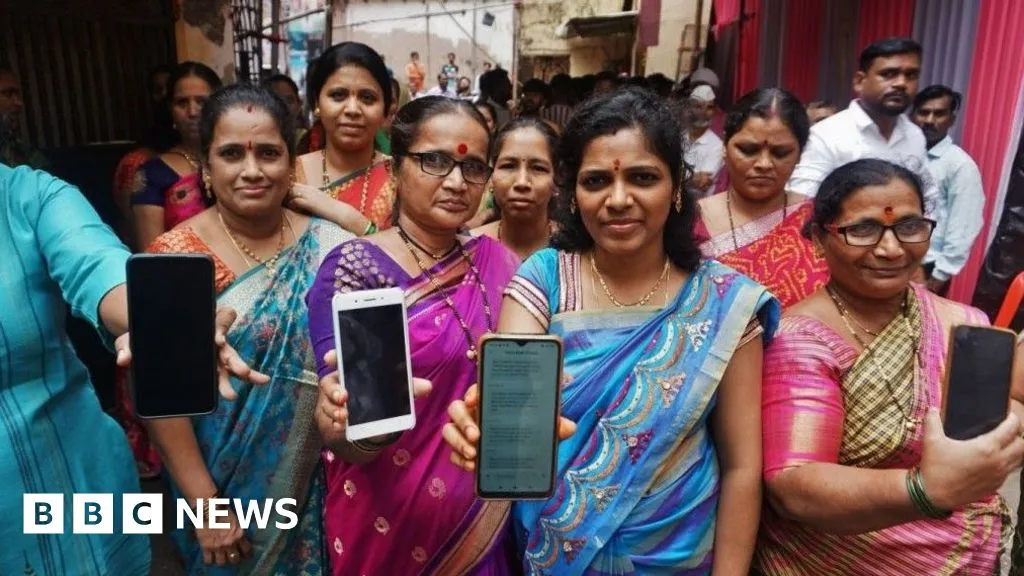
"Welfare is already the floor of Indian politics. What decides elections now is what parties build above it. Voters understood that long ago. Analysts are still arguing about the floor while the contest has moved to the ceiling."That, Joshi argues, is why welfare can no longer be viewed in isolation from the broader political coalitions parties assemble around it.In West Bengal, he says, the TMC's old "electoral equilibrium of welfare delivery, women voters, Muslim consolidation and enough Hindu support" may have fractured, contributing to its loss to the BJP.In neighbouring Assam, meanwhile, the BJP's rise rests "not only on religious rhetoric but also on welfare schemes, women's self-help groups, roads, state institutions and Chief Minister Himanta Biswa Sarma's image of administrative efficiency", Joshi says.Women have become central to this expanding welfare architecture - seen both as more reliable managers of household spending and as an increasingly decisive voting bloc whose turnout now often exceeds that of men.To be sure, the political and fiscal stakes are enormous: India's state governments now run more than 2,000 cash transfer programmes.According to the latest Ministry of Finance Economic Survey, states are expected to spend roughly $18bn (£13.2bn) on unconditional cash transfers alone in 2025-26, much of it targeted at women. In just three years, the number of states operating such schemes has increased more than fivefold, including many already running revenue deficits, the survey says. In some states, the transfers account for as much as half the monthly consumption expenditure of poorer rural households. For female casual labourers and self-employed women, they form a substantial share of income.AFP via Getty ImagesMK Stalin (left) of DMK, who lost the election in Tamil Nadu, was a leading welfarist chief ministerYet the survey reads less like a celebration than a warning. India's states, it argues, are increasingly borrowing to fund recurring welfare payouts while squeezing spending on roads, schools, health systems and job creation. With salaries, pensions, subsidies and interest payments already consuming more than 60% of state revenues, every additional rupee spent on cash transfers risks crowding out capital investment - the kind economists associate with longer-term growth and employment.That trade-off is beginning to shape the political debate too. "Election after election, we've seen that welfare alone is not enough to win," says Louise Tillin, a professor of politics at King's College London. "It may help at the margins, but it is rarely the decisive factor." One reason, Tillin says, is the rise of "competitive welfarism": almost every major party now offers some version of cash transfers, subsidies or free services, often trying to outbid rivals during campaigns.Yamini Aiyar, a senior visiting fellow at Brown University, calls this "techno-patrimonialism" to describe how governments use "cash-transfer technology to recast welfare as a personal gift from political leaders".AFPIndia's women have become central to its relatively new welfare politicsMany appear to want something more enduring: jobs, mobility and economic self-worth.That shift is also reflected in emerging research on how beneficiaries - especially women - view welfare."The media produced a narrative of cash transfers leading to electoral success. Political scientists who study elections don't really see a causal link," says Prabha Kotiswaran, a professor of law and social justice at King's College London.Kotiswaran has researched women beneficiaries across several Indian states. In one project, she and fellow researchers interviewed women a year after cash-transfer schemes were introduced in Assam, West Bengal, Tamil Nadu and Karnataka - states where major parties had increasingly converged around unconditional transfers."The majority of the women in all these states said they did not vote for the party in power due to the cash transfers," she says.Her fieldwork points to something more politically sophisticated than the transactional model often assumed by strategists. Many women, she says, viewed welfare not as a gift exchanged for votes but as partial compensation for state failure.Swastik PalSoma Das sells clothes using welfare money, supporting her household in West BengalSome questioned how governments could sustain payouts indefinitely. Others argued that lowering prices or creating jobs mattered more than direct transfers."Women were far more worried about various other things, primarily the cost of living, decent work in rural areas for themselves and their educated children, and state specific issues like debt and alcoholism in Tamil Nadu," says Kotiswaran.Welfare still matters politically, not least because women have become central to India's electoral landscape. What was once an outlier idea - direct cash transfers to women - has, since 2021, become a near-universal campaign promise across parties."I think it is a positive development from a feminist perspective and needs to form the basis for a new generation of rights on the right to care," says Kotiswaran.But as welfare becomes common across parties, it may no longer be enough on its own to secure voter loyalty."A party might get punished for withdrawing welfare. But whether it is getting rewarded (for offering it) is the real question," says Tillin.
SRCBBC News - World
LANGEN
LEANCenter
WORDS813
ENT11
MON · 2026-05-11 · 22:12 GMTBRIEF NSR-2026-0512-75473
NSR-2026-0512-75473Analysis·EN·Political Strategy
Why welfare isn't winning elections in India like it used to
Welfare programs, once a primary determinant of election outcomes in India, are no longer sufficient on their own to secure victory. Political analysts suggest that while welfare forms the foundational "floor" of Indian politics, parties now compete by building "ceilings" of broader political coalitions and other developmental initiatives above it.
BBC News - WorldFiled 2026-05-11 · 22:12 GMTLean · CenterRead · 4 min
BBC News - WorldFIG 01
Reading time
4min
Word count
813words
Sources cited
3cited
Entities identified
11entities
Quality score
100%
§ 01
Briefing Summary
AI-generatedNEWSAR · AI
Welfare programs, once a primary determinant of election outcomes in India, are no longer sufficient on their own to secure victory. Political analysts suggest that while welfare forms the foundational "floor" of Indian politics, parties now compete by building "ceilings" of broader political coalitions and other developmental initiatives above it. This shift is evident in states like West Bengal, where a fracturing of the traditional welfare-based equilibrium may have contributed to electoral losses, and in Assam, where the BJP's success combines religious rhetoric with welfare schemes, women's self-help groups, infrastructure, and administrative efficiency. Women have become a crucial demographic, both as recipients and managers of welfare, and as a decisive voting bloc. However, the extensive reliance on cash transfer programs, often funded by state borrowing, raises concerns about potential crowding out of essential investments in infrastructure, education, health, and job creation, impacting long-term economic growth.
Confidence 0.90Sources 3Claims 5Entities 11
§ 02
Article analysis
Model · rule-basedFraming
Political Strategy
Economic Impact
Tone
Measured
AI-assessed
CalmNeutralAlarmist
Factuality
0.60 / 1.00
Mixed
LowHigh
Sources cited
3
Well sourced
FewMany
§ 03
Key claims
5 extracted01
India's state governments are expected to spend roughly $18bn on unconditional cash transfers alone in 2025-26.
statisticMinistry of Finance Economic Survey
Confidence
0.95
02
States are increasingly borrowing to fund recurring welfare payouts while squeezing spending on essential services like roads, schools, and health.
quoteMinistry of Finance Economic Survey
Confidence
0.90
03
Welfare alone is not enough to win elections in India; it helps at the margins but is rarely the decisive factor.
quoteLouise Tillin
Confidence
0.90
04
Women have become a decisive voting bloc whose turnout now often exceeds that of men.
factual
Confidence
0.85
05
The TMC's old electoral equilibrium in West Bengal may have fractured, contributing to its loss to the BJP.
quoteJoshi
Confidence
0.80
§ 04
Full report
4 min read · 813 words§ 05
Entities
11 identifiedKey playerOppositionContextPositiveNeutralNegative
People3
Organizations4
§ 06
Keywords & salience
10 termswelfare politics
1.00
election strategy
0.90
voter behavior
0.80
women voters
0.70
cash transfer programs
0.70
fiscal policy
0.60
economic growth
0.50
political coalitions
0.50
state government spending
0.40
india
0.40
§ 07
Topic connections
Interactive graph Network visualization showing 51 related topics
View Full Graph Person Organization Location Event|Click node to navigate|Edge numbers = shared articles