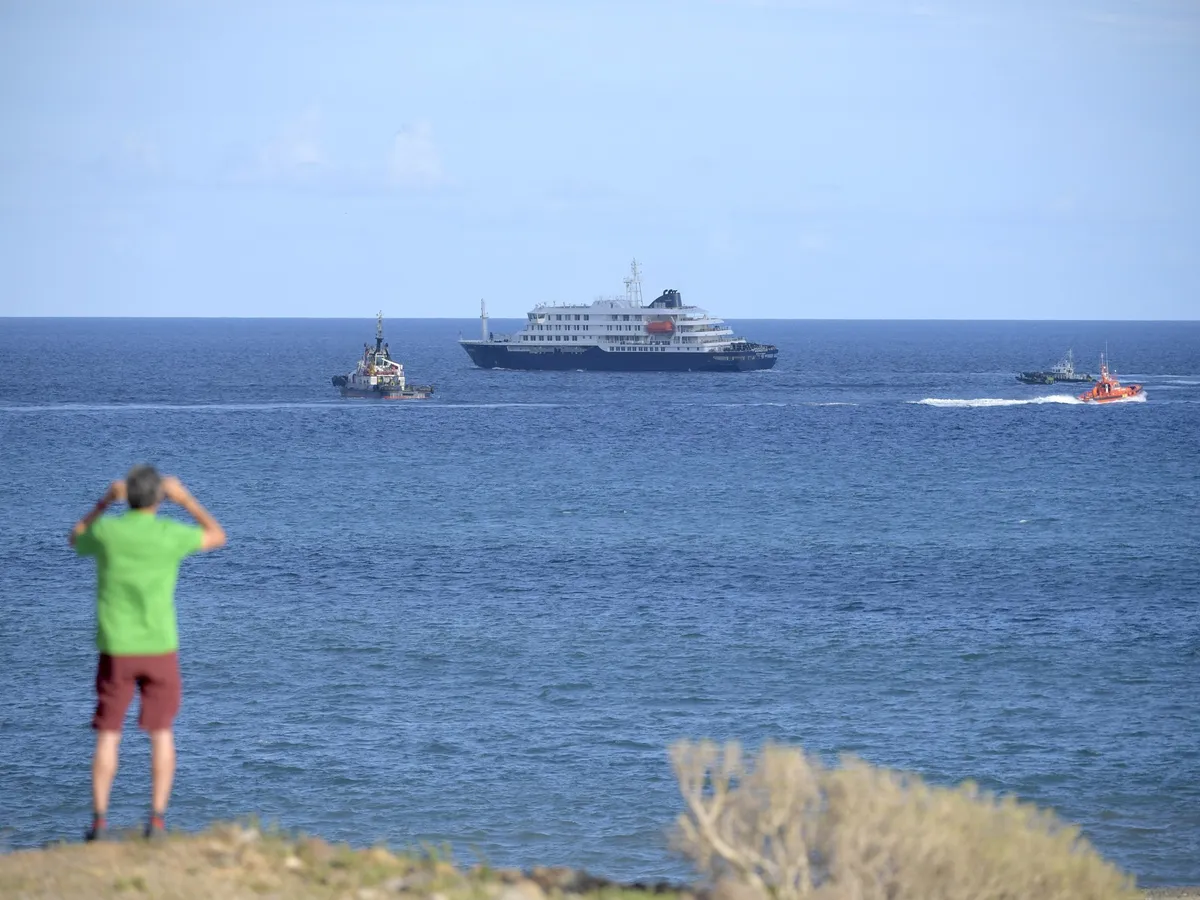
The hantavirus scare on board the MV Hondius revived COVID-era questions about elite mobility, disease transmission and who bears the risks during global health scares.Critic, journalist, and historian of science based in Berlin.Published On 13 May 2026No one can stop the wealthy from taking their holidays. Whether coasting down snowy mountains or rubbing shoulders with fellow elites on luxury cruises, they will always find a way to indulge in leisure and excess, sometimes even on the cusp of an outbreak.In January 2020, a German tourist vacationing in the Canary Islands tested positive for the novel coronavirus, becoming Spain’s first confirmed COVID-19 case. The patient, along with five other German nationals travelling with him, was placed under observation. Authorities later discovered that the tourist had been in contact, in Germany, with a Chinese businesswoman infected with COVID-19 before travelling to the archipelago. The episode foreshadowed a pattern that would define the pandemic: Pathogens moved quickly along the same routes as wealthy tourists, business travellers, and international elites.During the early months of COVID-19, the virus was frequently associated with affluent mobility. Early outbreaks were linked to ski holidays, business trips to Wuhan, and luxury cruises that served as vectors of disease transmission. As Bjorn Thor Arnarson wrote in Scientific Reports, “human transportation was needed to distribute the virus to new places.” Those moving most freely across borders were overwhelmingly affluent.This dynamic produced strange public perceptions. In Mexico, Governor Luis Miguel Barbosa notoriously declared: “If you’re rich, you’re at risk, but if you’re poor, you’re not. The poor, we’re immune.” His comments were absurd, but they reflected a real phenomenon unfolding at the time. A number of Mexico’s wealthiest bankers had returned from a ski trip in Vail, Colorado, carrying the virus with them. When public health officials attempted to contact several members of the group about possible exposure, many reportedly failed to respond.
SRCAl Jazeera
LANGEN
LEANCenter
WORDS311
ENT10
WED · 2026-05-13 · 09:51 GMTBRIEF NSR-2026-0513-75849
NSR-2026-0513-75849Analysis·EN·Public Health
The class politics of modern outbreaks
A recent hantavirus scare on the MV Hondius has reignited discussions about how elite mobility influences disease transmission during global health crises. During the early COVID-19 pandemic, pathogens frequently traveled along routes used by wealthy tourists and business travelers, leading to initial outbreaks linked to luxury travel.
Edna BonhommeAl JazeeraFiled 2026-05-13 · 09:51 GMTLean · CenterRead · 2 min
Al JazeeraFIG 01
Reading time
2min
Word count
311words
Sources cited
1cited
Entities identified
10entities
Quality score
100%
§ 01
Briefing Summary
AI-generatedNEWSAR · AI
A recent hantavirus scare on the MV Hondius has reignited discussions about how elite mobility influences disease transmission during global health crises. During the early COVID-19 pandemic, pathogens frequently traveled along routes used by wealthy tourists and business travelers, leading to initial outbreaks linked to luxury travel. This pattern created a perception, exemplified by a Mexican governor's statement, that the wealthy were more at risk due to their extensive travel. The article highlights how affluent individuals, often less responsive to public health inquiries, played a significant role in the initial spread of diseases across borders.
Confidence 0.90Sources 1Claims 4Entities 10
§ 02
Article analysis
Model · rule-basedFraming
Public Health
Social Justice
Tone
Measured
AI-assessed
CalmNeutralAlarmist
Factuality
0.40 / 1.00
Mixed
LowHigh
Sources cited
1
Limited
FewMany
§ 03
Key claims
4 extracted01
Mexico's Governor Luis Miguel Barbosa stated that 'If you’re rich, you’re at risk, but if you’re poor, you’re not. The poor, we’re immune.'
quoteLuis Miguel Barbosa
Confidence
1.00
02
Pathogens moved quickly along the same routes as wealthy tourists, business travellers, and international elites.
factual
Confidence
0.90
03
Early COVID-19 outbreaks were linked to ski holidays, business trips to Wuhan, and luxury cruises.
factual
Confidence
0.85
04
A number of Mexico’s wealthiest bankers had returned from a ski trip in Vail, Colorado, carrying the virus with them.
factual
Confidence
0.70
§ 04
Full report
2 min read · 311 words§ 05
Entities
10 identifiedKey playerOppositionContextPositiveNeutralNegative
Organizations1
Locations7
Topics1
§ 06
Keywords & salience
9 termsclass politics
1.00
elite mobility
0.90
disease transmission
0.90
global health scares
0.80
affluent mobility
0.70
covid-19
0.70
risk perception
0.60
luxury cruises
0.50
hantavirus
0.40
§ 07
Topic connections
Interactive graph Network visualization showing 32 related topics
View Full Graph Person Organization Location Event|Click node to navigate|Edge numbers = shared articles