Fancy your chances in politics? Then perhaps you should change your name to Aaron Aaronson or Aaliyah Aardvark, figures from last week’s local elections in England suggest.A Guardian analysis of election results compiled by the website Democracy Club points to a striking alphabet effect. In wards where a party fielded three candidates, those listed nearer the top of the ballot paper – with a surname nearer the start of the alphabet – finished ahead of their party colleagues in 2,200 cases, or 65% of the time.By contrast, candidates listed third out of their party’s list – with a surname nearer the end of the alphabet – topped their party’s slate only 382 times, or 11%. If ballot order had no relationship with performance, the figures would be expected to fall much closer to one-third in each position.The figures show that out of the main parties in England, Reform had the strongest relationship between where candidates placed among their party colleagues, and the initials of their surname. About 74% of alphabetically advantaged Reform candidates topped their party’s vote, compared with fewer than 8% of Reform candidates nearest the bottom of the ballot paper. The Green Party had the second-strongest surname effect, followed by Labour.Juliet Zhong, who unsuccessfully stood for Reform UK in Kensington and Chelsea in London, said: “In the Queen’s Gate ward, where I stood alongside my two fellow Reform UK candidates, Ms Noble and Mr Walker, all our leaflets displayed our three names together. However, the election results showed: Noble 120, Walker 115, and then Zhong (me) 102. That is about 15% to 18% less. It makes no sense at all, as all our campaign materials featured all three of our names.”Zhong said that this phenomenon was being seen across the party. She added: “My party colleague, Henry Woodruff, also noted this in our group chat after the election. He secured 288 votes, while his wardmates trailed at 320 and 345. It’s no coincidence that the top scorer, Andrew Barclays (345 votes), sat comfortably at the summit of the ballot paper.”She said candidates’ names should be grouped by party, rather than alphabetically, adding; “It would surely be more logical for voters to see candidates classified by their party rather than playing a game of ‘find the surname’. This would ensure a level playing field, regardless of whether a party is perched at the top or relegated to the bottom of the list.”Election-winners whose names are near the top of the alphabet are less likely to think their surname is a factor in their success. Nick Abear, a Green Party candidate who was elected to the Redhill West & Meadvale Ward in East Surrey, said: “I hadn’t really considered it because I think most people know who (or which party) they are going to vote for in advance of voting. The thought of someone turning up to vote and thinking: ‘I’ll just stick my X on the top line’ seems unlikely.”Abear did, however, get more votes than his Green Party colleague Elly Heaton.Andy Adams won a council seat in Winchester for the Liberal Democrats last week, and said it was an issue he had known about for a while. “I have heard of this alleged effect before and I always regale staff at polling stations with it as I visit as the candidate, joking that I am living proof that it is by no means always true. I stood for Winchester city council 11 times and once for parliament before I was finally successful this year.”Adams added that the effect could sometimes work: “In a very close election and at local level the numbers can be very close at times … a very long list would reasonably be expected to give rise to the effect. I would probably support randomising ballot papers in principle even if I would not stand to gain from such an innovation.”He added: “My husband is a Wiggins and whilst we decided not to double-barrel, if he were interested in politics then he would be well advised to become an Adams-Wiggins, or so it seems.”The system used across local elections varies depending on the council, with most urban areas electing three councillors for each ward, but some rural areas electing fewer. Last week, 864 wards had at least one party standing three candidates.Another way of looking at it – looking across all wards – is to compare the average vote share each candidate got compared with the rest of their party. This shows a similar pattern: candidates with surnames near the beginning of the alphabet slightly outperformed the party average vote share, and those with surnames beginning W, Y and Z underperformed in their party.Unfortunately, the results suggest that if your name is Zebedee Zurcher, you might want to consider a career outside of politics.
SRCThe Guardian - World News
LANGEN
LEANCenter-Left
WORDS799
ENT12
WED · 2026-05-13 · 08:00 GMTBRIEF NSR-2026-0513-75862
NSR-2026-0513-75862Analysis·EN·Political Strategy
Easy as ABC: voters in England tend to pick names nearer top of ballot, data suggests
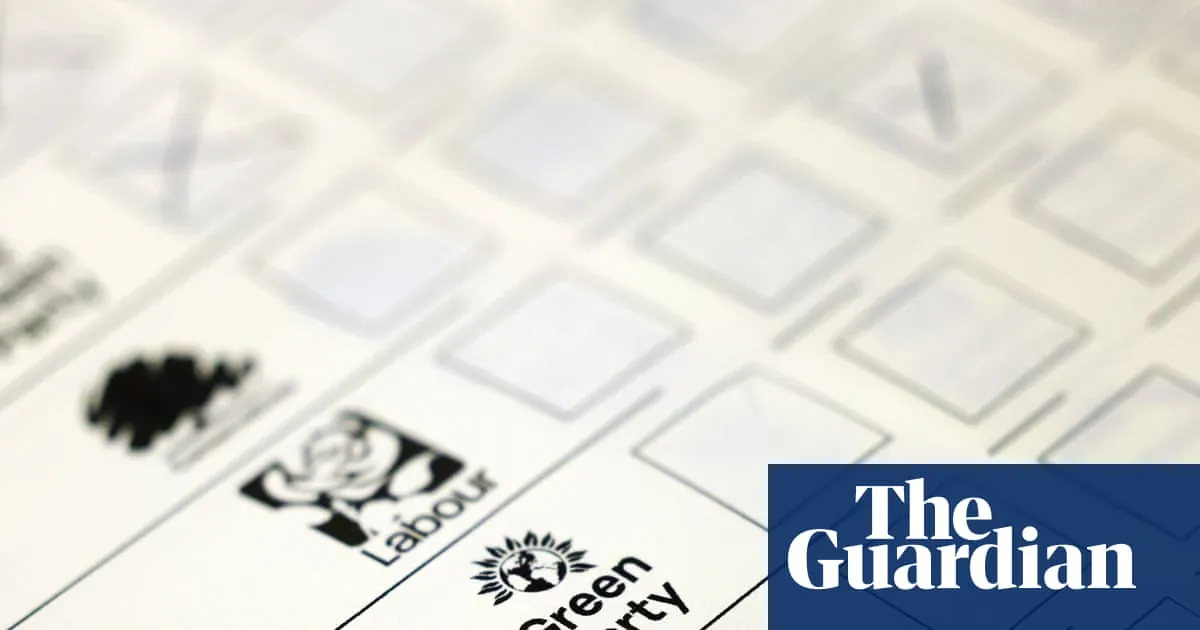
Data from recent local elections in England suggests a significant "alphabet effect" on voter choices. Analysis of results indicates that candidates whose surnames appear earlier in the alphabet, and thus are placed higher on the ballot paper, tend to receive more votes than their party colleagues listed lower down.
Michael Goodier and Helena HortonThe Guardian - World NewsFiled 2026-05-13 · 08:00 GMTLean · Center-LeftRead · 4 min
The Guardian - World NewsFIG 01
Reading time
4min
Word count
799words
Sources cited
3cited
Entities identified
12entities
Quality score
100%
§ 01
Briefing Summary
AI-generatedNEWSAR · AI
Data from recent local elections in England suggests a significant "alphabet effect" on voter choices. Analysis of results indicates that candidates whose surnames appear earlier in the alphabet, and thus are placed higher on the ballot paper, tend to receive more votes than their party colleagues listed lower down. In wards with three candidates from the same party, those near the top of the ballot outperformed their colleagues 65% of the time. This effect was particularly pronounced in the Reform party, followed by the Green and Labour parties. This phenomenon raises questions about ballot design and fairness, with some suggesting candidates should be grouped by party rather than alphabetically to ensure a more level playing field.
Confidence 0.90Sources 3Claims 5Entities 12
§ 02
Article analysis
Model · rule-basedFraming
Political Strategy
Human Interest
Tone
Measured
AI-assessed
CalmNeutralAlarmist
Factuality
0.70 / 1.00
Factual
LowHigh
Sources cited
3
Well sourced
FewMany
§ 03
Key claims
5 extracted01
Juliet Zhong stated that in her election, Noble received 120 votes, Walker 115, and Zhong 102, despite all names being on leaflets.
quoteJuliet Zhong
Confidence
0.95
02
About 74% of alphabetically advantaged Reform candidates topped their party’s vote, compared with fewer than 8% of Reform candidates nearest the bottom of the ballot paper.
statisticThe Guardian analysis of election results compiled by Democracy Club
Confidence
0.90
03
Candidates listed third out of their party’s list topped their party’s slate only 11% of the time.
statisticThe Guardian analysis of election results compiled by Democracy Club
Confidence
0.90
04
In wards where a party fielded three candidates, those listed nearer the top of the ballot paper finished ahead of their party colleagues in 65% of cases.
statisticThe Guardian analysis of election results compiled by Democracy Club
Confidence
0.90
05
Candidates’ names should be grouped by party rather than alphabetically to ensure a level playing field.
quoteJuliet Zhong
Confidence
0.80
§ 04
Full report
4 min read · 799 words§ 05
Entities
12 identifiedKey playerOppositionContextPositiveNeutralNegative
People5
Organizations4
§ 06
Keywords & salience
10 termsalphabet effect
1.00
ballot order
0.90
election results
0.80
surname advantage
0.80
voter behavior
0.70
local elections
0.60
political candidates
0.50
reform uk
0.40
green party
0.40
labour
0.40
§ 07
Topic connections
Interactive graph Network visualization showing 51 related topics
View Full Graph Person Organization Location Event|Click node to navigate|Edge numbers = shared articles