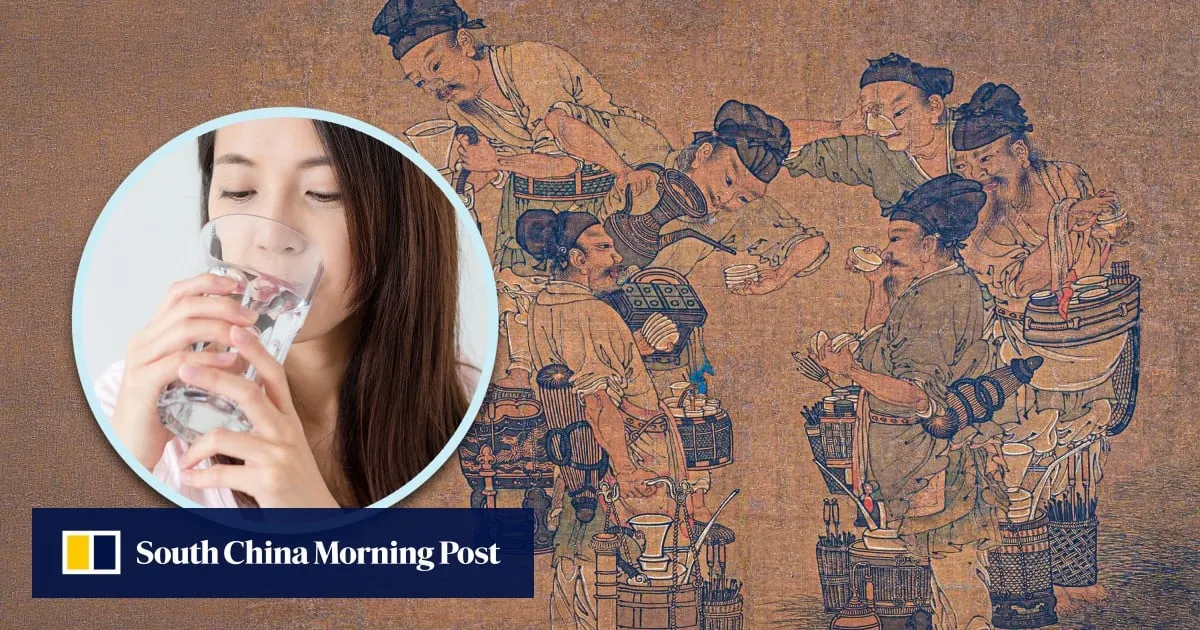
For most people, drinking water is an unremarkable daily habit.In ancient China, however, it carried far greater meaning. Water was bound up with social rank, health beliefs, ritual practice and etiquette.As early as the pre-Qin period (Paleolithic Period – 221 BC), Chinese thinkers were already classifying natural water.The ancient encyclopedic text Master Lü’s Spring and Autumn Annals claimed that “heavy water”, rich in minerals, could cause swelling in the legs and feet, while “light water”, with fewer minerals, could lead to baldness and tumours.It also linked local water quality to the appearance of the people who drank it: sweet water was said to produce healthy, attractive residents; pungent water was associated with sores.A section of the Yongding River in the gorge area of Beijing. The source of drinking water was considered very important in ancient times. Photo: XinhuaThis helped shape later elite tastes, with emperors and nobles seeking out sweet, clean-tasting spring water or dew to brew tea.The Classic of Mountains and Seas also described spring water from high mountains as cold and clear, stating it could quench thirst and even relieve heart pain.By the Ming dynasty (1368–1644), the writer Xu Xianzhong had gone further, setting out standards for fine spring water in his book Shuipin, or Ranking of Waters.For Xu, the best springs came from grand, majestic mountains. Water that seeped out of mud or sand, by contrast, was considered bitter.Tang Dynasty (618–907) tea master Lu Yu ranked natural water into three grades in The Classic of Tea: slow-flowing water from “milky springs” – filtered through stalactites – and stone pools was best, river water came second, and well water was lowest.A picturesque water source in China. The ancient elite sought out the best for their refined tastes. Photo: BaiduHe also warned against drinking waterfall water, claiming it could cause neck illness.Further ReadingEmperor Qianlong of the Qing dynasty (1644–1912), the longest-lived emperor in Chinese history, lived to 89 and was famously particular about both tea and the water used to brew it.During his inspection tours, Qianlong had attendants weigh water samples from across China, believing lighter water was better. Melted snow ranked first, followed by water from Beijing’s Jade Spring Hill.Empress Dowager Cixi was said to be just as fastidious. Known for her extravagant lifestyle, she had palace maids collect dew from the imperial gardens each morning for her to rinse her mouth.They also used clean snow water, sometimes mixed with plants, to brew tea for her.Archaeologists unearth a brick-structured sewer from the Han dynasty during a dig. Photo: XinhuaIn summer, the imperial court stored ice to chill drinking water, making a clean, cold cup a rare privilege of power.However, ordinary people had far fewer choices.Most relied on well water, filtering it through coarse cloth or using alum to help sediment settle.Historical texts said the best well water came from deep underground veins, but in crowded cities, wells were often polluted and the water could turn murky.Li Shizhen, author of Bencao Gangmu, believed the first bucket drawn from a well in the morning was the finest and could help treat bad breath.In parts of southwestern China, some villagers still use freshly drawn morning well water to rinse their mouths and wash their faces.Ancient Chinese texts also assigned different health properties to different waters.Jia Ming, a Yuan dynasty (1271–1368) food expert who reportedly lived past 100, wrote in Essential Knowledge of Food and Drink that storm rain carried hanqi, cold energy, and should not be drunk.He also claimed that early spring rain was believed to help with infertility, while rainwater from the plum-rain season had to be boiled first to avoid misfortune.Dew had an even more refined reputation.In the Qing dynasty dietary text Suixiju Yinshi Pu, Traditional Chinese Medicine (TCM) doctor Wang Shixiong wrote that dew from rice stalks could nourish the stomach, dew from sweet flag could clear the mind and brighten the eyes, and dew from chrysanthemums could nourish the blood.The above painting depicts a scene from ancient China in which people are carrying and selling water. Photo: BaiduWater also flowed through folk customs and rites of passage in China.In the ancient ceremony, a newborn was bathed on the third day after birth to cleanse away impurities and mark the child’s formal arrival into the family.In Qinghai, northwestern China, a Han wedding custom known as the “water-splashing ritual” saw the bride’s companions splash water on the groom’s party as they entered her home, a gesture meant to bless the couple with happiness.Around Chinese New Year’s Eve, some ethnic minority communities would race to springs or wells for the first bucket of water, believed to be especially pure, sweet and able to bring good fortune for the year ahead.
SRCSouth China Morning Post
LANGEN
LEANCenter-Right
WORDS780
ENT12
WED · 2026-05-13 · 10:00 GMTBRIEF NSR-2026-0513-75914
NSR-2026-0513-75914News Report·EN·Social Justice
China emperors drank from mountain springs, melted snow; commoners used murky well water
In ancient China, water consumption was deeply tied to social status, health beliefs, and ritual. Elite individuals, including emperors and nobles, sought out pure water sources like mountain springs and melted snow for drinking and tea brewing, believing these to be superior.
Zoey ZhangSouth China Morning PostFiled 2026-05-13 · 10:00 GMTLean · Center-RightRead · 4 min
South China Morning PostFIG 01
Reading time
4min
Word count
780words
Sources cited
5cited
Entities identified
12entities
Quality score
100%
§ 01
Briefing Summary
AI-generatedNEWSAR · AI
In ancient China, water consumption was deeply tied to social status, health beliefs, and ritual. Elite individuals, including emperors and nobles, sought out pure water sources like mountain springs and melted snow for drinking and tea brewing, believing these to be superior. Texts from various dynasties, such as *Master Lü's Spring and Autumn Annals* and *The Classic of Tea*, classified water quality and its perceived effects on health and appearance. While the elite enjoyed refined water, commoners typically relied on less desirable well water. This distinction highlights the significant social and cultural importance placed on water sources in ancient Chinese society.
Confidence 0.90Sources 5Claims 5Entities 12
§ 02
Article analysis
Model · rule-basedFraming
Social Justice
Human Interest
Tone
Measured
AI-assessed
CalmNeutralAlarmist
Factuality
0.80 / 1.00
Factual
LowHigh
Sources cited
5
Well sourced
FewMany
§ 03
Key claims
5 extracted01
Emperor Qianlong believed lighter water was better, ranking melted snow first and water from Beijing’s Jade Spring Hill second.
factualEmperor Qianlong
Confidence
1.00
02
Tang dynasty tea master Lu Yu ranked natural water into three grades, with well water being the lowest.
factualLu Yu
Confidence
1.00
03
Emperors and nobles sought out sweet, clean-tasting spring water or dew, while commoners relied on well water.
factual
Confidence
1.00
04
Ancient Chinese texts like Master Lü’s Spring and Autumn Annals classified natural water and linked its mineral content to health effects.
factualMaster Lü’s Spring and Autumn Annals
Confidence
1.00
05
In ancient China, water quality was linked to social rank, health beliefs, ritual practice, and etiquette.
factual
Confidence
1.00
§ 04
Full report
4 min read · 780 words§ 05
Entities
12 identifiedKey playerOppositionContextPositiveNeutralNegative
Organizations7
§ 06
Keywords & salience
10 termsancient chinese water beliefs
1.00
social rank and water
0.90
water quality standards
0.80
elite water preferences
0.70
health beliefs about water
0.60
historical water sources
0.50
master lü’s spring and autumn annals
0.40
lu yu
0.40
emperor qianlong
0.40
tea and water
0.40
§ 07
Topic connections
Interactive graph No topic relationship data available yet. This graph will appear once topic relationships have been computed.