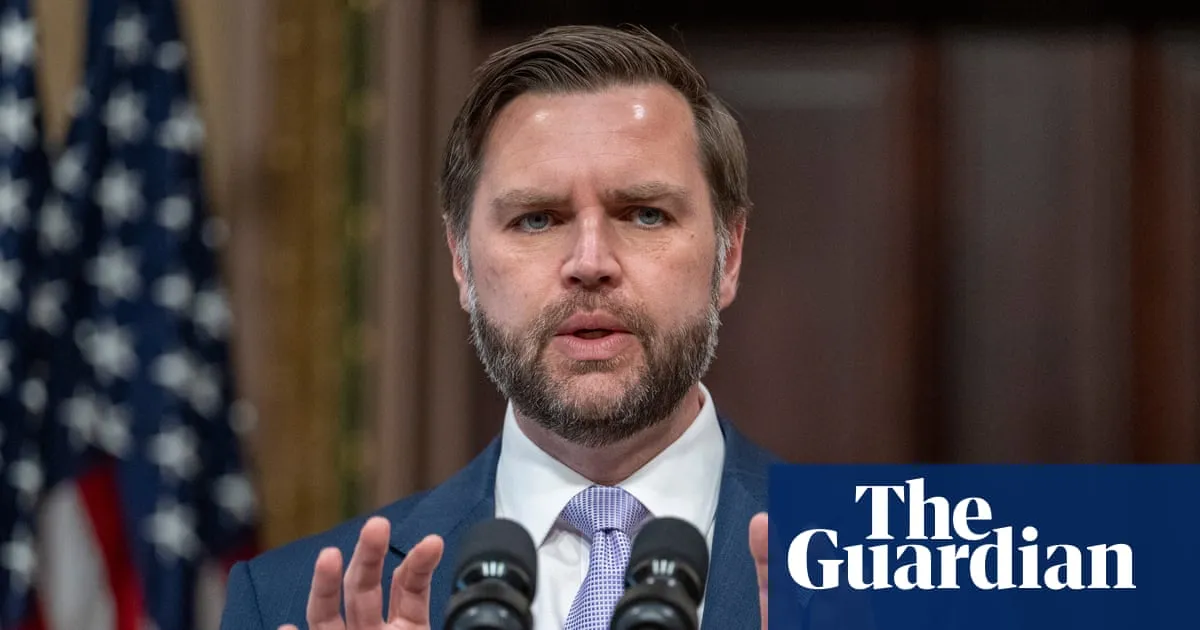
JD Vance has threatened to “turn off” federal funding for government health insurance programs in states that refuse to comply with the Trump administration’s crackdown on suspected fraud.States which fail to “get serious” about fraud would lose Medicaid and Medicare funding, the US vice-president announced on Wednesday, sparking fresh accusations that Trump officials are using unfounded allegations to punish political rivals.Hospices and home health agencies are also halted from new Medicare enrollment for six months while the Medicare-and-Medicaid-services" class="entity-link entity-organization" data-entity-id="17072" data-entity-type="organization">Centers for Medicare and Medicaid Services (CMS) investigates potential fraud alongside Vance’s anti-fraud taskforce, the agency announced on Wednesday.The administration will review anti-fraud funding for states that it deems to have failed to tackle fraud, Vance said. “And if we continue to find problems, we can turn off other resources within their state Medicaid programs as well.“Our goal here is not to do that. We don’t want to turn off any money,” the vice-president claimed. “What we want to do is ensure that people are taking fraud seriously.“We want to protect Medicaid. We want to protect Medicare. But we can’t do that if the states that are administering those programs are allowing those programs to be fleeced by fraudsters.”The news follows a crackdown on Minnesota and three other Democratic states, as well as a freeze on new medical suppliers for Medicare. Donald Trump signed an executive order in March to create a taskforce on eliminating fraud.The Vance investigation on Medicaid is set to include audits of the watchdog organizations tasked with guarding against fraud, known as Medicaid Fraud Control Units (MFCUs), which are funded federally. The audits seek to reveal whether the units are pursuing known abuse of Medicaid.Attorneys general in all 50 states reportedly received a letter from Thomas Bell, inspector general at the US Department of Health and Human Services (HHS). “This means your failure to do your job,” Bell wrote, according to the Wall Street Journal, “has put all of your state’s Medicaid funds in jeopardy.”More than $300m in funding was halted to Minnesota in recent months because federal officials believed the state was not in compliance with other requirements. CMS recently stayed that hold on funding.“But as radical as the Minnesota withhold was, it did not involve ‘all of the state’s Medicaid funds’,” said Andy Schneider, research professor of the practice at Georgetown University’s Center for Children and Families. “There’s no statutory or regulatory basis for withholding all of a state’s federal Medicaid matching funds due to non-performance by a MFCU,” he said.The HHS doesn’t have the authority to withhold all of a state’s federal Medicaid funds, and “CMS, which does have the authority, has never done so and is not going to do so”, Schneider said. He has cautioned that “it’s important to watch what CMS does (and doesn’t do), not what [CMS administrator] Dr [Mehmet] Oz or Vice-President Vance says.”About 850 agents and brokers suspected of fraud were reinstated under the Trump administration, Lloyd Doggett, a Democratic representative from Texas, pointed out at a recent congressional hearing. “Your administration was the one that let them all go back to work,” he told the HHS secretary, Robert F Kennedy Jr.In response, Kennedy claimed that was “not a credible story”, and focused instead on alleged fraud by home health aides, including family members, whom he said may receive payment from CMS for taking care of elderly and disabled people. “These are family members getting paid to do things that they used to do as family members for free, and this is rife with fraud,” Kennedy said, claiming that the US was “paying for fraud now as much as for medicine”.The allegation rippled through the disability community. Caregivers who receive federal payments are frequently not able to work other jobs or support their families otherwise.“Waiting lists are already long, and the serious fraud – which does happen – isn’t coming from individuals who need help, but from bad companies and lax oversight,” said David Perry, a journalist, historian and parent of a disabled adult. He has recounted the ways increasingly complicated rules have made it difficult to apply for his son’s benefits.“Republican anti-fraud programs are not about building the capacity to help people who need it while making sure funds are not stolen, but stripping away capacity in order to punish political rivals,” he said.The HHS did not respond by press time to the Guardian’s questions about what fraud investigation non-compliance would entail, and how these moves would affect access to caregiving.New providers of home health and hospices were “a key source of fraudulent activity”, CMS said in its statement, highlighting states that it deemed to have “elevated fraud risk”, including Arizona, California, Georgia, Ohio, Nevada and Texas.It’s not new to scrutinize state-level fraud investigations, but this news “differs from prior approaches in its greater reliance on financial penalties for states”, said Alice Burns, associate director of the Medicaid and the uninsured program at KFF, a health policy non-profit.“It’s still unknown how extensively CMS will apply financial penalties to other states or the shares of Medicaid funding that might be at risk,” Burns said. Such moves could force states to make difficult decisions on funding Medicaid, which could affect providers and enrollees who are not involved in fraud, waste or abuse, she added.There have already been major restrictions on such coverage. Last year, Congress cut nearly $1tn in Medicaid spending – the largest decrease in history, taking away coverage from 7.5 million low-income people.For now, the announcements are “very preliminary, and we don’t know for sure that any federal Medicaid funding will be withheld”, Burns said. “However, the deferrals of federal Medicaid funding in Minnesota are ‘historically unprecedented’, and if the scope of deferrals increases, there could be implications for access to Medicaid services in affected states.”
SRCThe Guardian - World News
LANGEN
LEANCenter-Left
WORDS957
ENT12
WED · 2026-05-13 · 21:20 GMTBRIEF NSR-2026-0513-76047
NSR-2026-0513-76047News Report·EN·Political Strategy
JD Vance threatens health funding to states that don’t comply with White House anti-fraud effort
Vice President JD Vance has threatened to cut federal funding for state Medicaid and Medicare programs if states do not adequately address suspected fraud. Vance announced on Wednesday that states failing to "get serious" about fraud could lose these vital health insurance funds.
Melody SchreiberThe Guardian - World NewsFiled 2026-05-13 · 21:20 GMTLean · Center-LeftRead · 4 min
The Guardian - World NewsFIG 01
Reading time
4min
Word count
957words
Sources cited
3cited
Entities identified
12entities
Quality score
100%
§ 01
Briefing Summary
AI-generatedNEWSAR · AI
Vice President JD Vance has threatened to cut federal funding for state Medicaid and Medicare programs if states do not adequately address suspected fraud. Vance announced on Wednesday that states failing to "get serious" about fraud could lose these vital health insurance funds. This action follows a broader crackdown on fraud, including a freeze on new Medicare enrollments for hospices and home health agencies and audits of state Medicaid Fraud Control Units. The administration aims to protect these programs from fraudsters, but critics suggest the move could be used to target political rivals. Attorneys general across the nation have been warned that non-compliance could jeopardize all of their state's Medicaid funds.
Confidence 0.90Sources 3Claims 5Entities 12
§ 02
Article analysis
Model · rule-basedFraming
Political Strategy
Economic Impact
Tone
Mixed Tone
AI-assessed
CalmNeutralAlarmist
Factuality
0.70 / 1.00
Factual
LowHigh
Sources cited
3
Well sourced
FewMany
§ 03
Key claims
5 extracted01
Hospices and home health agencies are halted from new Medicare enrollment for six months while CMS investigates potential fraud.
factualCMS
Confidence
1.00
02
States which fail to “get serious” about fraud would lose Medicaid and Medicare funding.
quoteUS vice-president
Confidence
1.00
03
JD Vance threatened to "turn off" federal funding for government health insurance programs in states that refuse to comply with the Trump administration’s crackdown on suspected fraud.
quoteJD Vance
Confidence
1.00
04
The HHS doesn’t have the authority to withhold all of a state’s federal Medicaid funds, and CMS has never done so.
factualAndy Schneider
Confidence
0.90
05
There’s no statutory or regulatory basis for withholding all of a state’s federal Medicaid funds due to non-performance by a MFCU.
factualAndy Schneider
Confidence
0.90
§ 04
Full report
4 min read · 957 words§ 05
Entities
12 identifiedKey playerOppositionContextPositiveNeutralNegative
People3
Organizations6
§ 06
Keywords & salience
10 termsanti-fraud effort
1.00
health funding
1.00
medicaid
0.90
medicare
0.90
federal funding
0.80
fraud investigation
0.70
state compliance
0.70
trump administration
0.60
centers for medicare and medicaid services
0.50
medicaid fraud control units
0.40
§ 07
Topic connections
Interactive graph Network visualization showing 51 related topics
View Full Graph Person Organization Location Event|Click node to navigate|Edge numbers = shared articles