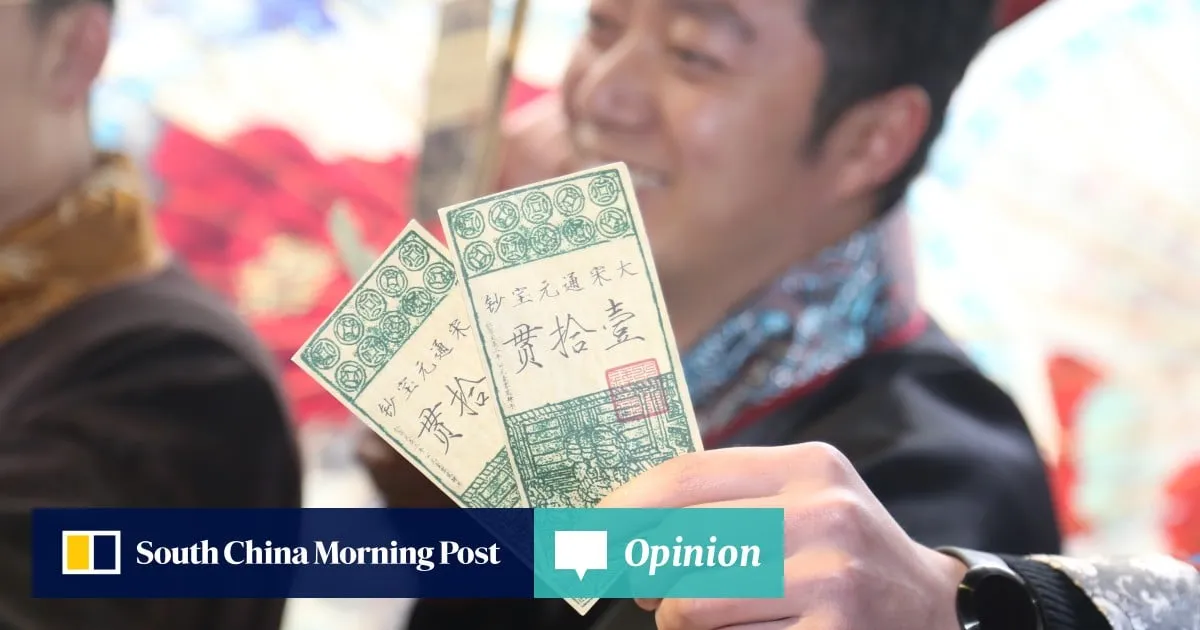
At least gold glitters. Long before the first paper banknotes fluttered through the financial houses of Europe, the bustling markets of 11th century China birthed an unprecedented financial “innovation”: the use of paper currency.In the 1020s, burdened by the shortage of bronze coins and a rapidly expanding economy, merchants in the southwestern province of Sichuan began issuing paper promissory notes. This marked the genesis of jiaozi, the world’s earliest paper money. Soon, with the imperial government’s realisation of this tool’s power, the Song state eventually launched another form of paper currency, huizi.With the issuance of jiaozi and huizi, China’s monetary system transitioned from the exclusive use of metal coins into an unprecedented era of state-backed fiat. This experiment pioneered a sophisticated financial practice centuries ahead of the rest of the world.
SRCSouth China Morning Post
LANGEN
LEANCenter-Right
WORDS131
ENT6
THU · 2026-05-14 · 01:30 GMTBRIEF NSR-2026-0514-76091
NSR-2026-0514-76091Analysis·EN·Economic Impact
Centuries ahead of Wall Street: how China’s Song dynasty pioneered global fiat currency
In 11th century China, merchants in Sichuan pioneered the world's first paper currency, known as jiaozi, due to a shortage of bronze coins and economic expansion. The Song imperial government later adopted and issued its own form of paper money, huizi.
Jose-Antonio MaurelletSouth China Morning PostFiled 2026-05-14 · 01:30 GMTLean · Center-RightRead · 1 min
South China Morning PostFIG 01
Reading time
1min
Word count
131words
Sources cited
0cited
Entities identified
6entities
Quality score
100%
§ 01
Briefing Summary
AI-generatedNEWSAR · AI
In 11th century China, merchants in Sichuan pioneered the world's first paper currency, known as jiaozi, due to a shortage of bronze coins and economic expansion. The Song imperial government later adopted and issued its own form of paper money, huizi. This marked a transition to a state-backed fiat monetary system, a sophisticated financial innovation that predated similar developments in Europe by centuries. The use of jiaozi and huizi represented a significant advancement in global financial practices.
Confidence 0.85Claims 5Entities 6
§ 02
Article analysis
Model · rule-basedFraming
Economic Impact
Technology
Tone
Mixed Tone
AI-assessed
CalmNeutralAlarmist
Factuality
0.80 / 1.00
Factual
LowHigh
Sources cited
0
No named sources
FewMany
§ 03
Key claims
5 extracted01
China's monetary system transitioned to state-backed fiat currency with the issuance of jiaozi and huizi.
factual
Confidence
1.00
02
The Song state eventually launched its own form of paper currency, huizi.
factual
Confidence
1.00
03
Merchants in Sichuan began issuing paper promissory notes in the 1020s due to a shortage of bronze coins and economic expansion.
factual
Confidence
1.00
04
The Song dynasty in 11th century China pioneered the use of paper currency.
factual
Confidence
1.00
05
This financial practice was centuries ahead of the rest of the world.
factual
Confidence
0.90
§ 04
Full report
1 min read · 131 words§ 05
Entities
6 identifiedKey playerOppositionContextPositiveNeutralNegative
Organizations2
§ 06
Keywords & salience
9 termsfiat currency
1.00
paper money
1.00
song dynasty
0.90
china
0.80
huizi
0.70
jiaozi
0.70
monetary system
0.60
financial innovation
0.50
sichuan
0.40
§ 07
Topic connections
Interactive graph Network visualization showing 51 related topics
View Full Graph Person Organization Location Event|Click node to navigate|Edge numbers = shared articles