NEWSAR
Multi-perspective news intelligence
SRCAssociated Press (AP)
LANGEN
LEANCenter
WORDS1 848
ENT10
THU · 2026-05-14 · 11:53 GMTBRIEF NSR-2026-0514-76208
News/The world’s reaction to hantavirus is ti/The world’s reaction to hantavirus is tinged by echoes of so…
NSR-2026-0514-76208Analysis·EN·Public Health

The world’s reaction to hantavirus is tinged by echoes of something else: COVID

A recent hantavirus outbreak on the cruise ship MV Hondius has triggered a public reaction tinged with echoes of the COVID-19 pandemic. Passengers disembarked in Tenerife, Spain, amid concerns about the rare virus.

Associated Press (AP)Filed 2026-05-14 · 11:53 GMTLean · CenterRead · 8 min
The world’s reaction to hantavirus is tinged by echoes of something else: COVID
Associated Press (AP)FIG 01
Reading time
8min
Word count
1 848words
Sources cited
1cited
Entities identified
10entities
Quality score
100%
§ 01

Briefing Summary

AI-generated
NEWSAR · AI

A recent hantavirus outbreak on the cruise ship MV Hondius has triggered a public reaction tinged with echoes of the COVID-19 pandemic. Passengers disembarked in Tenerife, Spain, amid concerns about the rare virus. Experts suggest this heightened fear, despite official reassurances, stems from the erosion of trust in science, government, and information caused by the pandemic. The article highlights how COVID-19 has altered societal norms and personal well-being, leaving a lasting impact on public perception of health crises. This lingering distrust makes people more susceptible to fear and less likely to rely on established authorities during new outbreaks.

Confidence 0.90Sources 1Claims 5Entities 10
§ 02

Article analysis

Model · rule-based
Framing
Public Health
Social Justice
Tone
Measured
AI-assessed
CalmNeutralAlarmist
Factuality
0.40 / 1.00
Mixed
LowHigh
Sources cited
1
Limited
FewMany
§ 03

Key claims

5 extracted
01

COVID-19 undermined trust in science, government, and information itself, leading to increased cynicism and a search for alternative explanations.

quoteElisa Jayne Bienenstock
Confidence
1.00
02

Three people had died from hantavirus on the ship, with a total of nine confirmed and two suspected cases.

factual
Confidence
0.90
03

The lingering impact of COVID-19 is scattered across how we live today, affecting work-from-home jobs, mask-wearing habits, and the presence of hand sanitizer.

factual
Confidence
0.90
04

Before 2020, illness outbreaks typically did not cause massive concern outside specific areas, unlike the reaction to the hantavirus outbreak.

factual
Confidence
0.80
05

A rare hantavirus outbreak aboard a cruise ship has triggered fear that 'it might be happening again,' despite official reassurances.

factual
Confidence
0.80
§ 04

Full report

8 min read · 1 848 words
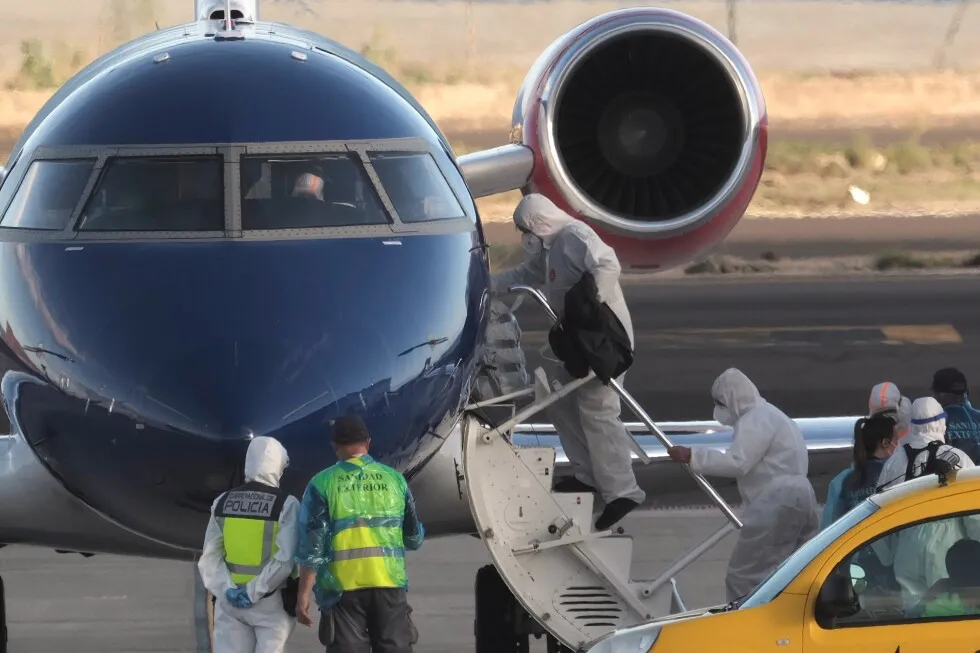
Passengers board a plane bound for Eindhoven, after disembarking from the hantavirus-stricken cruise ship MV Hondius at the airport in Tenerife, Canary Islands, Spain, Monday, May 11, 2026. (AP Photo/Arturo Rodriguez,File) 2026-05-14T11:17:04Z NEW YORK (AP) — The lingering impact of COVID-19 , a few years out from the declaration that the pandemic was over, is scattered across how we live today — the work-from-home jobs , the way some have decided wearing masks is their new normal, the hand sanitizer dispensers that remain ever present. Some of the other ripples, though, aren’t as obvious. They’re the ones we carry inside us — grief over lost loved ones, chronic health conditions, the sense of lives interrupted. And in recent days, another one has made itself known in the wake of a rare hantavirus outbreak aboard a cruise ship: the fear, despite official reassurances, that it might be happening again. But the flourishing of fear, whether on a personal or societal level, can also be an indicator that something else is missing. Perhaps there’s no post-pandemic reality more entrenched than the damage done, in the U.S. and globally, to the bonds that in the before times, many would have considered secure — science, government, information itself. “COVID undermined our trust in what most of us used to trust,” said Elisa Jayne Bienenstock, a research professor and sociologist at Arizona State University. “When general trust goes down, when there’s a lot of cynicism, who are people looking to, to explain what to do and how the world works?” freestar.queue.push(function () { window.fsAdCount = window.fsAdCount + 1 || 0; let customChannel = '/dynamic_' + fsAdCount; let adList = document.querySelectorAll(".fs-feed-ad") let thisAd = adList[fsAdCount]; let randId = Math.random().toString(36).slice(2); thisAd.id = randId; let thisPlacement = fsAdCount == 0 ? "apnews_story_feed" : "apnews_story_feed_dynamic"; freestar.newAdSlots({ placementName: thisPlacement, slotId: randId }, customChannel); }); What it used to be and what it is now Before 2020, the outbreak of some illness somewhere didn’t usually cause massive concern outside of the specific areas impacted, even as some epidemics caused significant numbers of deaths. Some of that was complacency in the face of a world where widespread travel wasn’t as accessible to the masses as it has become, which was a key part of COVID-19’s spread. In fact, there have been outbreaks of the current strain of hantavirus in some South American countries through the decades, like one in 1997 in Chile. Other countries have had epidemics of a range of illnesses from cholera to dengue to SARS, and the U.S. has seen West Nile , Legionnaire’s and more. But in a post-COVID-19 world, it didn’t take long before questions and concerns surfaced about disease spread in the days immediately following the first reports that three people had died from hantavirus on the ship. A total of nine confirmed and two suspected cases have been identified, including the fatalities. /* Desktop-first: fully collapse by default */ #ap-readmore-embed { display: none; margin: 0; padding: 0; height: 0; min-height: 0; overflow: hidden; text-align: center; position: relative; z-index: 2; } /* Only show on mobile */ @media (max-width: 767px) { #ap-readmore-embed { display: block; margin: 28px 0; height: auto; overflow: visible; } } #ap-readmore-embed .ap-readmore-btn { appearance: none; -webkit-appearance: none; border: 0; background: #000; color: #fff; cursor: pointer; display: inline-flex; align-items: center; justify-content: center; gap: 10px; padding: 14px 22px; border-radius: 999px; font-family: inherit, "AP Sans", -apple-system, BlinkMacSystemFont, "Helvetica Neue", Arial, sans-serif; font-weight: 700; font-size: 16px; letter-spacing: 0.2px; line-height: 1; box-shadow: 0 10px 18px rgba(0,0,0,0.12); transition: transform 120ms ease, box-shadow 120ms ease, opacity 120ms ease; touch-action: manipulation; -webkit-tap-highlight-color: transparent; position: relative; z-index: 3; } #ap-readmore-embed .ap-readmore-btn:hover { transform: translateY(-1px); box-shadow: 0 14px 22px rgba(0,0,0,0.16); } #ap-readmore-embed .ap-readmore-btn:active { transform: translateY(0); box-shadow: 0 10px 18px rgba(0,0,0,0.12); opacity: 0.95; } #ap-readmore-embed .ap-readmore-btn:focus-visible { outline: 3px solid rgba(228, 0, 43, 0.35); outline-offset: 3px; } #ap-readmore-embed .ap-readmore-icon { width: 10px; height: 10px; border-right: 2px solid currentColor; border-bottom: 2px solid currentColor; transform: rotate(45deg); margin-top: -2px; } #ap-readmore-embed .ap-readmore-fade { display: none; height: 48px; margin-top: -48px; pointer-events: none; background: linear-gradient(to bottom, rgba(255,255,255,0), rgba(255,255,255,1)); } Read More (function () { var APRM_EMBED_ID = "ap-readmore-embed"; var APRM_MOBILE_MQ = "(max-width: 767px)"; function APRM_onReady(fn) { if (document.readyState === "loading") { document.addEventListener("DOMContentLoaded", fn); } else { fn(); } } APRM_onReady(function () { var APRM_embedEl = document.getElementById(APRM_EMBED_ID); if (!APRM_embedEl) return; // 🚨 DESKTOP: remove entire module wrapper and bail early if (!window.matchMedia(APRM_MOBILE_MQ).matches) { var APRM_rootModule = APRM_embedEl.closest(".HTMLModuleEnhancement") || APRM_embedEl.closest(".HtmlModule"); if (APRM_rootModule && APRM_rootModule.parentNode) { APRM_rootModule.parentNode.removeChild(APRM_rootModule); } else if (APRM_embedEl.parentNode) { APRM_embedEl.parentNode.removeChild(APRM_embedEl); } return; // stop the rest of the script from running } }); })(); (function () { var EMBED_ID = "ap-readmore-embed"; var BTN_ID = "apReadMoreBtn"; var FADE_ID = "apReadMoreFade"; var STOP_SELECTOR = ".Page-below"; var SIGN_IN_GATE_SELECTOR = ".sign-in-gate-content"; var HIDDEN_ATTR = "data-ap-readmore-hidden"; var MOBILE_MQ = "(max-width: 767px)"; function ready(fn) { if (document.readyState === "loading") { document.addEventListener("DOMContentLoaded", fn); } else { fn(); } } function isElementNode(n) { return n && n.nodeType === 1; } function cancelEvent(e) { if (!e) return; if (typeof e.preventDefault === "function") e.preventDefault(); if (typeof e.stopPropagation === "function") e.stopPropagation(); if (typeof e.stopImmediatePropagation === "function") e.stopImmediatePropagation(); e.cancelBubble = true; e.returnValue = false; } function collapseDesktopEmbed(embed) { if (!embed) return true; if (!window.matchMedia(MOBILE_MQ).matches) { var maybeWrappers = [ embed.parentElement, embed.closest(".html-embed"), embed.closest("[data-type='htmlembed']"), embed.closest("[class*='embed']"), embed.closest("[class*='Embed']") ].filter(Boolean); embed.style.display = "none"; embed.style.margin = "0"; embed.style.padding = "0"; embed.style.height = "0"; embed.style.minHeight = "0"; embed.style.overflow = "hidden"; maybeWrappers.forEach(function (el) { el.style.margin = "0"; el.style.padding = "0"; el.style.height = "0"; el.style.minHeight = "0"; el.style.overflow = "hidden"; }); if (embed.parentNode) { embed.parentNode.removeChild(embed); } return true; } return false; } ready(function () { var embed = document.getElementById(EMBED_ID); var btn = document.getElementById(BTN_ID); var fade = document.getElementById(FADE_ID); if (!embed || !btn) return; if (collapseDesktopEmbed(embed)) return; var signInGate = document.querySelector(SIGN_IN_GATE_SELECTOR); if (signInGate) { embed.innerHTML = ""; return; } // — Analytics: impression when embed enters viewport — if ("IntersectionObserver" in window) { var io = new IntersectionObserver(function (entries, observer) { if (entries[0].isIntersecting) { window.dataLayer = window.dataLayer || []; window.dataLayer.push({ event: "ap_readmore_impression" }); observer.disconnect(); } }, { threshold: 0 }); io.observe(btn); } var stopEl = document.querySelector(STOP_SELECTOR); if (!stopEl) return; var rootCandidates = [ embed.closest(".Page"), embed.closest("article"), embed.closest("main"), document.body ].filter(Boolean); var root = rootCandidates.find(function (c) { return c.contains(stopEl); }) || document.body; var all = root.getElementsByTagName("*"); var hidden = []; for (var i = 0; i Health experts have repeatedly emphasized that even though the virus can cause serious illness in those infected, the risk of spread in the general public is low. Despite that, when ship passengers were taken to the Spanish island of Tenerife to disembark, residents like Samantha Aguero were concerned. “We feel a bit unsafe. We don’t feel as there are 100% security measures in place to welcome it,” she said. “This is a virus, after all, and we have lived this during the pandemic.” freestar.queue.push(function () { window.fsAdCount = window.fsAdCount + 1 || 0; let customChannel = '/dynamic_' + fsAdCount; let adList = document.querySelectorAll(".fs-feed-ad") let thisAd = adList[fsAdCount]; let randId = Math.random().toString(36).slice(2); thisAd.id = randId; let thisPlacement = fsAdCount == 0 ? "apnews_story_feed" : "apnews_story_feed_dynamic"; freestar.newAdSlots({ placementName: thisPlacement, slotId: randId }, customChannel); }); Institutions are diminished for many Bienenstock points to three institutions that have suffered from the public’s loss of trust: government, media and science itself. But government officials and journalists were dealing with issues of public mistrust well before the pandemic . The mistrust of science got ammunition not because scientists were making mistakes in their processes but because non-scientists didn’t have the same understanding, she said. “Most people don’t think of science as a process. In their mind, science is an answer, it’s a fact. And so when those facts showed that they weren’t 100% reliable and assured, it started undermining trust in the science,” she said. freestar.queue.push(function () { window.fsAdCount = window.fsAdCount + 1 || 0; let customChannel = '/dynamic_' + fsAdCount; let adList = document.querySelectorAll(".fs-feed-ad") let thisAd = adList[fsAdCount]; let randId = Math.random().toString(36).slice(2); thisAd.id = randId; let thisPlacement = fsAdCount == 0 ? "apnews_story_feed" : "apnews_story_feed_dynamic"; freestar.newAdSlots({ placementName: thisPlacement, slotId: randId }, customChannel); }); “One of the problems with COVID is it undermined that confidence in science for people who don’t understand how science works. It showed the process. And it showed that scientists don’t always have the answer,” Bienenstock said. “A lot of people in crisis, when they fear things, don’t care what the answer is, as long as there’s a definitive answer. And science doesn’t provide that when it doesn’t know.” Now what? It’s not just about the issue at the forefront of people’s attention at the moment. There are ripple effects as well. “COVID ... didn’t just heighten people’s sensitivity to health threats. It did so unevenly, in ways often disconnected from actual risk,” said Michele Gelfand, professor of organizational behavior at the Stanford Graduate School of Business. “As trust in institutions has weakened, people have lost a key way to navigate uncertainty together. Without trust, people rely more on rumor, fear, and emotion, which can lead them to overreact to small risks and underreact to serious ones.” freestar.queue.push(function () { window.fsAdCount = window.fsAdCount + 1 || 0; let customChannel = '/dynamic_' + fsAdCount; let adList = document.querySelectorAll(".fs-feed-ad") let thisAd = adList[fsAdCount]; let randId = Math.random().toString(36).slice(2); thisAd.id = randId; let thisPlacement = fsAdCount == 0 ? "apnews_story_feed" : "apnews_story_feed_dynamic"; freestar.newAdSlots({ placementName: thisPlacement, slotId: randId }, customChannel); }); Karlynn Morgan, a 76-year-old retired nurse-anesthetist in Winston-Salem, North Carolina, has seen that heightened attention, with more people without a medical or science background talking about health issues than before the pandemic. She has also been disturbed by the increase in what looks to her like a lack of trust in science, as seen in falling vaccination rates and rising instances of diseases like measles. freestar.queue.push(function () { window.fsAdCount = window.fsAdCount + 1 || 0; let customChannel = '/dynamic_' + fsAdCount; let adList = document.querySelectorAll(".fs-feed-ad") let thisAd = adList[fsAdCount]; let randId = Math.random().toString(36).slice(2); thisAd.id = randId; let thisPlacement = fsAdCount == 0 ? "apnews_story_feed" : "apnews_story_feed_dynamic"; freestar.newAdSlots({ placementName: thisPlacement, slotId: randId }, customChannel); }); “I think people are far less trusting because people used to take their children and just get the vaccine,” she said. “When I was a kid, there was no question you were going to go get your shot.” If trust is going to be rebuilt, Gelfand said in an email, then leaders have to get involved. “They set the threat signal. They determine whether people get accurate information about the level of danger or distorted information that serves a political agenda. When leaders send clear, honest signals, people can calibrate in the face of threat. When leaders manipulate threat for their own purposes, norms erode and and trust collapses,” Gelfand said. “Strong, reliable institutions have historically been our superpower as a society. They’re what allow millions of people to coordinate under uncertainty without knowing each other personally,” she said. “Without that institutional backbone, we lose the very capacity for collective action that has helped human groups survive for millennia.” ___ Follow the AP’s coverage of the hantavirus outbreak at https://apnews.com/hub/hantavirus . DEEPTI HAJELA Hajela writes about the ways in which America is changing as part of the AP’s Trends+Culture team. She is based in New York City.
§ 05

Entities

10 identified
§ 06

Keywords & salience

9 terms
covid-19 impact
1.00
hantavirus outbreak
0.90
public trust
0.80
fear of recurrence
0.70
societal impact
0.60
pandemic aftermath
0.50
information trust
0.50
cruise ship
0.40
global travel
0.40
§ 07

Topic connections

Interactive graph
Network visualization showing 12 related topics
View Full Graph
Person Organization Location Event|Click node to navigate|Edge numbers = shared articles